Follow new trails.
There's history at every turn!

The Ohio History Center is excited to celebrate with America 250—Ohio! We’re a stop along several statewide story trails. As you explore the museum, these markers will guide you to featured galleries and objects.

Select a trail to learn more:


icon of a brain with text reading "Ohio Trails & Tales / Creativity / America 250-Ohio Program"

Ohio Creativity Trail

[Download PDF]

Where to start

Creativity is on exhibit in all corners of the Ohio History Center!

  • Creative Ohio is a rotating gallery dedicated to showcasing Ohio art and artists. It currently features works by Archibald Willard, Thomas Schiff, and Paul-Henri Bourguignon (1st Floor)
  • Decorative arts abound in Made by Hand (Gallery 2)
  • Head upstairs to see kid-created poems, maps and more in Hide and Seek (3rd floor)

You'll find more icons here:

  • Paintings by Lilly Martin Spencer and Howard Chandler Christy (1st Floor)
  • Hall China Company ceramics (Gallery 1)
  • Open art storage area (Gallery 3)
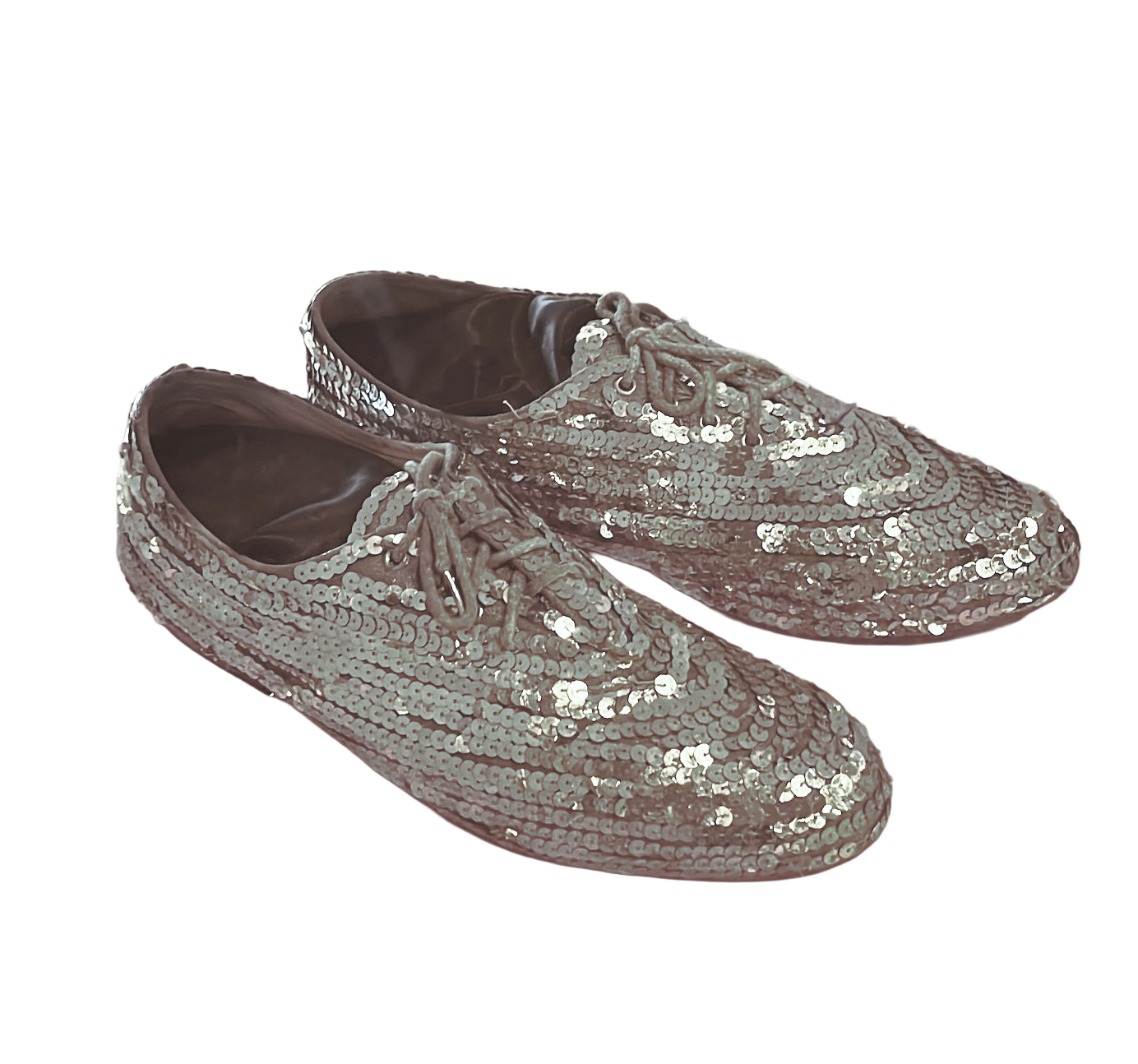
  • David Zimmer’s silver sequined sneakers (Gallery 3)
Photograph of a pair of canvas sneakers embellished with silver sequins. The image has been edited to remove background elements.

Featured item: David Zimmer's silver sneakers

As a performer, David Zimmer customized many of his costumes and accessories. He used silver paint and sequins to alter these shoes for the Berwick Ball, an annual Halloween drag event he hosted with his partner, Orn Huntington. They are currently on display in Gallery 3.

Zimmer began performing in drag in the early 1950s, while serving as a nurse during the Korean War. For some of his earliest performances, he fashioned a wig out of a floor mop.

You can see images of Zimmer's costumes and performances (including the mop!) on Ohio Memory.


Graphic icon displaying the bow of a boat on the water approaching a lighthouse, with text that reads: "Ohio Trails & Tales / Lake Erie to Ohio River / America 250-Ohio Program."

Lake Erie to Ohio River Trail

[Download PDF]

Where to start

Nature of Ohio introduces many modern and ancient animals that have made their homes in Ohio's waterways. In Gallery 1, you'll also encounter artifacts from Ohio's canal system and steamboat era.

Look for these in Nature of Ohio:

  • Glacial grooves in bedrock
  • Sedimentary rocks
  • “Changing Waterways”
  • Beavers
  • Mollusks
  • Trilobites

Look for these in Gallery 1:

  • Canal lever
  • Ferry boat wheel
  • Steamboat lantern
  • Boat whistles
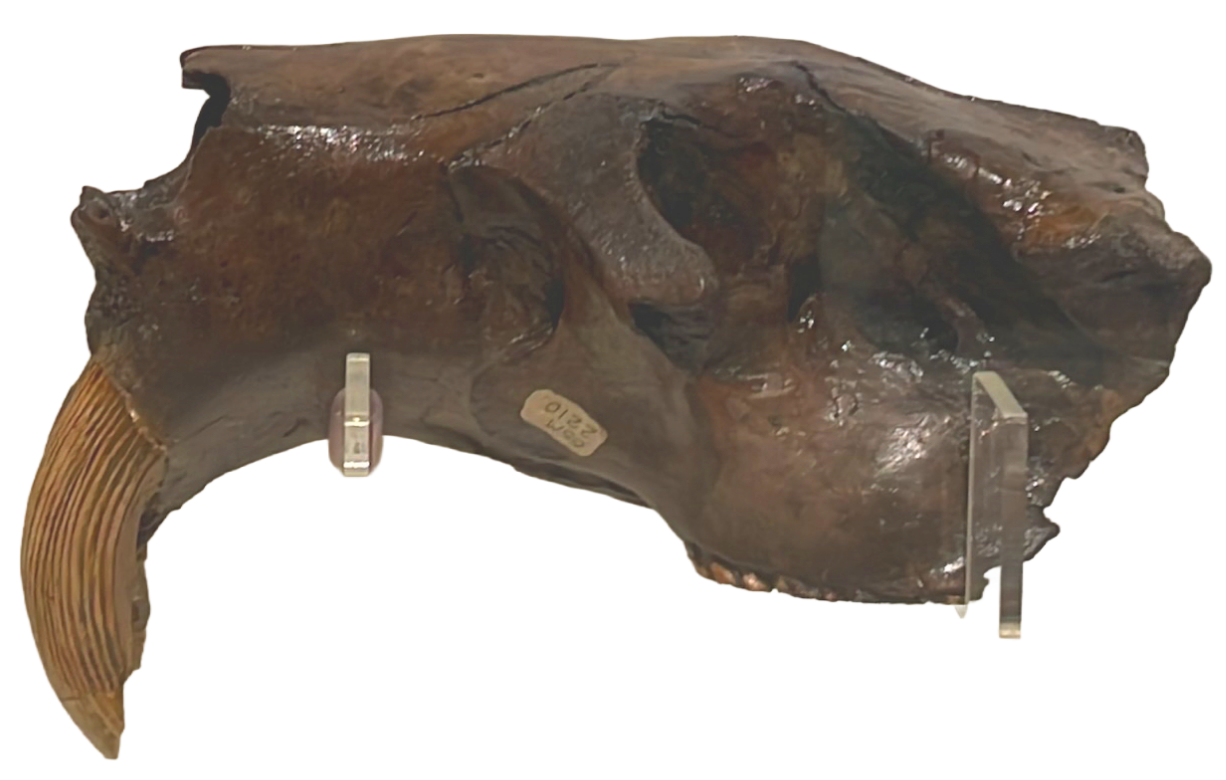
Image of a giant beaver skull on a Plexiglas mount. Background elements have been removed from the image.

An enormously eager beaver

Today, beavers are North America’s largest rodents but during the Ice Age, they weren’t even the largest rodents living in Ohio. That distinction belonged to the now‑extinct giant beaver, known to scientists as Castoroides ohioensis. It was named for the state where it was first identified—we hope you can guess which one!

The species was discovered in 1837 when workers digging the Ohio Canal uncovered fossil remains near Nashport, northwest of Zanesville. At the end of the Ice Age, Ohio’s wetlands were home to both giant beavers and the smaller beavers we know today.

There are several giant beaver skulls on exhibit at the Ohio History Center. How many do you see?

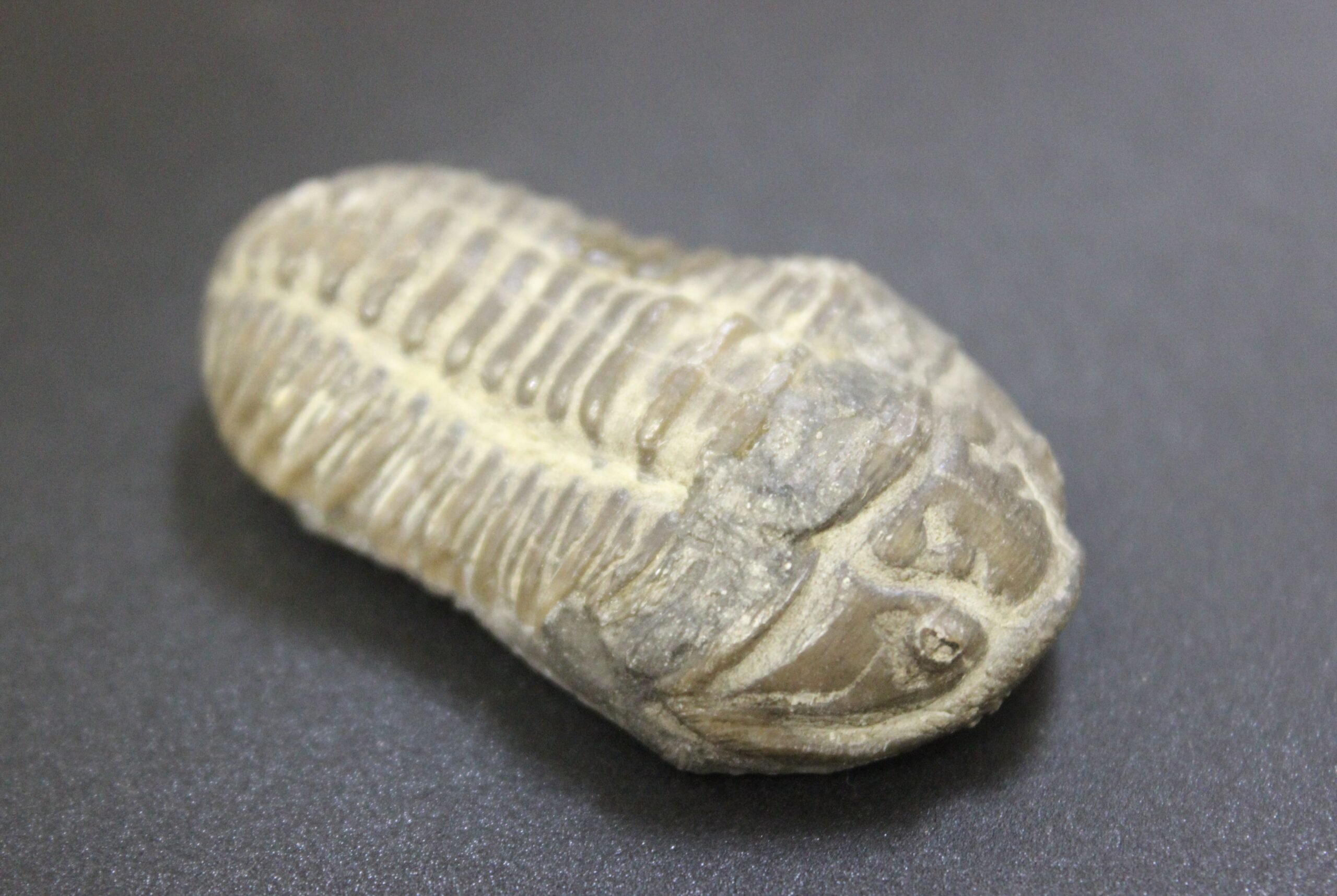
Spot the trilobite

Modern Ohio’s lakes, rivers, and streams are great examples of freshwater ecosystems, but did you know that in the distant past Ohio was covered by saltwater? During much of the Paleozoic Era this area was a rich marine habitat.

Trilobites are a group of long-extinct invertebrates that once called Ohio home. One famous type of trilobite, called Isotelus, became the state invertebrate fossil of Ohio in 1985 after middle school students from the Dayton area lobbied their state representatives.

You can learn more about these prehistoric creatures from the Ohio Department of Natural Resources. Can you find an Isotelus trilobite in the Nature of Ohio exhibit?

Keep exploring!

Ohio Memory is a statewide library of digital documents, images, and newspapers.

If you love maps, be sure to browse the collection of digitized plat maps from Ohio Canals.

More interested in Ohio's natural history? You'll find digitized specimens here!


Continue along the Lake Erie to Ohio River trail to more Ohio History Connection Sites:


Icon featuring a graphic of a lightbulb and text that reads: "Ohio Trails & Tales / Innovation / America 250-Ohio Program."

Innovation Trail

[Download PDF]

Where to start

You'll find inventions, enhancements, and business ventures throughout the museum. Our 1950s Lustron home is hard to miss, and be sure to check out the Made in Ohio area in Gallery 1!

  • Lustron hoome (1950s exhibit)
  • Cookstoves (Gallery 1)
  • "Made in Ohio" (Gallery 1)
  • Ohio Art Company products (Gallery 3)
  • Edison phonograph (Gallery 3)
  • H. & F. Blandy Company steam engine (Gallery 3)


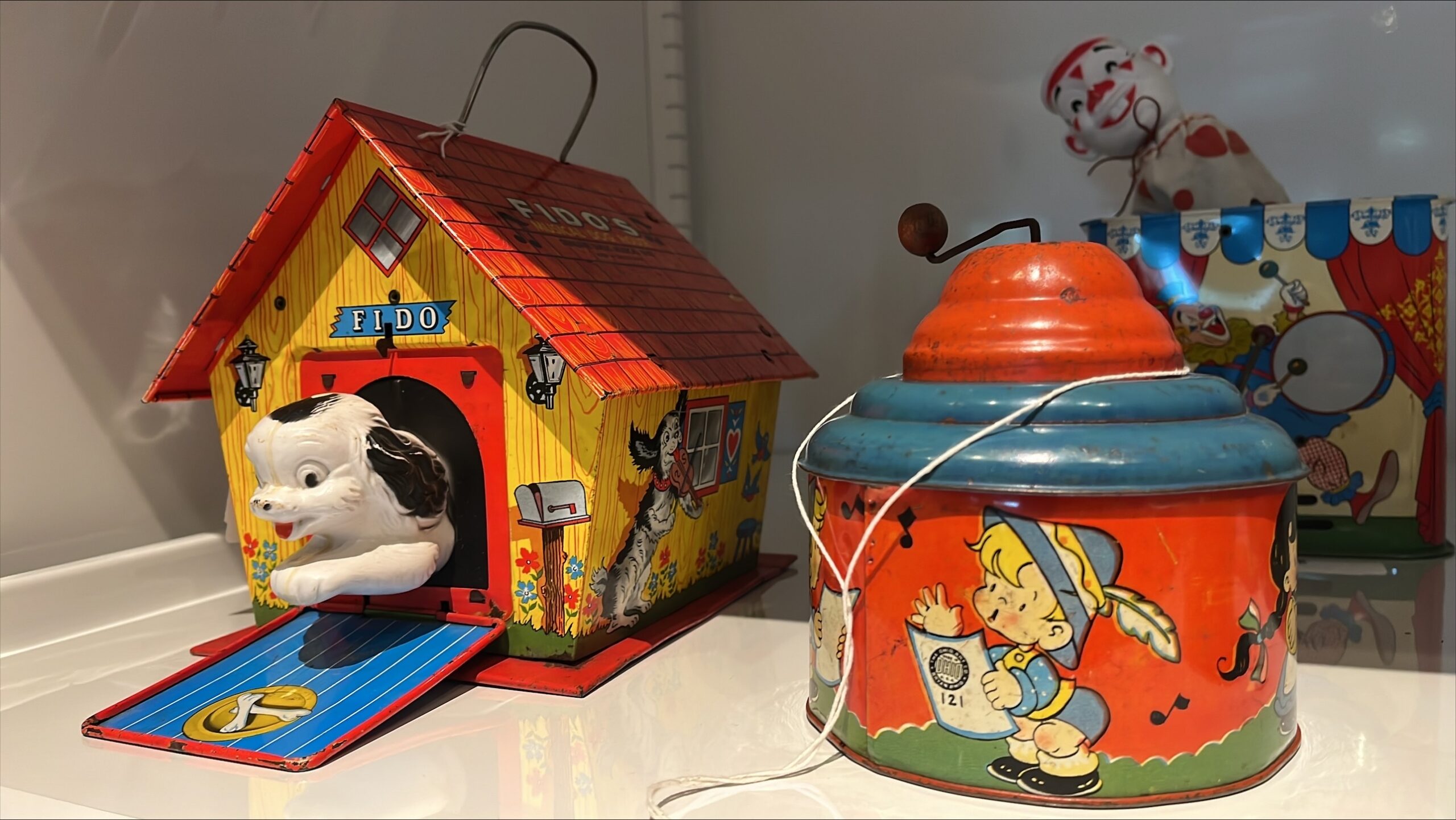
The Ohio Art Company

In 1908, Henry Winzeler made the bold choice to leave his dental practice behind. He saw a business opportunity in creating decorative picture frames, calling his venture the Ohio Art Company.

During World War I, the decline in imports from Germany opened the door for Winzeler to expand his offerings to American consumers. Ohio Art branched out to sell tea sets, globes, sand pails, and other toys. That innovative spirit continued throughout the 20th century. In the 1930s, Ohio Art became one of the first companies to license Walt Disney characters, and in 1960, it introduced the iconic Etch A Sketch.

Check out the cabinet of Ohio Art Company wares on display in Gallery 3. And if you feel like trying out an Etch A Sketch, you'll find one in our Hide and Seek exhibit up on the 3rd floor!

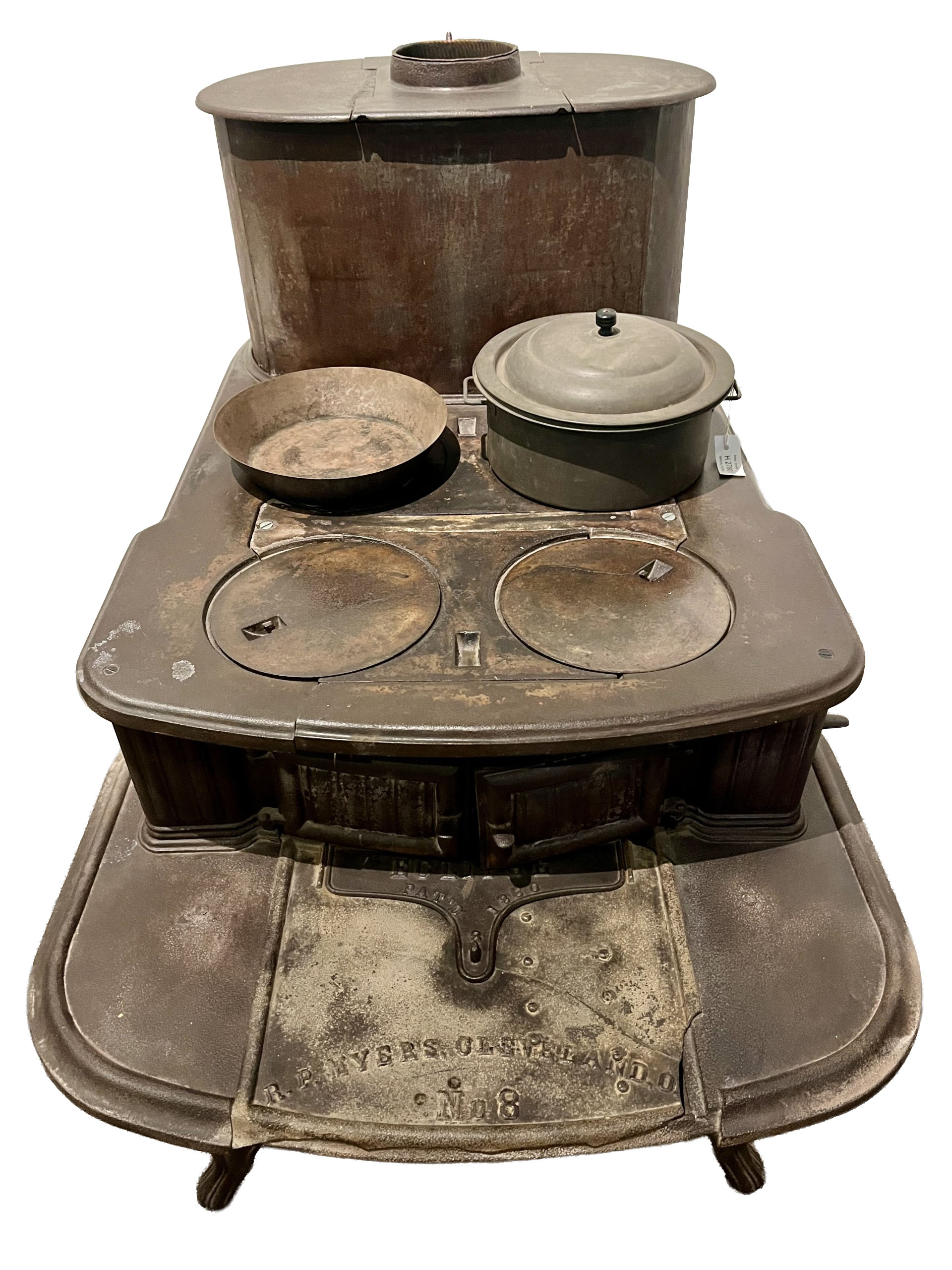
Photograph of an iron cookstove made by R. P. Myers in Cincinnati. The image has been edited to remove background elements.

Cookstoves

Before air fryers and microwaves filled Ohio kitchens, another innovation transformed how families prepared food at home.

Humans had cooked over open fires for hundreds of thousands of years, but during the 1800s, manufacturers introduced the American public to cast-iron cookstoves. By containing and controlling the flame, these stoves made cooking more efficient, and much safer.

This stove was made by R. P. Myers in Cleveland around 1860. Doors on the front enclose the firebox, where chopped wood was loaded to fuel the fire. The stovetop features four burners, or "stove eyes," while the oven is at the back. You can view this item and other Ohio-made cookstoves in Gallery 1.


Icon of a traffic light with the words: "Ohio Trails & Tales / Transportation / America 250-Ohio Program"

Transportation Trail

[Download PDF]

Where to start

We have planes, trains and automobiles—trolleys, bicycles and carriages, too. See how many modes of transportation you can find. (Don't forget a trip upstairs!)

1st Floor

  • Crosley station wagon (Building entrance)
  • Chevrolet Bel Air and Airstream trailer (Red carpet area)
  • Ohio Bell Telephone repair truck (Red carpet area)
  • Borden's Milk delivery wagon (Red carpet area)
  • Ahrens-Fox Fire Engine Company fire engine (Gallery 3)
  • Trolley car (Gallery 3)
  • Paul F. Thomas ferry boat pilot wheel (Gallery 1)

2nd Floor Plaza

  • Aeronca C-2 "Flying Bathtub" airplane
  • Alliance A-1 Argo biplane
  • Lola T 8700 race car
  • Seneca Motor Car Company H model auto
  • Singer & Co. ordinary bicycle
  • Winton Motor Carriage Company automobile

3rd Floor

  • Little Tikes Cozy Coupe
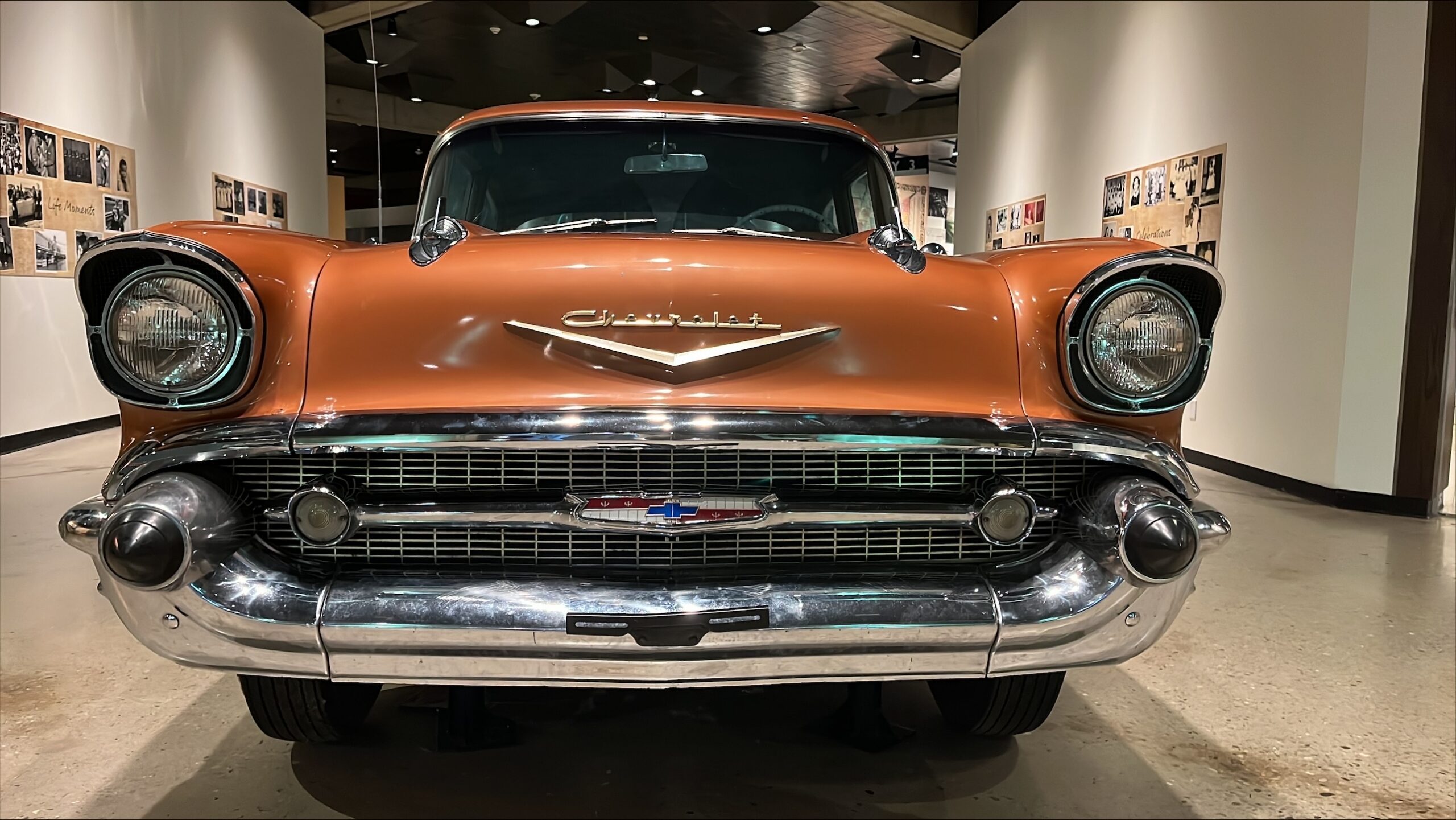
Photograph of the front of a copper-colored 1957 Chevrolet Bel Air showing the chrome bumper, grill, and headlights.

Don't make me turn this car around!

Really—please don’t. Together, this Chevrolet Bel Air and its Airstream trailer are nearly 36 feet long.

The ’57 Chevy was built at Norwood Assembly Plant near Cincinnati, which produced more than eight million cars between 1923 and its closure in 1987.

Airstream began in California, where this “new lightweight go-anywhere” trailer was made. When the company expanded in the early 1950s, they chose Jackson Center, Ohio as the location for a new factory. By 1978, Airstream had consolidated their operations in northwest Ohio, where they remain today.

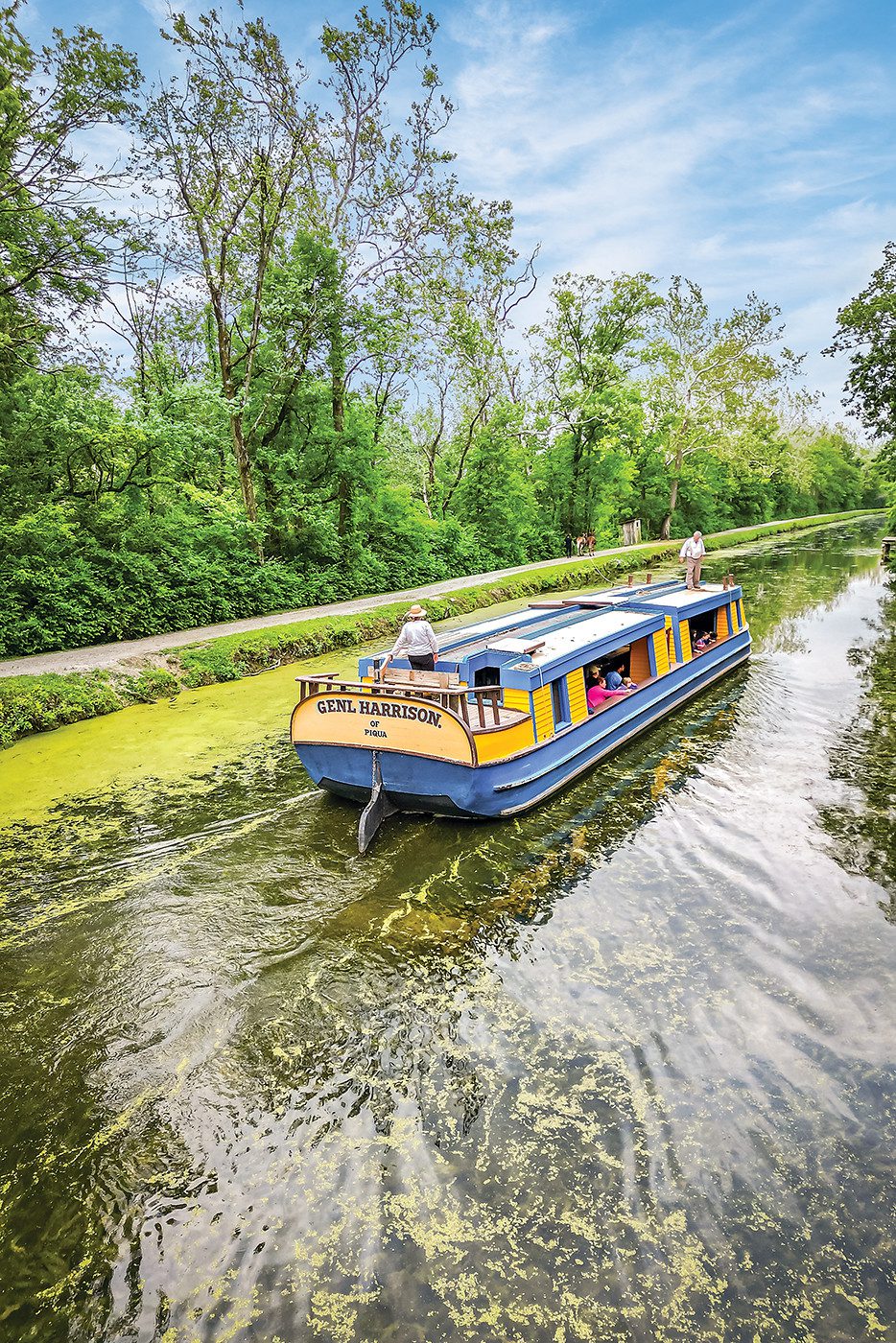
Image of the General Harrison of Piqua, historic canal boat, on the water at Johnston Farm and Indian Agency.

Keep exploring!

Follow the Transportation Trail to more Ohio History Connection sites: