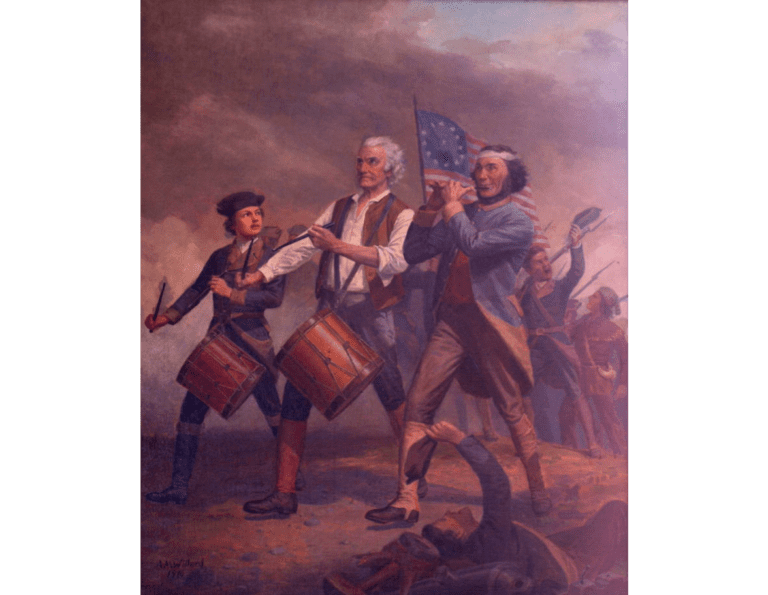
In 2026, the United States celebrates the 250th anniversary of the nation’s founding. Numerous events are planned both locally and nationally to commemorate the occasion. Similar events were planned for celebrations in 1876 and 1976. Tying both anniversaries together is Ohio artist, Archibald Willard and his painting, “Spirit of ‘76.” It was produced for the 1876 Centennial Exposition and gained popularity during the 1976 Bicentennial with its reproduction on mass-produced merchandise. As Ohioans reflect on the nation’s 250th birthday, look back at our country’s two previous centennial celebrations.
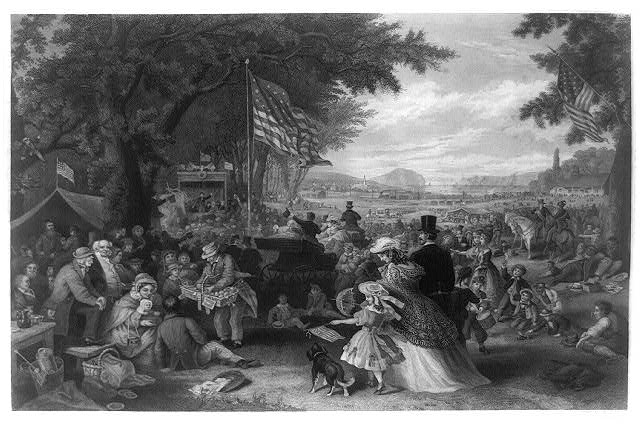
"The Day We Celebrate," 1876 courtesy of Library of Congress
US Centennial Celebration in Ohio, 1876
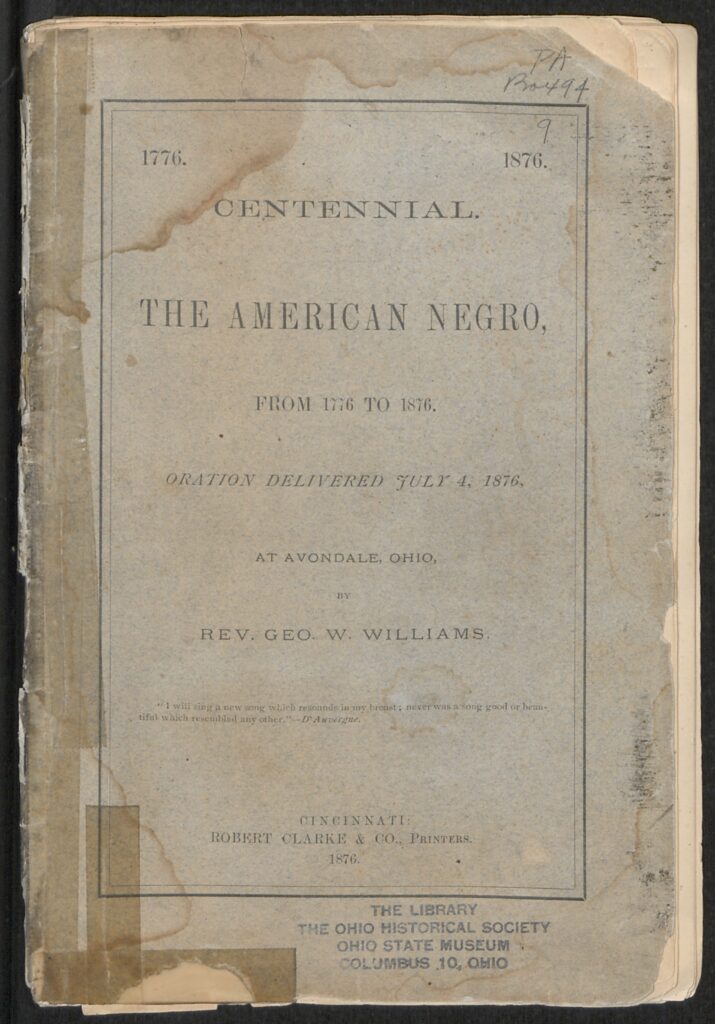
On July 4, 1876, Ohioans, like most Americans,celebrated the country’s centennial with parades, picnics, patriotic speeches, and firework displays.From large cities to small towns, Ohio marked the country’s one hundredth birthdayby both honoring the past and engaging in leisurely activities. In Lancaster, a veteran’s parade featuring a militaryband marched down Main Street; in Sandusky,a commemorative sailing regatta was held on Lake Erie; and in Columbus, cannon fire accompaniedspeeches extolling Ohio’spioneer heritage.Although many of these activitiescelebrated America’s fortitude, many Ohioans in 1876 were focusedon current social issues. In Cincinnati, Rev. George W. Williams gave a speech highlighting the contributions of African Americans to society; meanwhile, the Toledo Woman Suffrage Association announced the publication ofThe Ballot Box newspaper and called for all women to declare their independence by supporting the right to vote.
Centennial Oration, 1876 via Ohio Memory
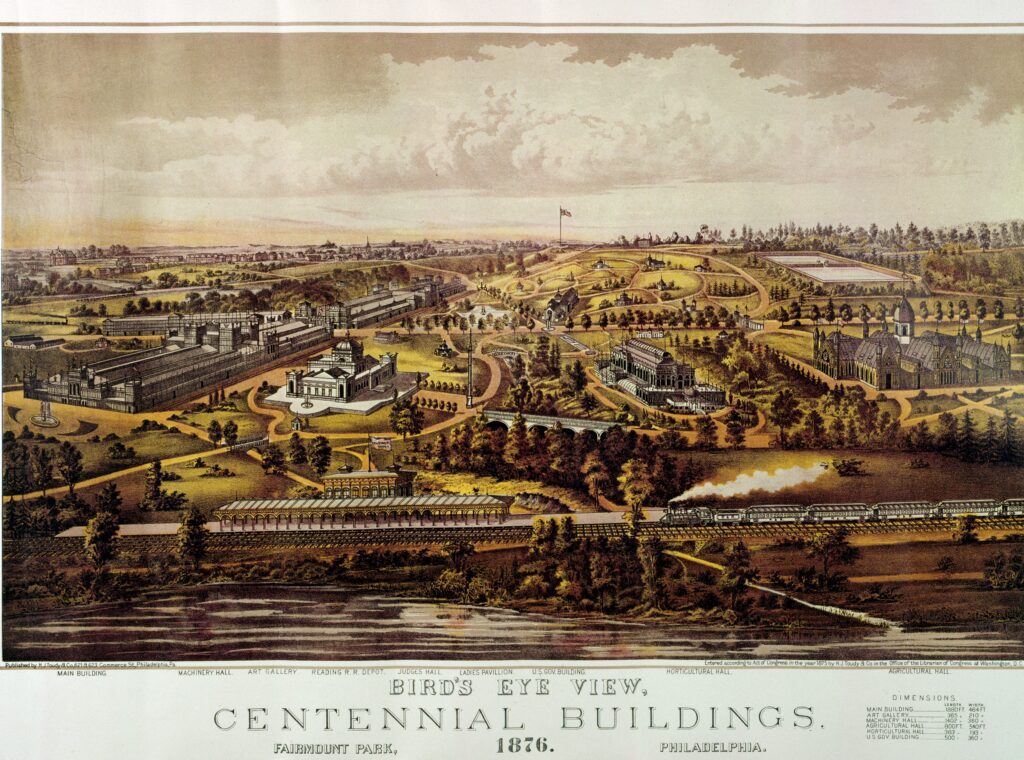
Poster for U.S. Centennial Exposition, 1876 courtesy of the Library of Congress
Centennial Exhibition in Philadelphia, 1876
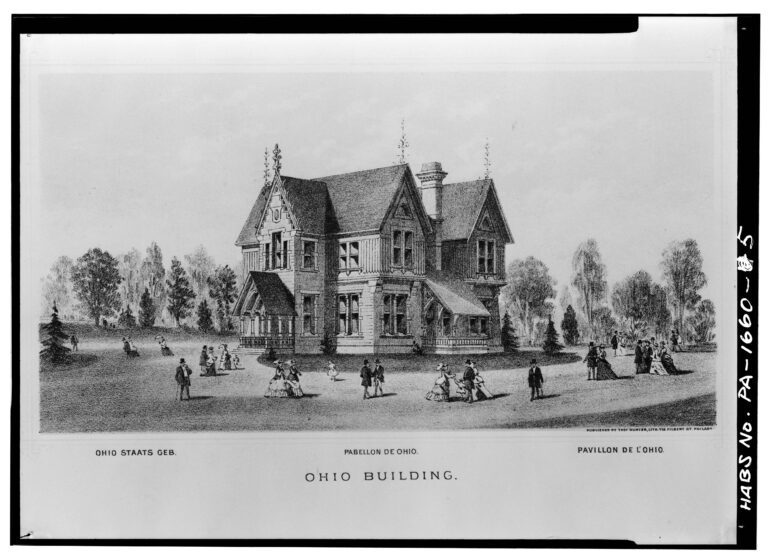
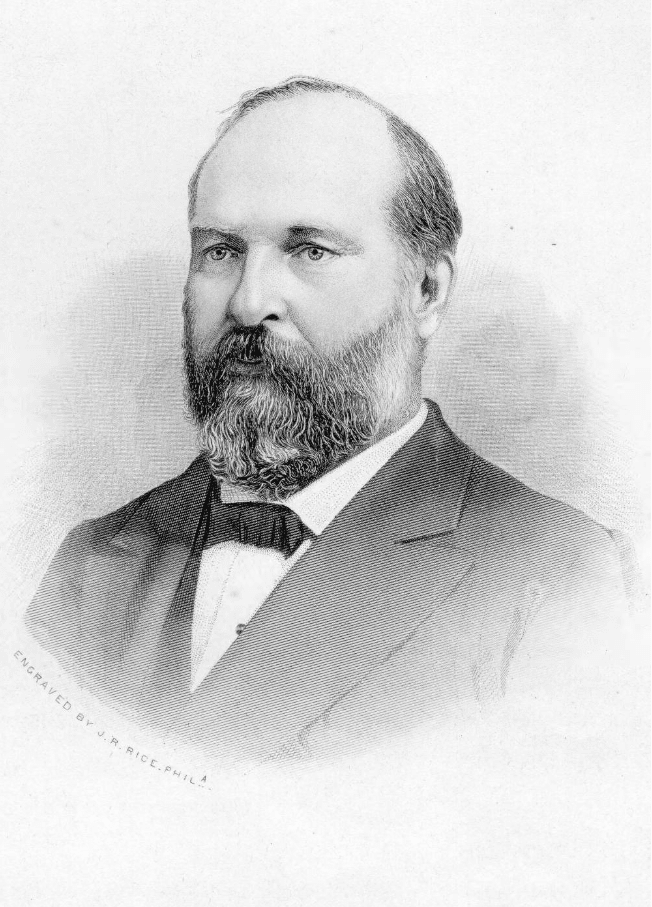
Beginning in May of 1876, Philadelphia’s Fairmount Parkhosted a six month-long “Centennial Exhibition” fair which highlightedeach state’s contributions to the nation.Visited by over ten million attendees, the eventboasted over two hundred buildings including the “Ohio House,” a two-story Gothic-Revival stylestructurebuilt from Ohio limestone, glass, and wood. A showcase of the Buckeye state’s industry and historical significance, the “Ohio House” featured four ledger-like registers in which visitors could record their name, current residence, and their remarks. Signed by nearly 80,000guests,these registerscontain signaturesfrom many prominent Ohioans including those of future presidents Rutherford Hayes, James Garfield, and William Howard Taft.
Ohio Building, Centennial Exposition, 1876 courtesy of the Library of Congress
1876, Spirit of Innovation
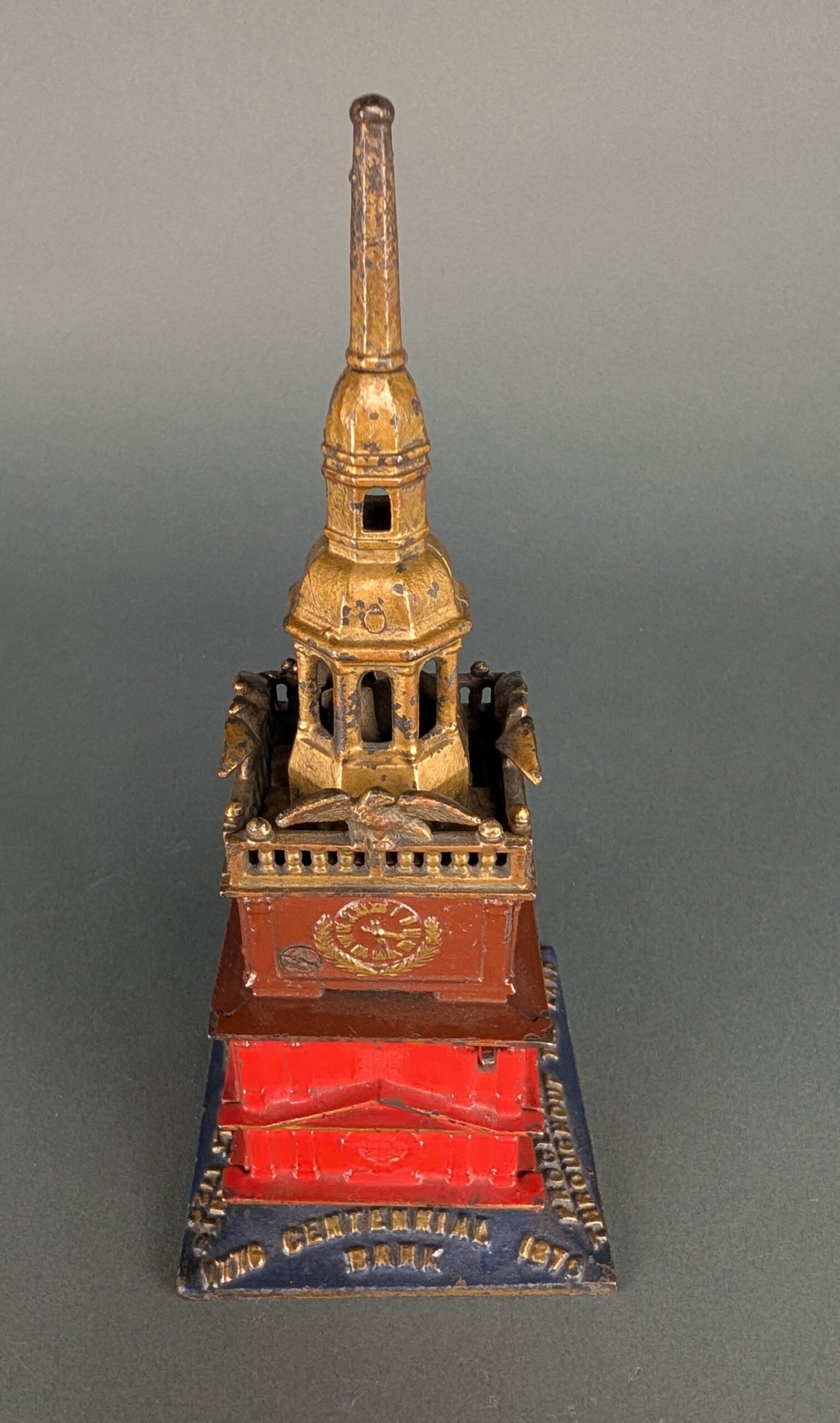
Those attending Philadelphia’s “Centennial Exhibition” in 1876 often collected souvenirs from their visit. These mementos usually depicted scenes from the fair and included everything from commemorative coins to souvenir handkerchiefs to miniature glass sculptures. That same year, many Ohio artisan companies expressed their American spirit by creating their own hand-crafted commemorative items in the form of stoneware jugs, glass dishes, and ceramic plates, while Ohioans themselves turned to producing patriotic quilts, woodcarvings, and artwork.
H 11913, Still Bank,1876
1976 Bicentennial
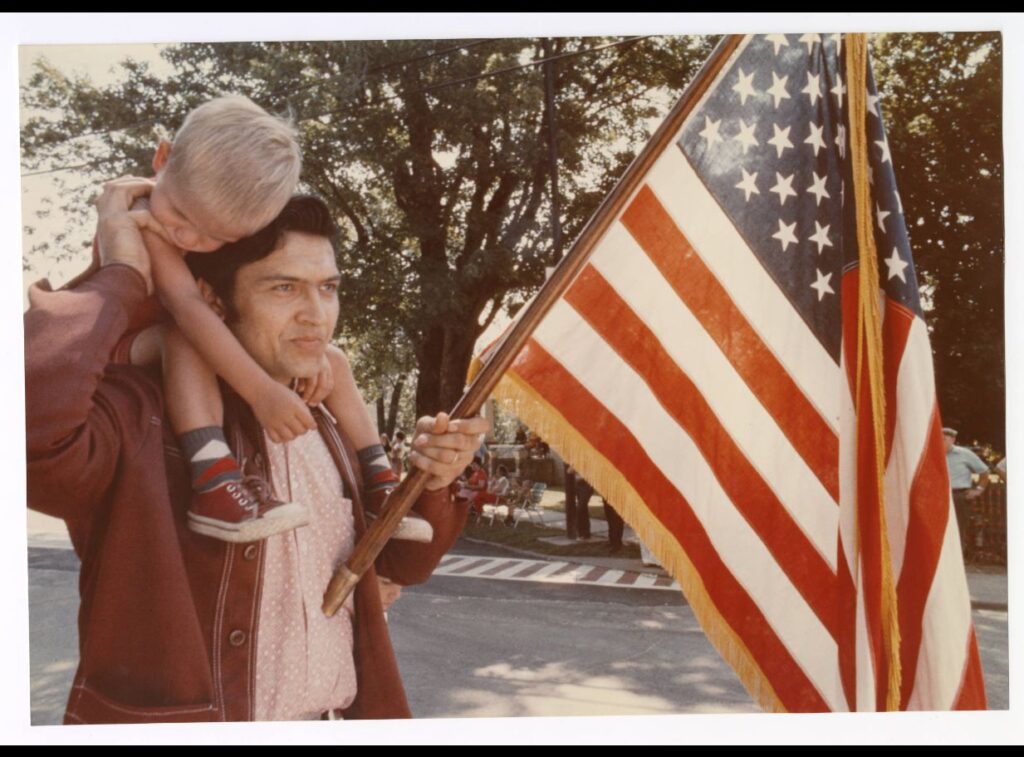
Planning for the 1976 Bicentennial commemoration began under President Lyndon B. Johnson in 1966 with the establishment of the American Revolution Bicentennial Commission and was to be a World’s Fair modeled after the 1876 Centennial held in Philadelphia, Pennsylvania. The Fair was meant to celebrate Johnson's "Great Society" programs and look forward to other advancements in America's future. However, the plans changed after the election of President Richard Nixon in 1968. The American Revolutionary Bicentennial Administration was tasked with planning the celebrations, and faced criticism by people who felt it was overly politicized and did not represent most Americans. Planning for the Bicentennial was occurring at the same time as numerous sources of unrest continued across the country. This included the Vietnam War, the women's rights movement, the civil rights movement, the environmental rights movement, and, eventually, the Watergate scandal. As a result, in 1973, Congress replaced the original commission with the American Revolution Bicentennial Administration, who launched “Bicentennial Communities,” a project that supported and publicized local programming and community-based initiatives. These regional initiatives sparked interest in family and community histories and served the needs of local communities. There were around 66,000 events including picnics, presentations, parades and other celebrations across the country.
Bicentennial parade in Bettsville, Ohio, 1976 via Ohio Memory
"Buy-Centennial"
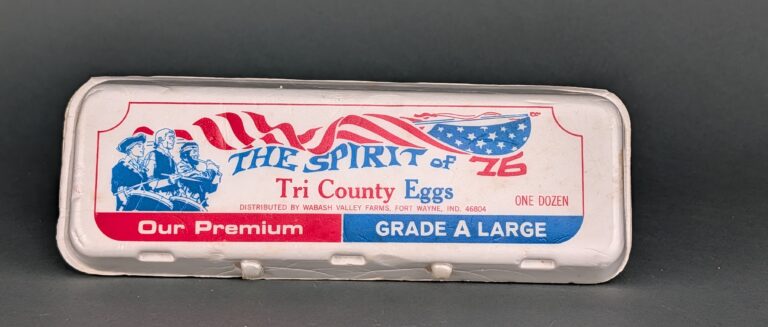
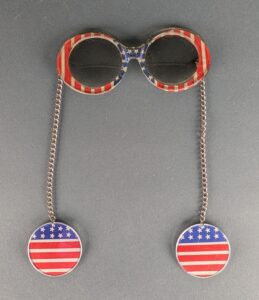
The mass commercialization of the Bicentennial was the result of corporations leveraging rising patriotic sentiment to increase revenue. Critics deemed this the “Buy-centennial” and mocked companies for exploiting a national event. Companies frequently featured the Bicentennial logo on their products or adopted red, white and blue designs. Likewise, the phrase “Spirit of ‘76” or a simplified version of the three figures central to the “Spirit of ‘76” painting appeared on product packaging and advertising. Despite some backlash, there was a strong demand for patriotic memorabilia. Overall, however, it was not a successful marketing campaign, as the US was experiencing an economic recession throughout the early 1970’s.
H 86318, Egg Carton, 1976
H 52729, Sunglasses
Learn More
Would you like to peruse the signatures of visitors to the Ohio Building at the Centennial Exposition? All four volumes have been digitized through Ohio Memory. The complete set features 60-80 thousand signatures! See if you can find James Garfield, William Tecumseh Sherman, Rutherford B. Hayes or William Howard Taft. Follow this link to start reading.
Our Archives & Library has many amazing resources for you to learn more about the past celebrations of America's founding in Ohio. Be sure to visit the Archives Wednesday through Friday for a research appointment to see these documents.
How do you celebrate America's founding? Are you curious to see if your artifacts could be a part of the Ohio History Connection's collection? Check out our donations page to learn more!