Were Rudolph’s Ancestors from Ohio?
Posted December 17, 2025
Topics: Natural HistoryMuseum Collections

Reindeer often evoke thoughts of the holiday season or distant northern landscapes, but  did you know they used to live right here in Ohio?

Reindeer and caribou are actually the same species, Rangifer tarandus. The common name for the species in Europe is reindeer, but here in North America, we call them caribou. This is why scientific names are so important. While common names can vary by region and between cultures, no matter where you go in the world Rangifer tarandus always refers to the same species.

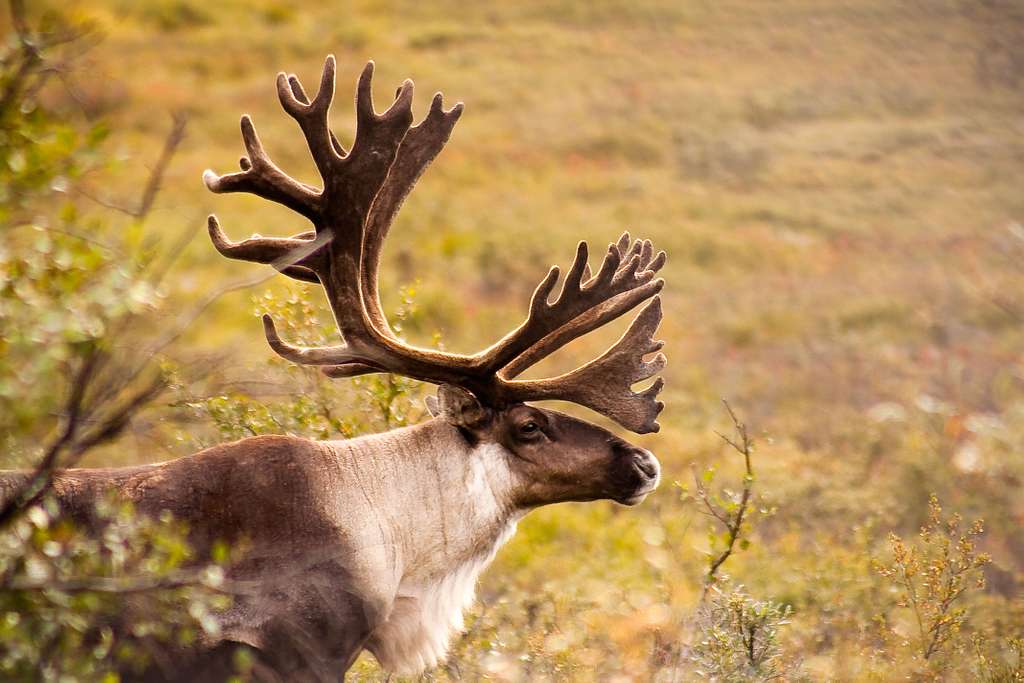
A male caribou in Denali National Park, Alaska

A distinct feature of Rangifer tarandus (caribou) are their antlers. They are the only member of the deer family (Cervidae) where females also typically have antlers. Antlers of other deer species are pretty symmetrical, but with caribou one of the brow tines (the prong that grows near the base of each antler) enlarges and projects forward between the eyes. You can see the position of the enlarged brow tine in the photo below of me posing with a set of caribou antlers found in the Brooks Range of northern Alaska. The enlarged brow tine is just above my hat.

Staff photo Alaska

Caribou can be “left-handed”, when the enlarged brow tine grows from the left antler, or “right-handed” when it grows from the right antler. Or both brow tines can be about the same size. The enlarged brow tine usually has a very flat (palmate) surface. Originally, scientists thought it was used to scrape snow away to access lichens, the main food of caribou in the winter. But caribou feet are well adapted for scraping snow and the antlers are shed months before the snow melts. Now we think the brow tine is for display during courtship.

Today, caribou thrive on tundra and in nearby boreal forests. Their range stretches from Alaska and much of Canada to eastern Greenland, and from northern Europe across most of Russia. The only caribou in the lower 48 states are a few stragglers from Canada who roam south into northern Montana, Idaho and Washington.

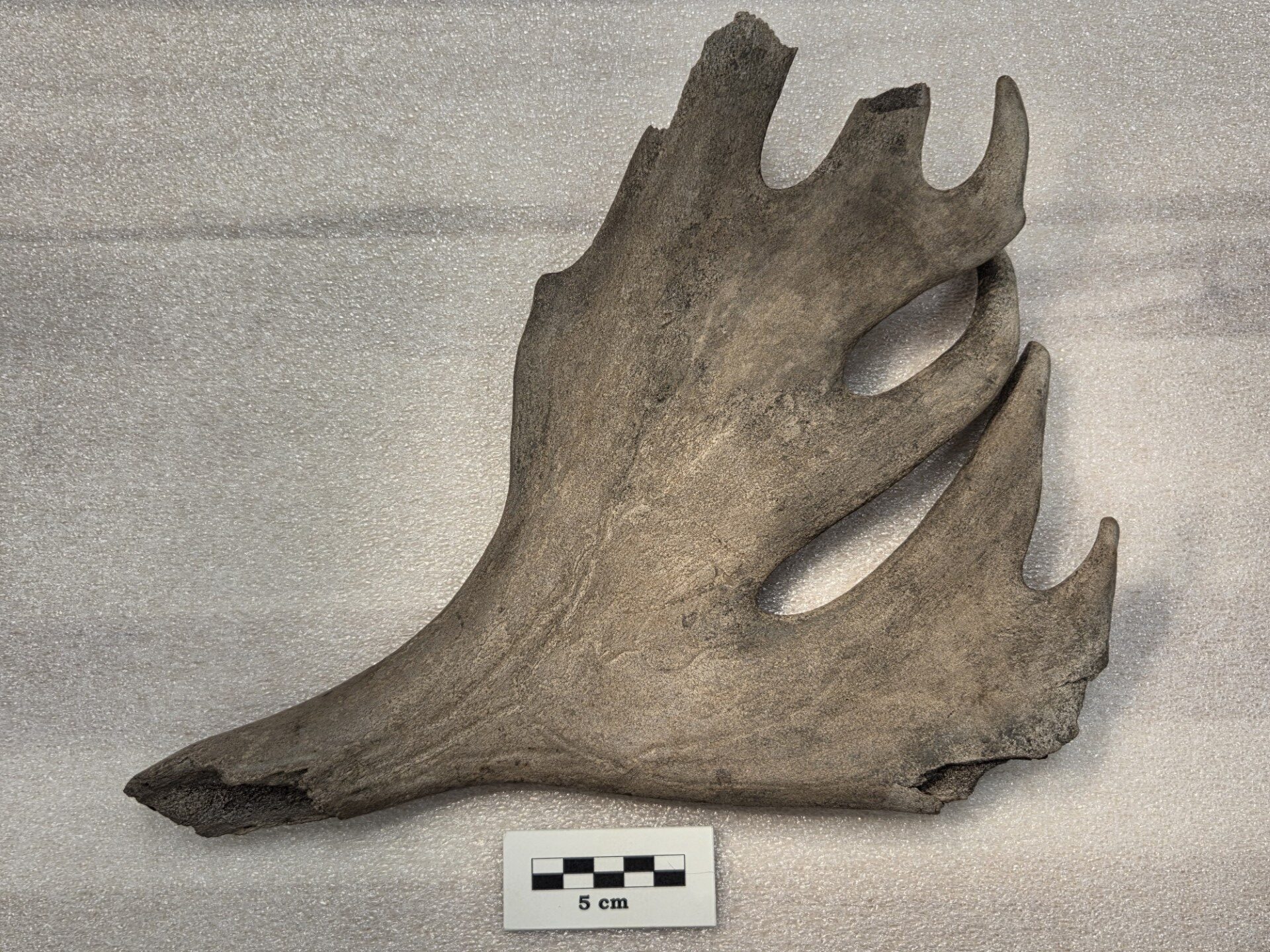
However, during the most recent Ice Age (Pleistocene epoch), which ended about 11,700 years ago, caribou lived right here in Ohio and ranged as far south as Tennessee. We know this because four examples of caribou remains have been found in Ohio counties (Erie, Huron, Richland, and Wyandot). Below is the large brow tine of a caribou found in Huron County. All four of the Ohio finds are partial antlers, which are easily recognizable as caribou. I wonder how many caribou finds, where the unique antlers weren’t recovered, have been mistaken for deer.

Brow tine of a caribou from Huron Co., Ohio (Ohio History Connection photo).

There are probably more remains of Ice Age caribou here in Ohio, so if you find unknown bones while digging on your property or walking along a steam, let us know!

Happy Holidays!

Dave Dyer, Natural History Curator

Subscribe to Our Blogs