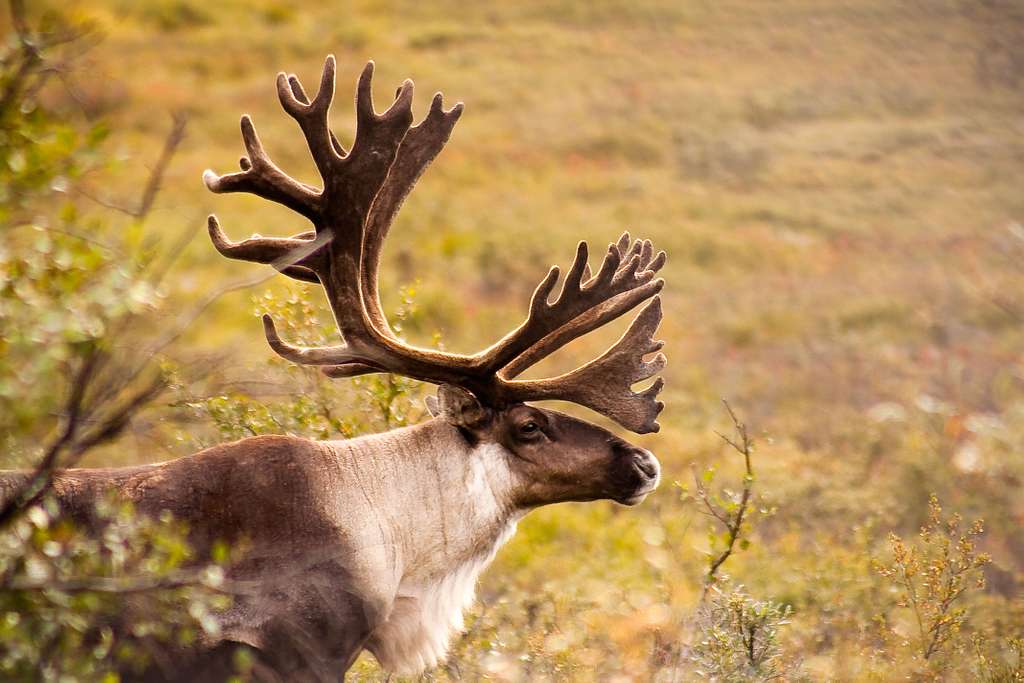
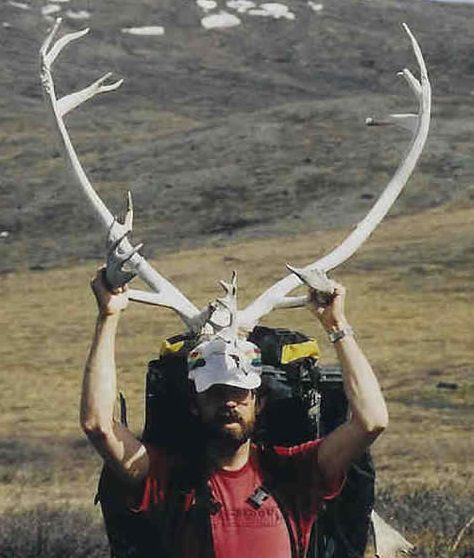
Caribou can be “left-handed”, when the enlarged brow tine grows from the left antler, or “right-handed” when it grows from the right antler. Or both brow tines can be about the same size. The enlarged brow tine usually has a very flat (palmate) surface. Originally, scientists thought it was used to scrape snow away to access lichens, the main food of caribou in the winter. But caribou feet are well adapted for scraping snow and the antlers are shed months before the snow melts. Now we think the brow tine is for display during courtship.
Today, caribou thrive on tundra and in nearby boreal forests. Their range stretches from Alaska and much of Canada to eastern Greenland, and from northern Europe across most of Russia. The only caribou in the lower 48 states are a few stragglers from Canada who roam south into northern Montana, Idaho and Washington.
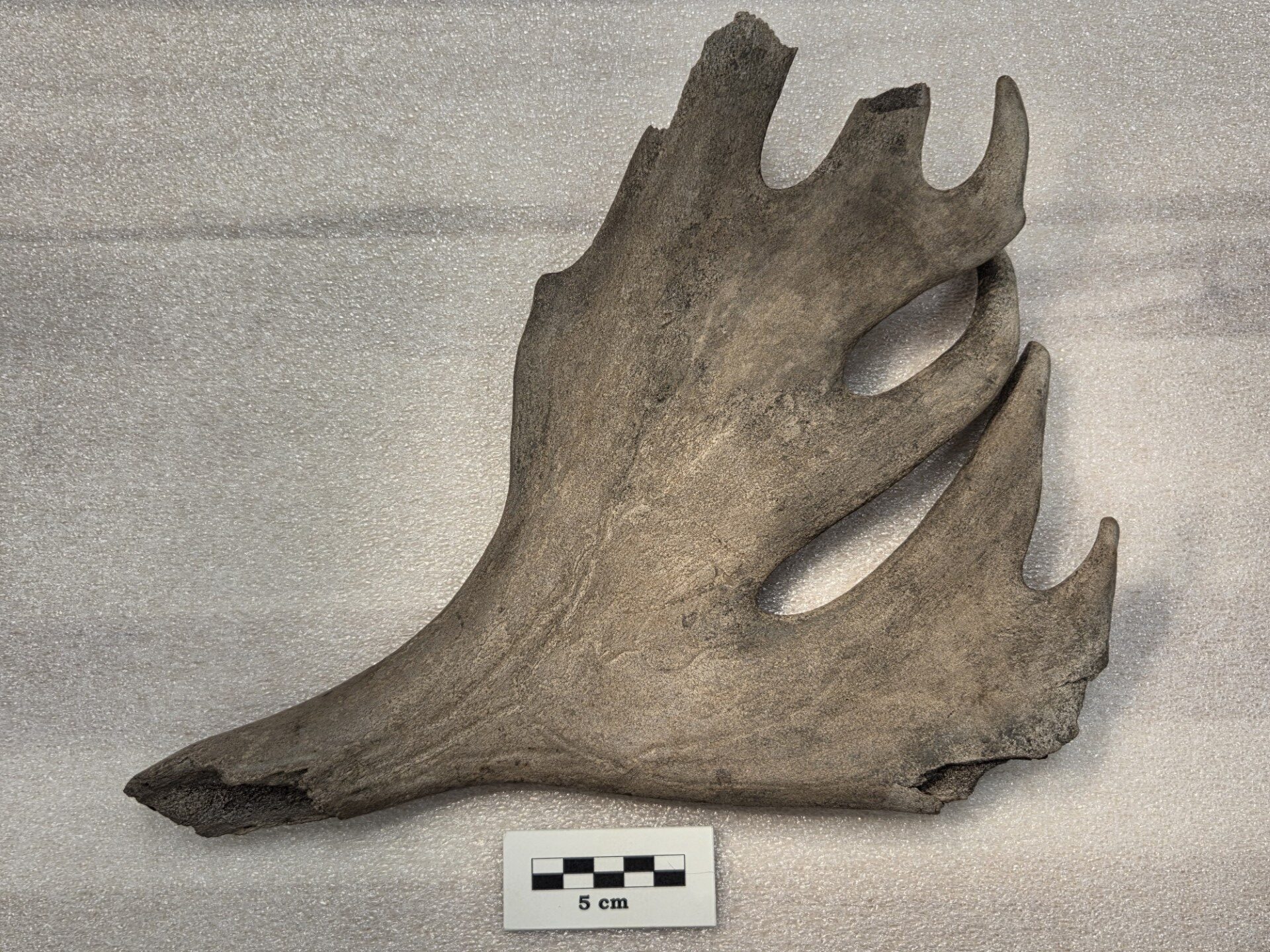
However, during the most recent Ice Age (Pleistocene epoch), which ended about 11,700 years ago, caribou lived right here in Ohio and ranged as far south as Tennessee. We know this because four examples of caribou remains have been found in Ohio counties (Erie, Huron, Richland, and Wyandot). Below is the large brow tine of a caribou found in Huron County. All four of the Ohio finds are partial antlers, which are easily recognizable as caribou. I wonder how many caribou finds, where the unique antlers weren’t recovered, have been mistaken for deer.