Second Best Cow
Posted May 22, 2026
Topics: Daily LifeMuseum Collections

By Marlise Schoeny, History Curator

"A Shorthorn Cow" by Henry Stafford, Public domain, via Wikimedia Commons

"Second Best Cow"

With thousands of objects in collections, curators are constantly learning more about the artifacts in the museum’s holdings. An artifact could grab your attention for any number of reasons. It may be bright and colorful, uniquely shaped, large and striking or, perhaps, it prompts you to ask, “Who was the first best cow?” 


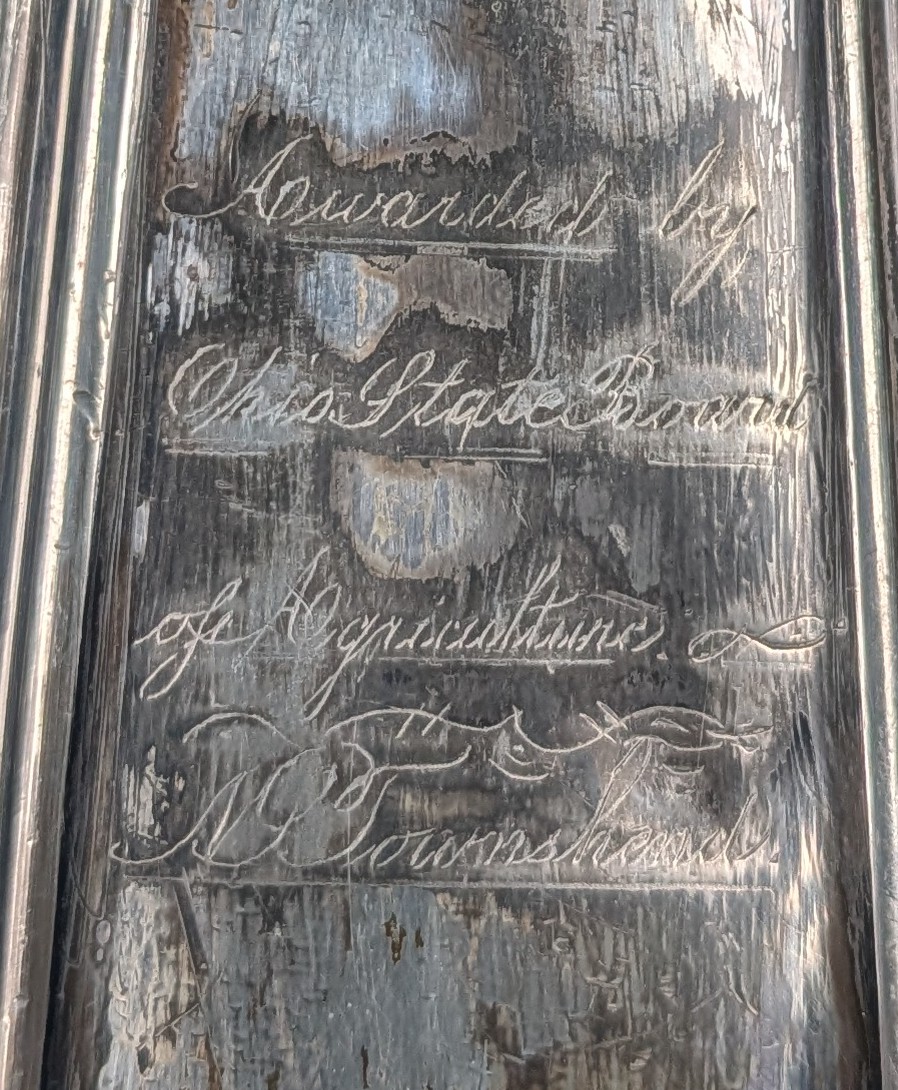
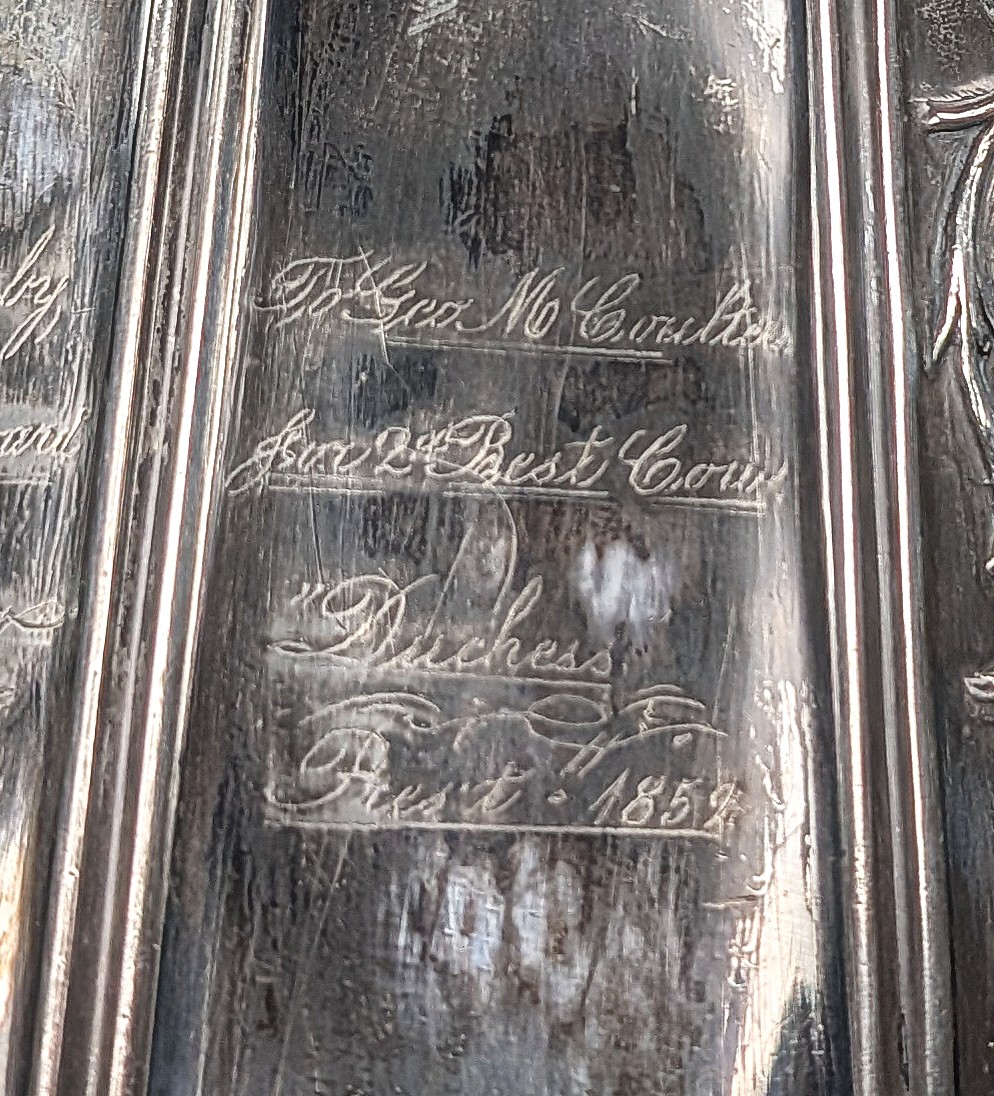
“Awarded by Ohio State Board of Agriculture. N.P. Townshend. To Geo M. Coulter for 2nd Best Cow “Duchess. Prest – 1859.” 


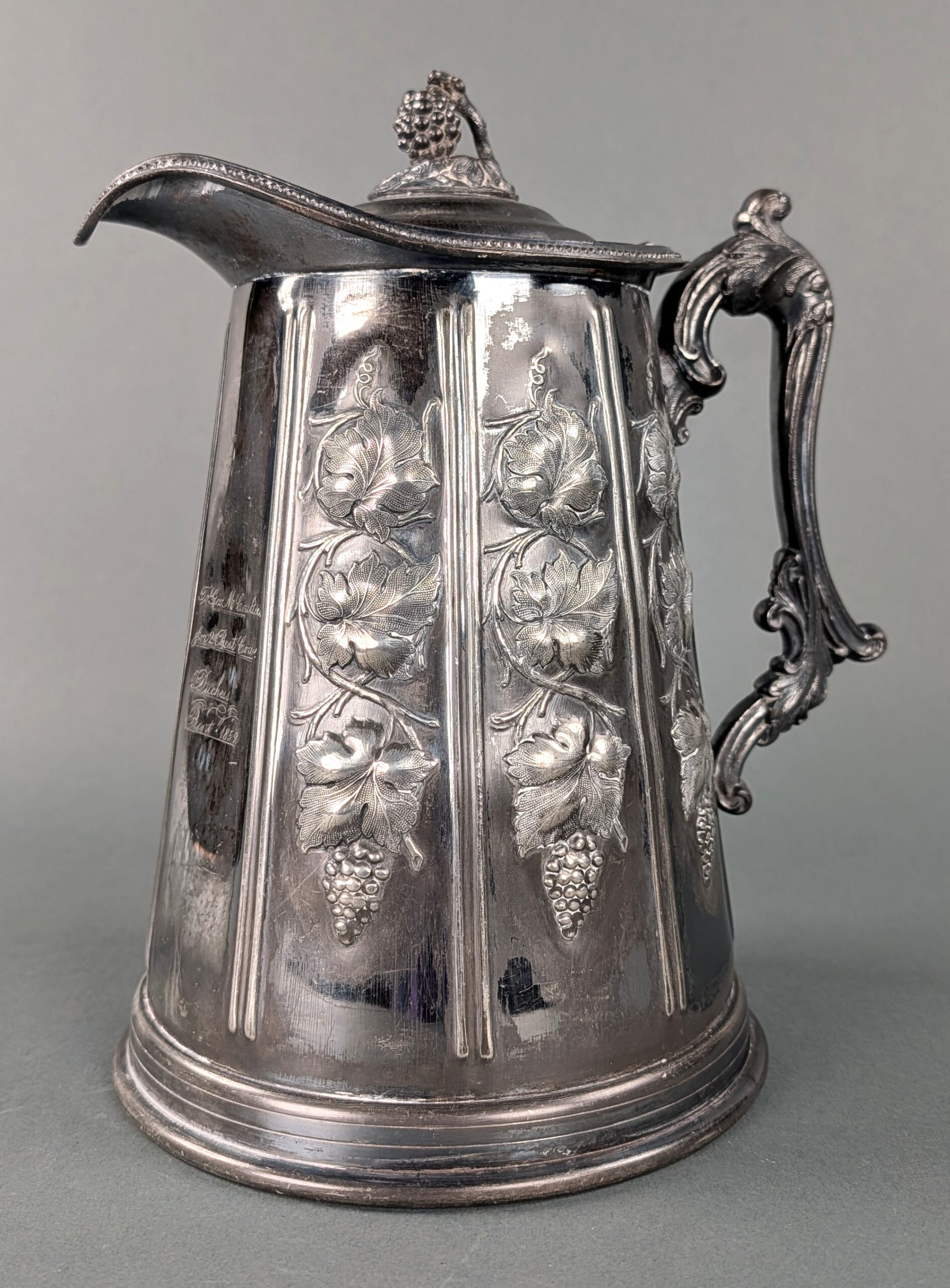
This electroplated silver pitcher was made by the Meriden Britannia Company in Meriden, Connecticut as an award for the 1859 Ohio State Fair. It bears the inscription above, spread across two sides of the pitcher. One can’t help but wonder two things, if this was the prize for second best cow, what was the prize for first and who was the first best cow? Thus began a dive into the history of the 1859 State Fair.  

Water Pitcher, H 30049

Detail of engraving, H 30049

Detail of engraving, H 30049

1859 Ohio State Fair

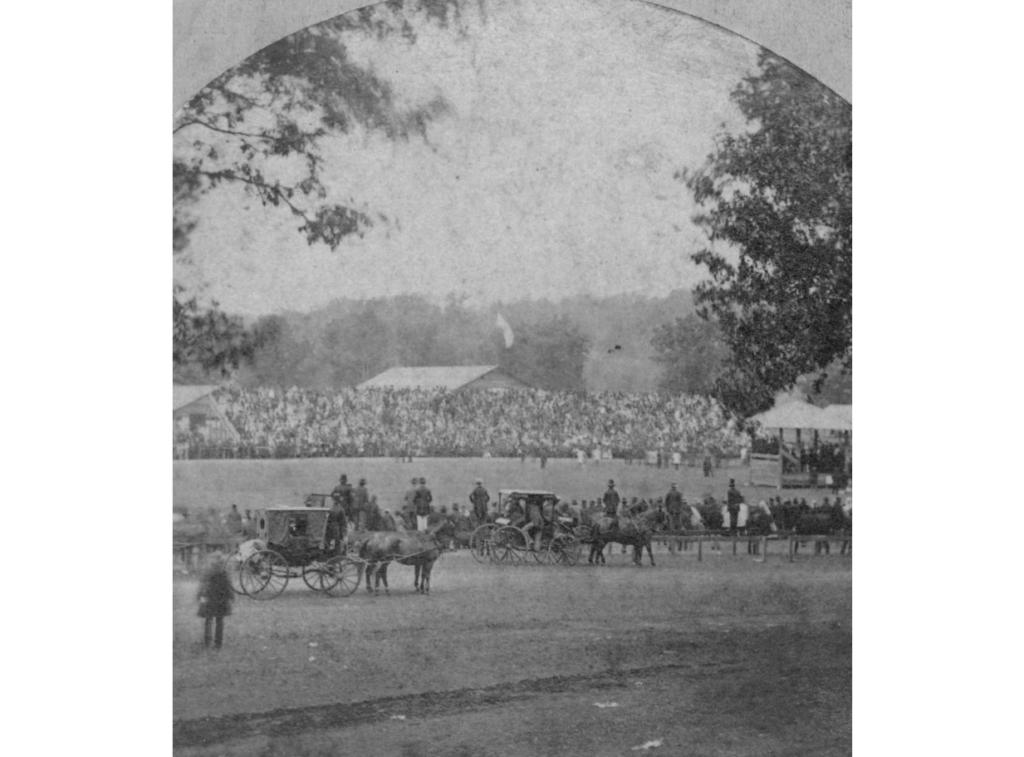
The 1859 Ohio State Fair was held in Zanesville, Ohio. The fair travelled throughout the state as transportation around Ohio could be difficult for exhibitors. Generally, most exhibitors lived near the fairgrounds. The railroads did offer special rates for exhibitors, their exhibits and fair attendees to support the fair. The first Ohio State Fair was held in Camp Washington (just east of Cincinnati, Ohio) in 1850, so the 1859 fair marked the fair’s ninth meeting and its first and only occurrence in Zanesville.  

During the early years of the fair, winners received medals, not ribbons, as awards for winning their various categories, and in some cases, silver serving ware. The Ohio History Connection has one other silver cup in addition to the pitcher featured here that was awarded in the early decades of the fair.  

Details of the 1859 state fair can be found in the minutes of the State Board of Agriculture. A report detailing the participants, winners and attendance can be found in the annual meeting minutes. In 1859, it is recorded that George M. Coulter of Reesville, Ohio, brought three Shorthorns to the Fair. His older brother, John Jr., brought one Shorthorn bull and his brother, Alfred, also brought one Shorthorn bull.

Ohio State Fair in Zanesville, Ohio, 1859 via Ohio Memory

George M. Coulter

The Coulter cattle farm was started by George’s father, John Coulter, who emigrated from Ireland in 1805, eventually settling in Clinton County. Coulter focused on raising Shorthorn cattle, a breed popular with early American settlers as they could be raised for meat and milk and could be used as a draught animal. The farm was incredibly successful with a recorded real estate value in the 1850 census of over $13,000. This figure would jump to $54,000 by 1860. In 2026, this figure roughly translates to $500,000 to $2,000,000 when adjusted for inflation. While John Jr., Alfred and George would all eventually run their own cattle farms, in 1859 they were working together on the original family farm following the passing of John Coulter Sr. in 1857.  

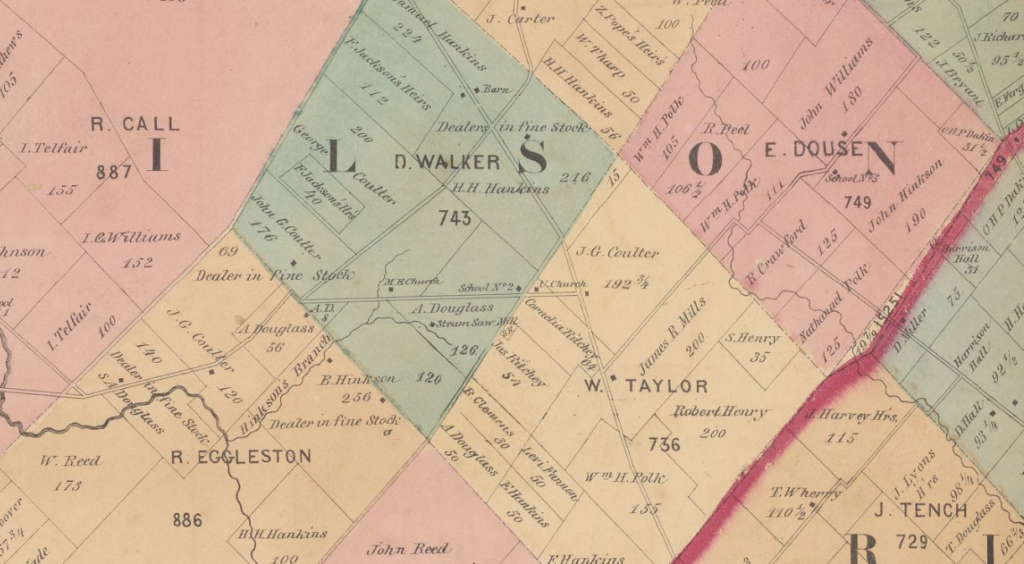
Map of Clinton County, Ohio, 1859, From the New York Public Library

The Coulter properties can be seen in this 1859 map. While still working together, John Coulter Sr. had given parcels of land over to George and John Jr. by this time. George's property is in the north corner of the land holdings. The property can be seen in the map above. George's property is directly under the "L" for Wilson Township. The J.G. Coulter property is captioned as "Dealer in Fine Stock." It is clear by the map how large and successful the Coulters were as cattle raisers.

"First Premium Cow"

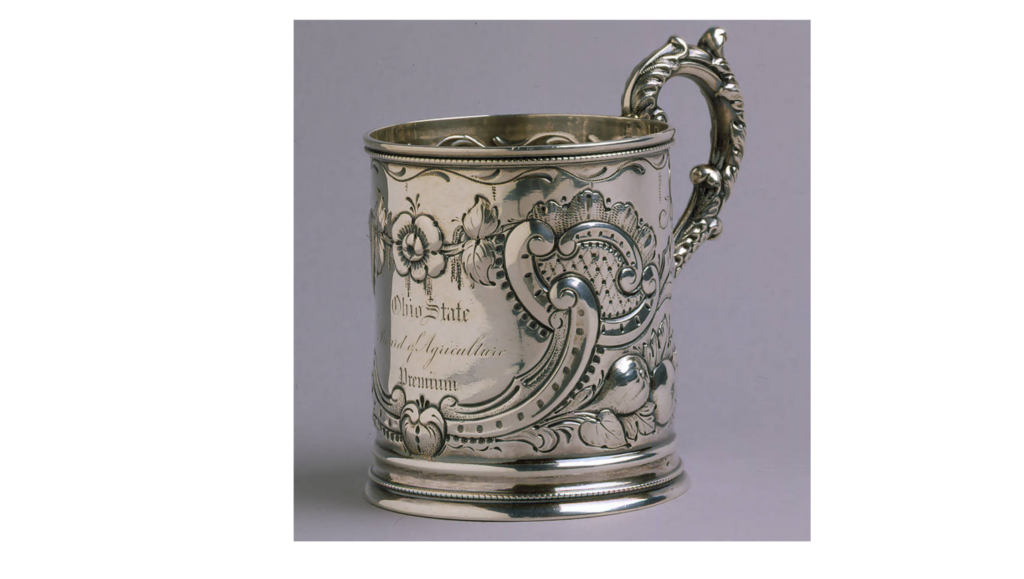
Now the moment you’ve been waiting for, who was first best cow? As reported in the minutes, “The class of two-year-olds was small, but beautiful. We awarded first premium to Lady Bonberry, owned by Wm. Lang, and the second to Duchess Second, owned by George M. Coulter.” Despite Duchess carrying a higher rank of nobility, she came second to Lady Bonberry at the 1859 state fair. Her efforts were well rewarded, however, as she received this beautiful pitcher and $15.  It is unknown what Lady Bonberry received besides $30 for winning first premium, as only the cash awards are listed in the Board of Agriculture minutes. There is only one other similar piece in the collection. A silver mug engraved with the words, "Ohio State / Board of Agriculture / Premium." It was awarded when the fair was held in Cleveland, Ohio, which means it dates from 1852 or 1856. No category for the winner is listed on the mug and the Board of Agriculture minutes list a $10 silver cup as the award for "Best Floral Exhibition by An Horticultural Society," but no winner is provided. In addition, a silver cup of $5 value is listed for "Best Steam Engine," but a winner is not listed. While we may never know what electroplated silver serving piece Lady Bonberry took home, we can comfortably assume it was somehow bigger or more impressive than this pitcher. For those of you who have become invested in Duchess and George Coulter's success, don't worry. His two-year old bull, Challenge, won first premium in his category. 

Mug, H 85038 via Ohio Memory

Learn More

Interested in learning more about Shorthorn cattle? They are raised in Ohio to this day! Check out the American Shorthorn Association to learn more about the breed and its history, or read more about the state of the breed in Ohio now at the website for the Ohio Shorthorn Breeders Association.

Our Archives & Library has many amazing resources for you to learn more about past Ohio State Fairs. Be sure to visit the Archives Wednesday through Friday for a research appointment to see these documents.

Did you ever win first premium? Are you curious to see if your artifacts could be a part of the Ohio History Connection's collection? Check out our donations page to learn more!


Subscribe to Our Blogs