Revolutionary War Veteran Spotlight: Abraham Moore
Posted December 22, 2025

Logo for America 250-Ohio with blue background, the number 250, the words America and Ohio and a red ribbon with the numbers 1776 and 2026

America 250-Ohio Presents the Revolutionary War Graves Identification Project


As we approach the 250th anniversary of American independence in 2026, America 250-Ohio and the Ohio History Connection invite you to take part in an inspiring statewide initiative: The Revolutionary War Veterans Graves Project.

In collaboration with the Ohio State Historic Preservation Office, Terracon Consultants, Inc., and local chapters of the Sons and Daughters of the American Revolution, this project seeks to identify, document, and map the final resting places of an estimated 7,000 Revolutionary War patriots buried in Ohio.

This is a unique opportunity to connect with Ohio's rich history and ensure that the sacrifices of these patriots are remembered for generations to come. Learn more about the project here or view our progress on the Live Results Dashboard.
Revolutionary War Veteran Spotlight: Abraham Moore

By Patrick Poole, Guest Blogger & Author of Black Patriots: Recovering a Lost History of the American Revolution

Among the thousands of Revolutionary War Patriots buried in Ohio, Abraham Moore of Steubenville is unique not only for being a “free man of color” but who also conducted much of his service in what is now Ohio.

In 1781 he served as a militia substitute for Augustus Moore of Fayette County, Pennsylvania, in a regiment commanded by Colonel Thomas Gaddis. Part of a brigade led by General Daniel Brodhead, they marched from Uniontown crossing the Ohio River to Mingo Bottom in what is now Jefferson County, continuing into the wilderness to the native town of Wakatomika. During a battle there, Moore was shot through the arm. The two-month expedition returned to Uniontown in July 1781.

He was likely still recovering from his wounds when the Pennsylvania militia was called up again that fall to address attacks on frontier settlements. He marched from Uniontown to the fort at Holliday’s Cove, crossing the Ohio River and following the Muskingum River until they engaged and defeated native forces responsible for the attacks. The militia then returned to Uniontown after a six-week expedition.


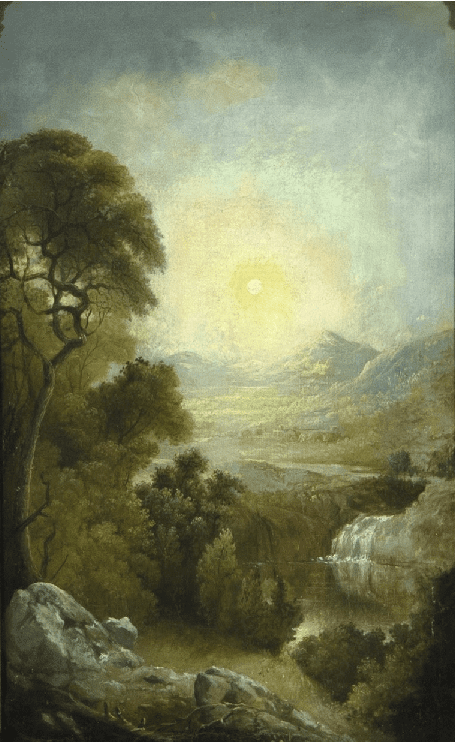
Untitled Bosworth Landscape, Sala Bosworth.
Ohio History Connection, H 24740


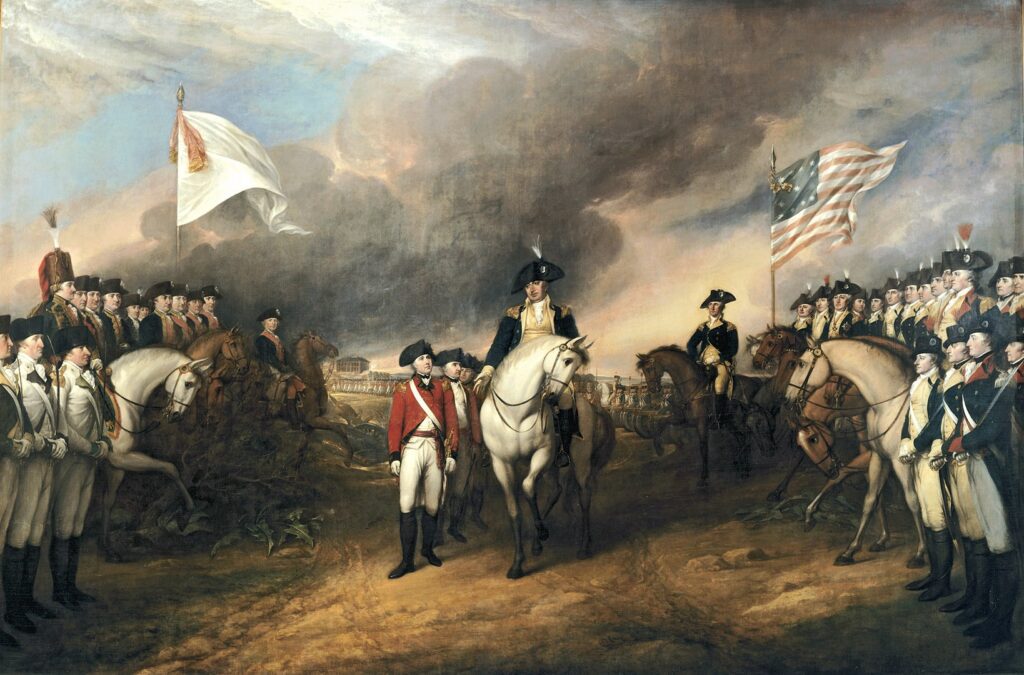
Surrender of Lord Cornwallis, John Trumbull.
Wikimedia Commons

Moore was called out again in the spring of 1782 following more attacks on settlements on Short Creek, Virginia. Pursuing the attackers across the Ohio River they travelled to the mouth of Short Creek and fought a battle near present-day Stillwater in Tuscarawas County.

The defeat and surrender of the British Army under Lord Cornwallis at Yorktown in October 1781 is considered by some as the end of the Revolutionary War, but in fact the war would continue to rage on along the frontier for at least another two years.

In the spring of 1783 – a year-and-a-half after the Patriot victory at Yorktown and as peace negotiations continued in Paris – the Pennsylvania militia was called up, and Abraham Moore once again marched out with his regiment. He was stationed at the blockhouse at Beech Bottom (modern day Brooke County, West Virginia) acting as scouts along the Ohio River until they marched home and were discharged after five months of service.


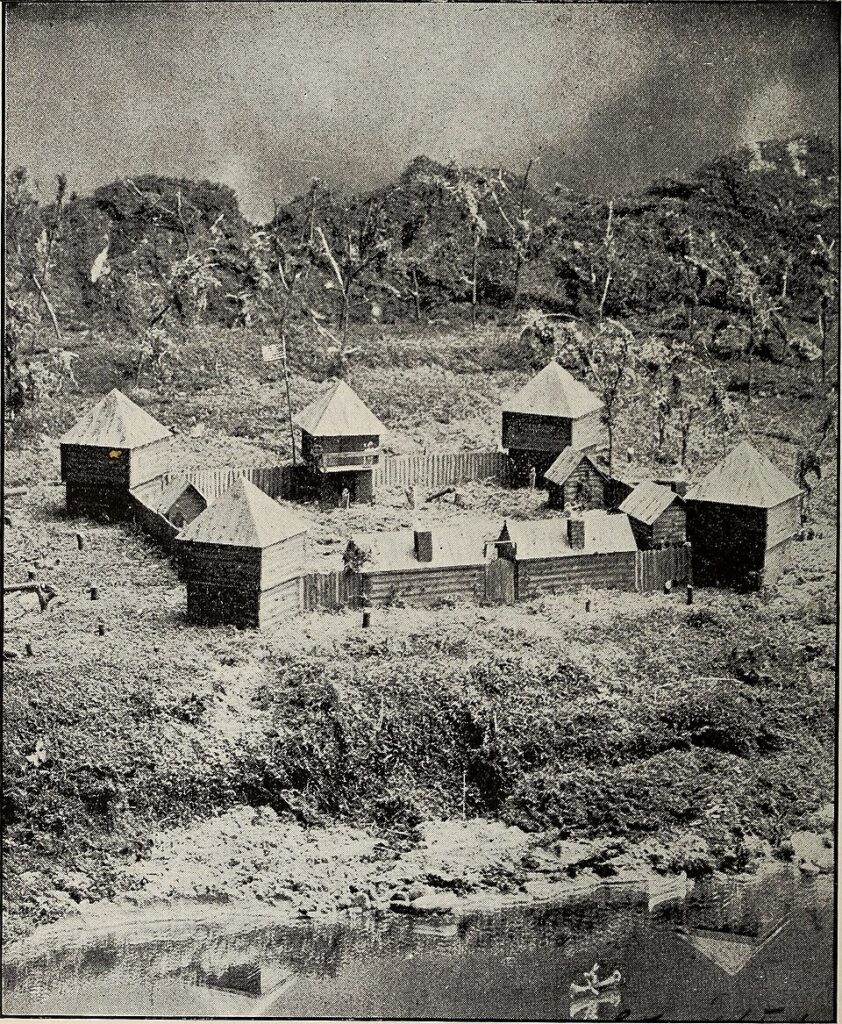
After the war, Moore lived in Washington County, Pennsylvania, until moving to Steubenville in 1790, just four years after the construction of Fort Steuben to protect surveyors plotting out land west of the Ohio River.

Much of Abraham Moore’s life as a founding father of the State of Ohio is unknown, but references to his role in the community are related in various local histories, such as the statement of one Eli McFeely, who records his arrival to the area:

"Arriving in Steubenville from Pittsburgh by keelboat with my father and family on Saturday, October 22, 1814, after a pleasant voyage of seven days, we were met by ‘uncle’ Abe Moore (colored) with his cart, who removed our household goods to the west end of Market Street."


Dioramic reconstruction of Fort Steuben, C.P. Filson.
Wikimedia Commons

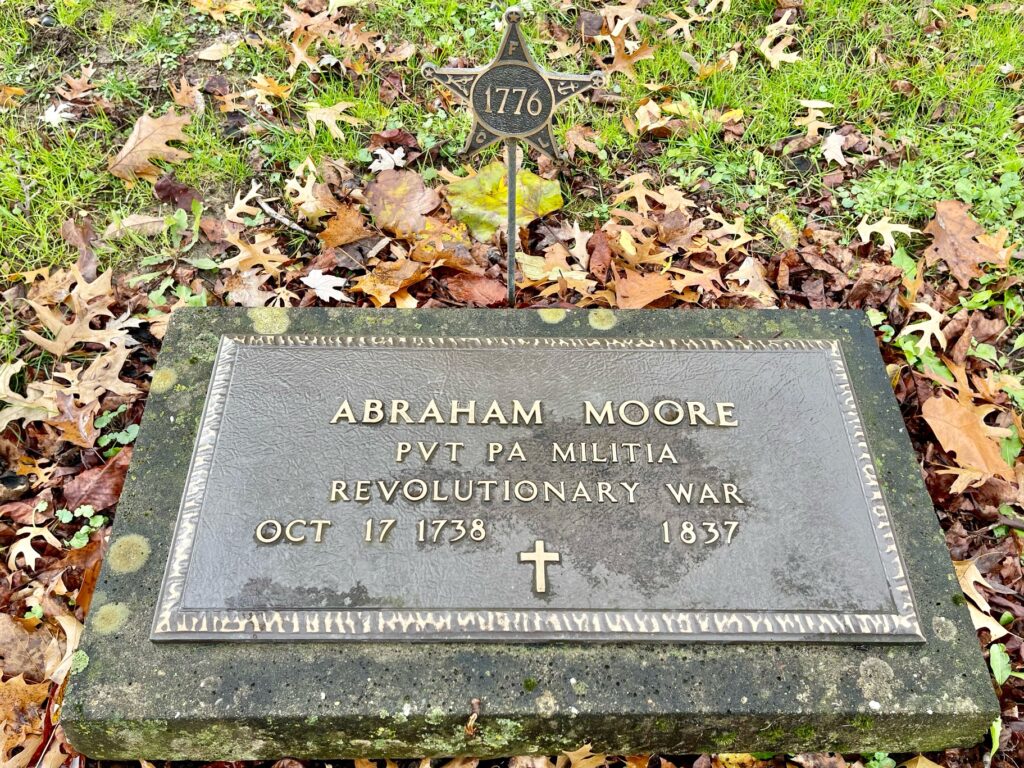
Abraham Moore's gravemarker, located in Section Q of Union Cemetery, Steubenville.
Patrick S. Poole

On May 17, 1833, Moore appeared in Jefferson County court to make a declaration of his nearly nine months active service in the Revolutionary War in the Pennsylvania militia in support of his application for a soldier’s pension. His pension application accepted, he lived in Steubenville until his death in 1837. He is buried in Section Q of Union Cemetery in Steubenville, and his grave bears a military marker noting his Revolutionary War service.

Abraham Moore is one of nearly twenty known Black Patriots – soldiers and sailors alike – who made their way to Ohio after their service in the Revolutionary War. Several of these veterans, including Moses Nickens of Ross, Madison and Franklin Counties, would later volunteer in the War of 1812 to once again defend American independence. These Americans are the foundation of an ongoing Black military heritage older than the Buckeye State itself.


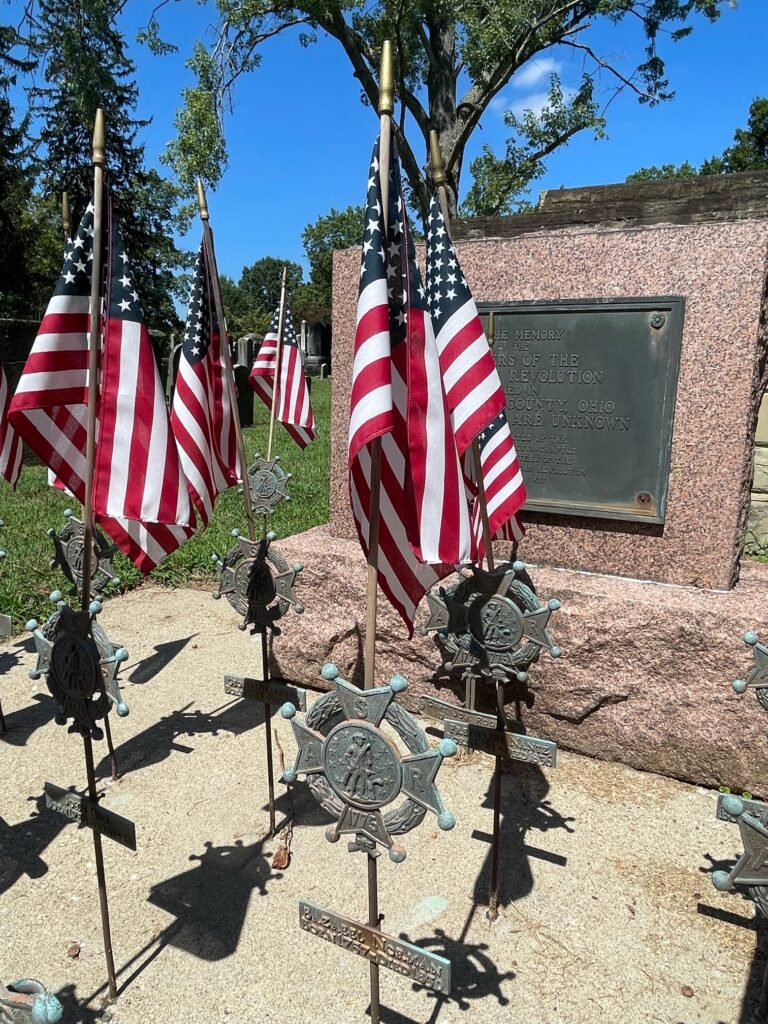
Bazaleel Norman served four years in the Seventh Maryland Regiment, fighting at Monmouth, Camden, Cowpens, Guilford Court House, and Eutaw Springs. After the war he moved to Marietta, which was founded by former Revolutionary War officers as the first permanent American settlement in the Northwest Territory. Three of his descendants died in service during the Civil War: Henry Norman served in the West Virginia cavalry and died as a prisoner of war at the notorious Confederate prison in Andersonville; Azariah Norman died of wounds and is likely buried in an unknown grave in Arlington National Cemetery; Corporal Horace Norman died on April 24, 1864, and is buried at Hampton National Cemetery.

Bazaleel Norman’s great-great-grandson Henry A. Norman graduated in one of the earliest classes of the flight school at the Tuskegee Institute, serving in both World War II and Korea, and retiring from the U.S. Air Force as a major. Bazaleel died in July 1830, his obituary appearing in the local paper and noting his Revolutionary War service. His final resting place is unknown, but is remembered at Mound Cemetery in Marietta.


Bazaleel Norman's service marker, located in Mound Cemetery, Marietta.
Patrick S. Poole.


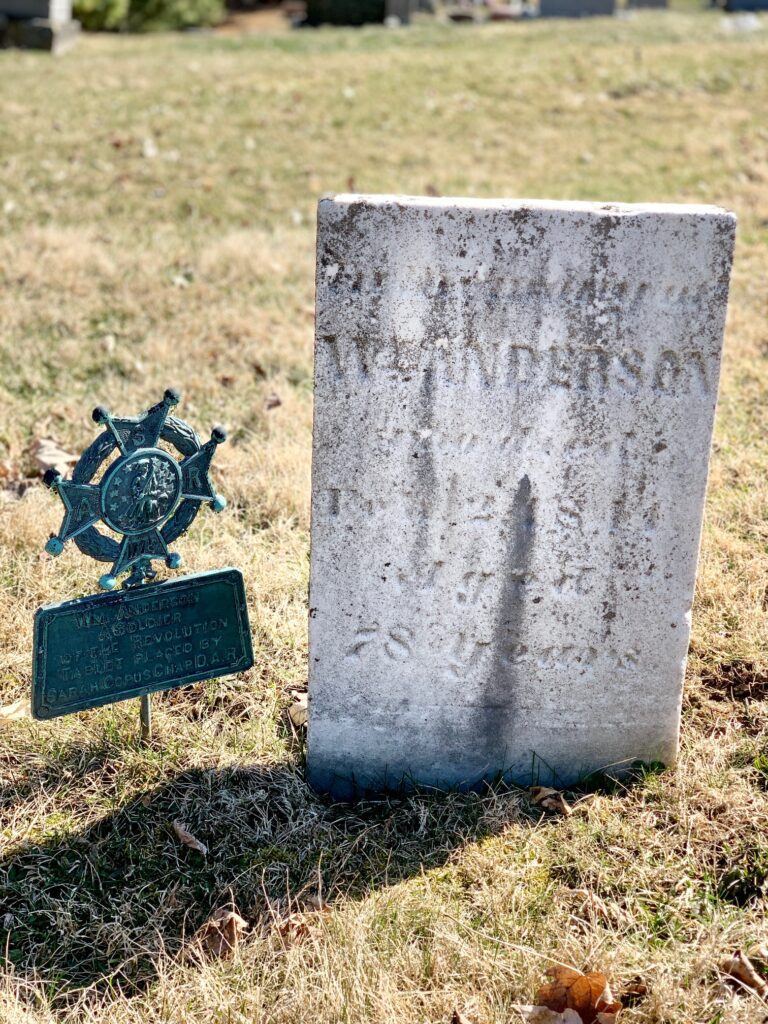
Headstone of William Anderson, located in Ashland Cemetery, Ashland, Ohio.
Patrick S. Poole


William Anderson also served in the Maryland line of the Continental Army, and at the Siege of Yorktown, was assigned to the artillery. During the campaign he was severely wounded in the thigh and was left for dead. Discovered to still be alive by a French officer who was able to get him to medical care, he survived the war. The French officer that found him, Captain Jeremiah Collins, later swore an affidavit in court in support of Anderson’s pension claim, but was rejected for insufficient evidence. William Anderson is buried in Ashland Cemetery, Ashland, Ohio.


Abraham Moore, Bazaleel Norman, and William Anderson are just three of the estimated 5,000-7,000 Black Patriot soldiers, sailors, and marines that served in the American Revolution. These three veterans, and thousands of others, chose to make Ohio their home. The ongoing Revolutionary War Graves Identification Project sponsored by the America 250-Ohio Commission and the Ohio History Connection is an important effort to remember and honor our Buckeye Patriots.


Cover image of Patrick S. Poole's book entitled Black Patriots.


Patrick Poole is a resident of Central Ohio and the author of “Black Patriots: Recovering a Lost History of the American Revolution,” and the forthcoming “Rocking the Cradle of Revolution: Women in the Fight for American Independence.”
Subscribe to Our Blogs