


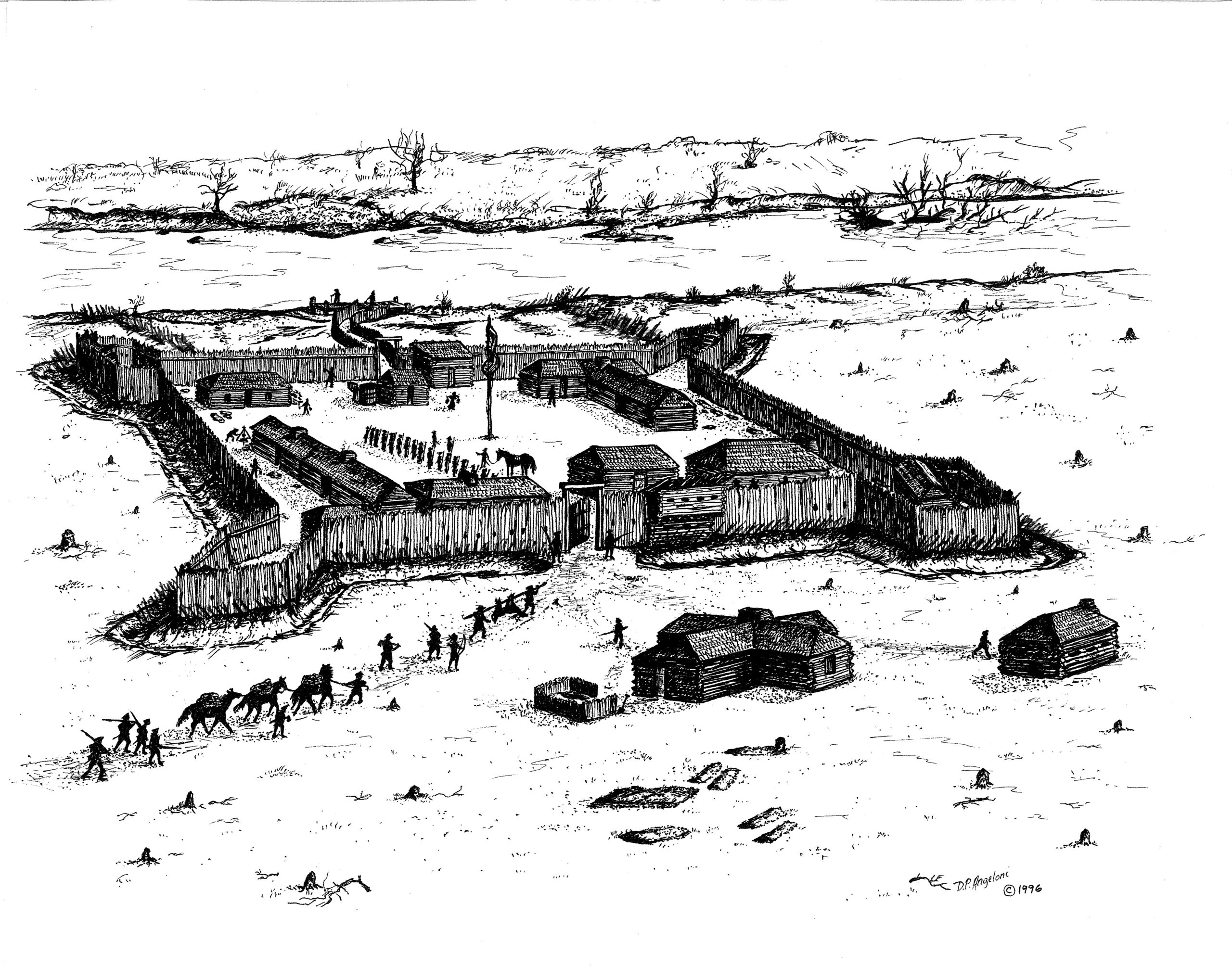
Fort Laurens was constructed on the banks of the Tuscarawas River (referred to in the period as the Muskingum River) by an expedition led by General Lachlan MacIntosh in November of 1778. The fort was a part of a larger plan to establish a line of forts in preparation for a campaign across northern Ohio to neutralize Native American allies of the British around what is now Sandusky, Ohio, and to provide a supply point for future campaigns against the British stronghold at Detroit, Michigan.
Using troops from the 8th Pennsylvania Regiment, the 13th Virginia Regiment, Virginia militiamen, and a small group of dragoons (mounted troops that dismounted to fight as infantry rather than fighting from horseback as cavalry would), McIntosh followed the Great Trail west, using the same route that General Henry Bouquet followed fourteen years earlier during the later stages of the French and Indian War (1754-1763). In November 1778, McLachlan selected a site along the west bank of the Tuscarawas in a broad river valley, in the same vicinity that Bouquet had ordered fortified storehouses to be built before continuing further south.
Construction of the American fort began on November 18th, 1778, most of it was completed in about ten days. Fort Laurens, as constructed by an experienced French military engineer, represents an amalgam of 18th century European fortifications with the practical limitations imposed by the isolated location and the American frontier. Typical European star forts were intended as strong points, a defense against European mass sieges involving artillery and large troop concentrations. The adaption of fortifications to the American frontier turned the fort into a defensible supply depot, especially against an opponent that lacked artillery and relied largely on guerilla tactics.
Fort Laurens is typical of this mixed ideal. Rather than stone, the walls were constructed of timber and the European arrangement of a glacis/moat/rampart earthworks is distilled down to a ditch in front of the wooden palisade, the excavated soil packed around the base of the timbers to provide additional strength. European style bastions at each corner of the fort provided unobstructed fields of fire to dissuade attackers approaching the fort’s wall. On December 9th, McIntosh departed the fort, leaving a force of 150 troops to continue working on the fort throughout the winter and spring, when his campaign against the Native villages at Sandusky could be resumed. The rest of the troops returned to Fort McIntosh and Fort Pitt for the winter.
The garrison force at Fort Laurens faced a difficult winter, enduring an ambush by Native American forces that was followed by a ruse that made it appear their forces were far more numerous. Believing they were heavily outnumbered, American soldiers remained within the fort, facing dwindling supplies, unwilling to venture out to hunt or gather food.
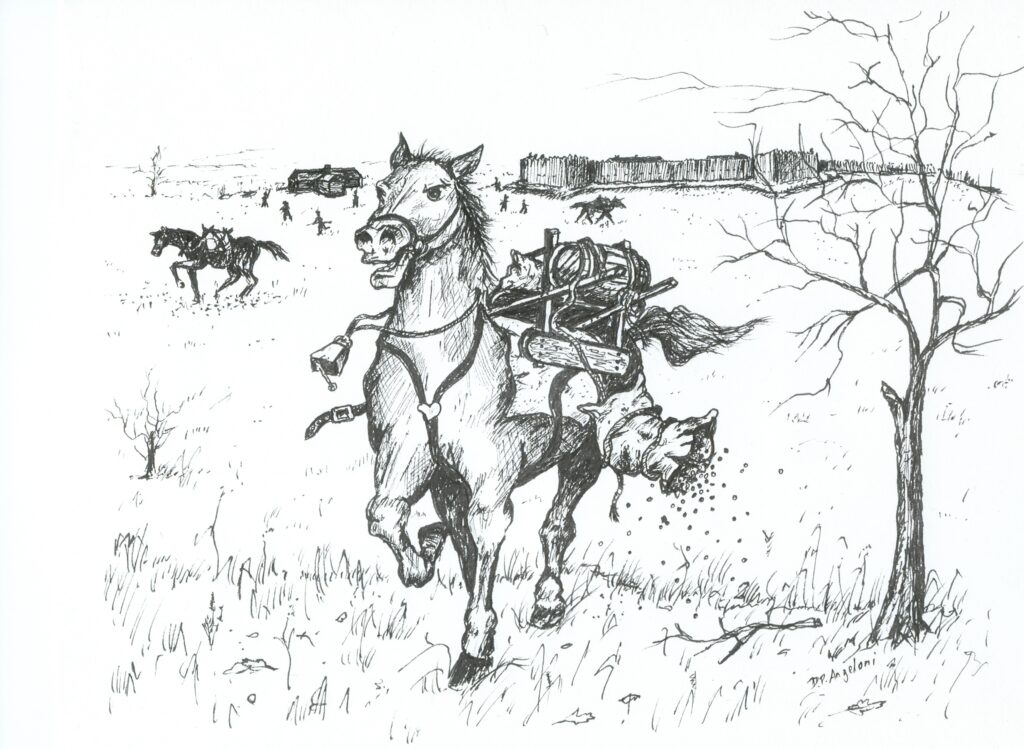
Drawing by Doug Angeloni
In March, General McIntosh led a relief column, but the defender’s musket salute frightened the packhorses, causing them to bolt and scatter, losing most of the supplies. With the loss, McIntosh abandoned the plans for his western campaign and, after garrisoning the fort with fresh troops, returned east. By August, strategic plans for the Continental Army shifted to the point where Fort Laurens was no longer seen as necessary and the garrison returned to Fort Pitt, abandoning the area.
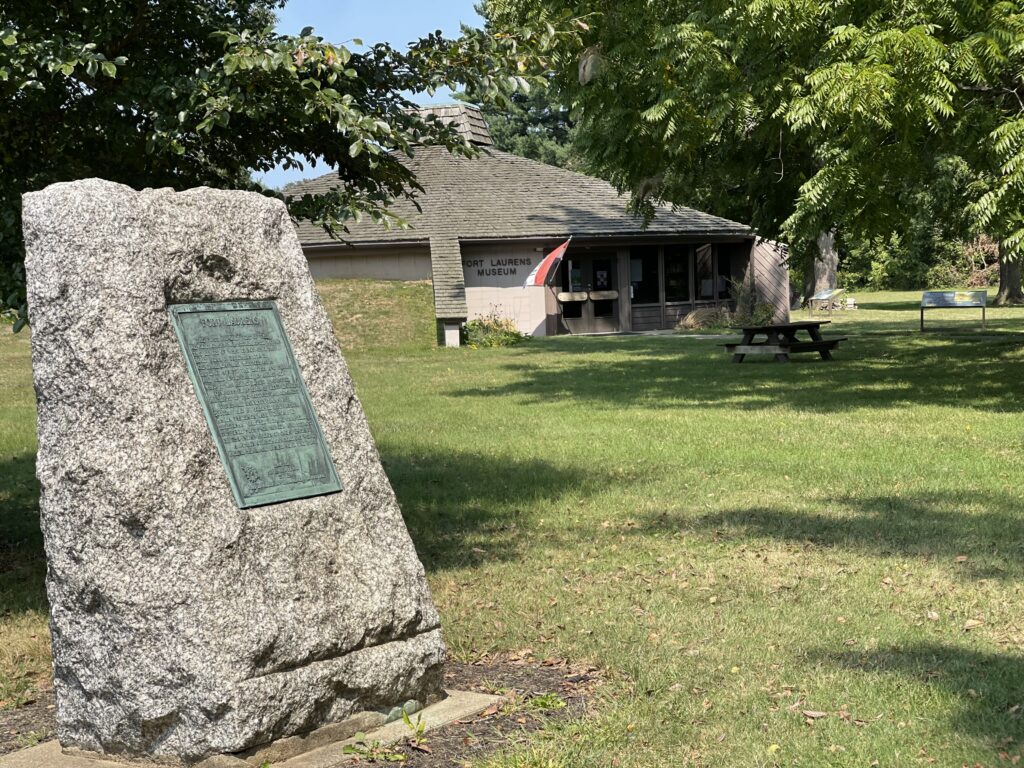
In 1832, the Ohio-Erie Canal was constructed along the east side of the now demolished fort. The cut for the canal removed the entirety of the eastern boundary, whether walls or reinforced structures, and largely destroyed any traces of the northeast and southeast bastions. The Gibler family purchased the area in 1853 and leveled the ground for agricultural production, removing most traces of the fort. By 1917, historians generated enough interest in the fort that the State of Ohio purchased the site and established a park with the goal of eventually rebuilding a replica of the fort.
Since the establishment of the State Memorial there have been eight archaeological research projects conducted at Fort Laurens.