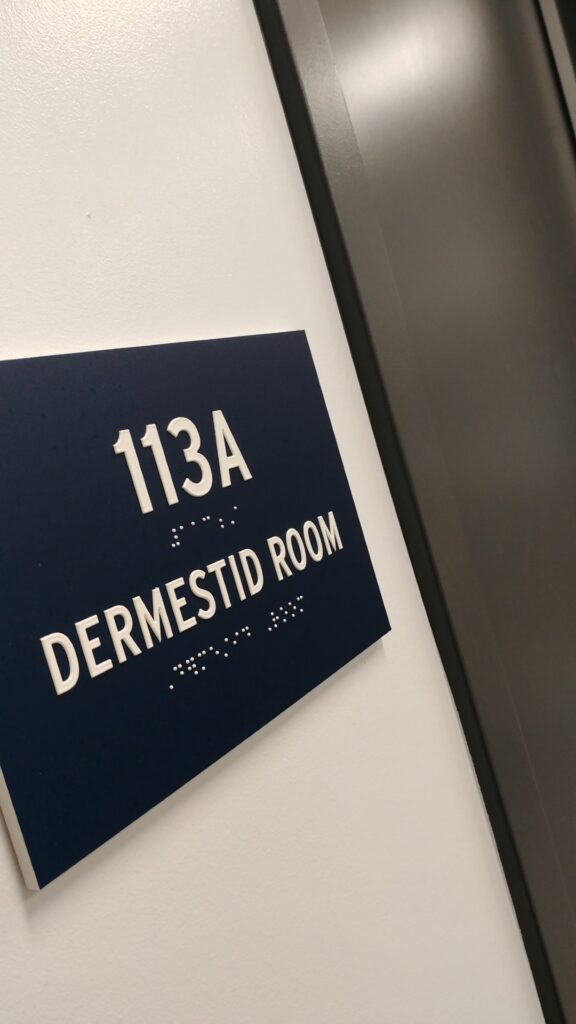
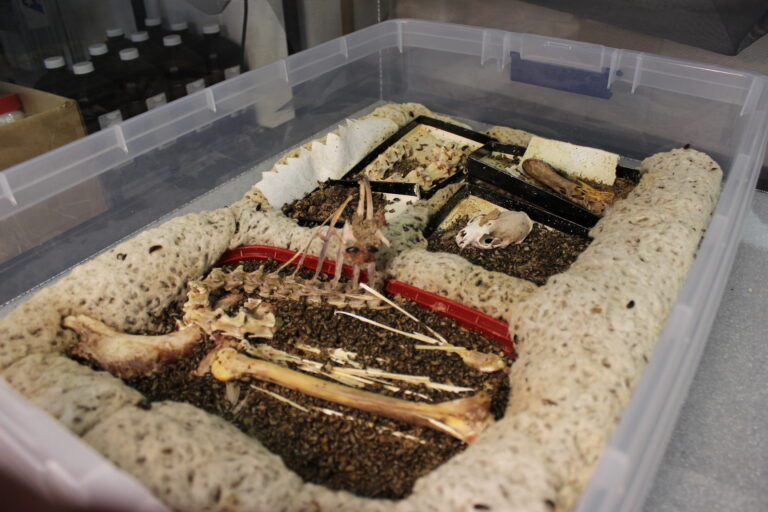
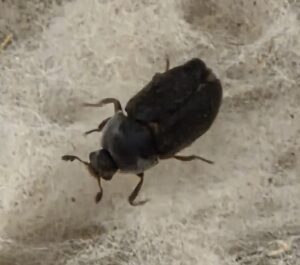
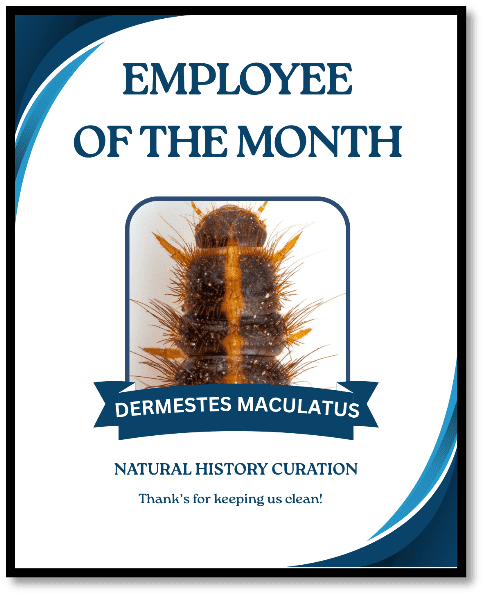
They may not be scary, but they are incredibly helpful! Flesh-eating beetles are members of the beetle family Dermestidae, commonly known as Skin Beetles or Carpet Beetles. The species we employ at the Ohio History Connection is the Hide Beetle, Dermestes maculatus, which is found worldwide - on every continent except Antarctica. Adult hide beetles are only about ¼ - 1/2 inch in length and the larvae can be up to about ¾ inch.
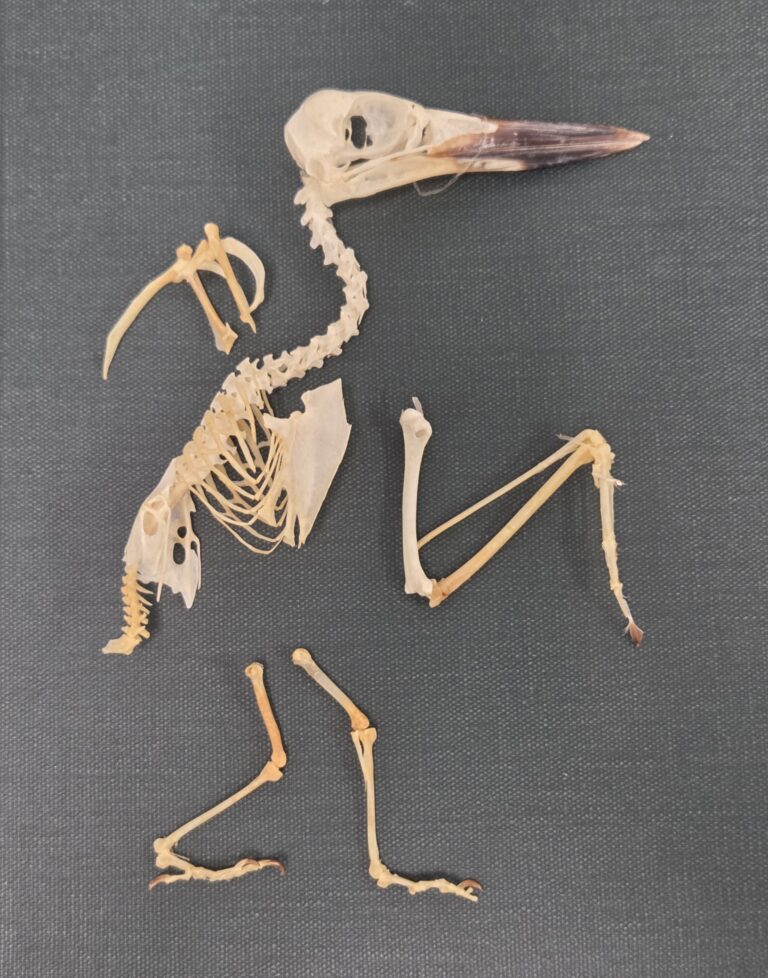
For us, the real workhorses are the larvae, not the adults. We use the larvae to clean animal skeletons for our comparative skeletal collection. After we remove the hide, organs, and major muscles of a specimen, we introduce them into the beetle colony. When we’re preparing delicate specimens like bird skulls or small bones we want to keep together, we need to be careful and remove the specimen at the appropriate time. Once the soft tissue is gone the larvae will sometimes eat the thin bones of the skull or the cartilage between small bones, like in the feet, causing them to fall apart. The larvae consume the remaining soft tissue, leaving us with a nice, mostly-clean skeleton – saving staff hours in the tedious (and smelly) job of preparing skeletons.
Outside the lab, dermestid beetles play an important role in nature. The beetles arrive after fly larvae (maggots) remove most of the tissue from a deceased animal. Then, the dermestids complete the final cleaning, consuming the dried bits and pieces of tissue remaining on the skeleton.