By Becky Odom, History Curator & Curatorial Department Manager
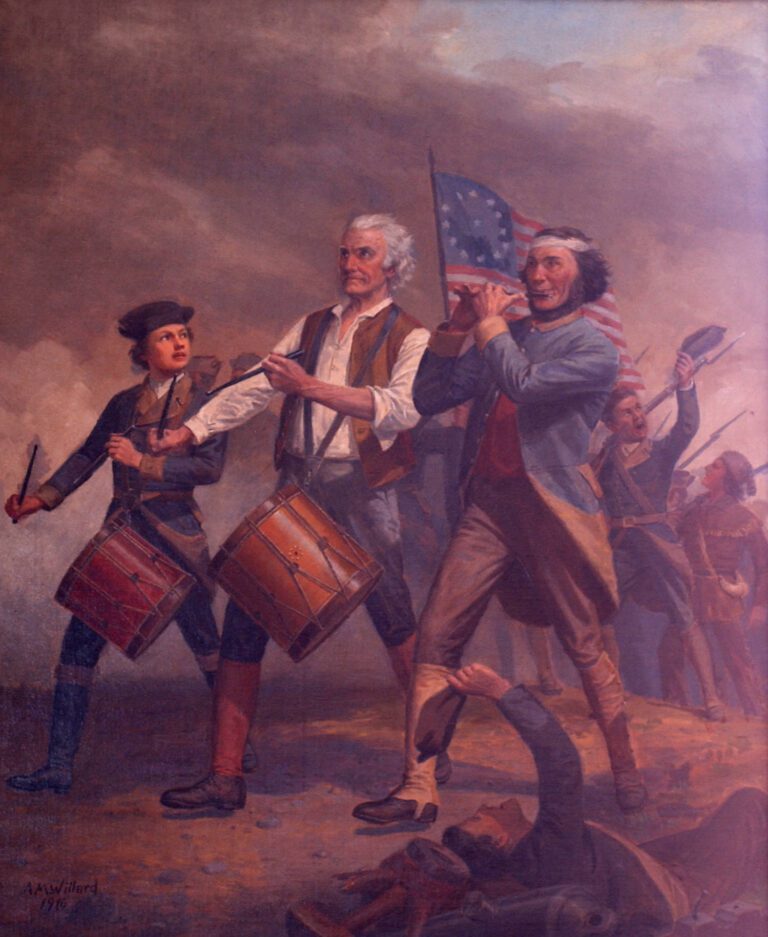
“Spirit of ’76.” Oil on canvas painting by Archibald Willard, 1891. Ohio History Connection, H 60254.
Ohio artist Archibald Willard (1836-1918) achieved national fame with his patriotic painting, "Spirit of ’76." The enormous ten-foot-tall painting of two drummers and a fife player marching through a battle during the American Revolution was exhibited at the 1876 Centennial Exposition in Philadelphia and widely reproduced at the time. The painting experienced a resurgence of popularity 100 years later as imagery on products and advertising during the nation’s bicentennial. Who was the artist behind this multi-generational image of patriotism?
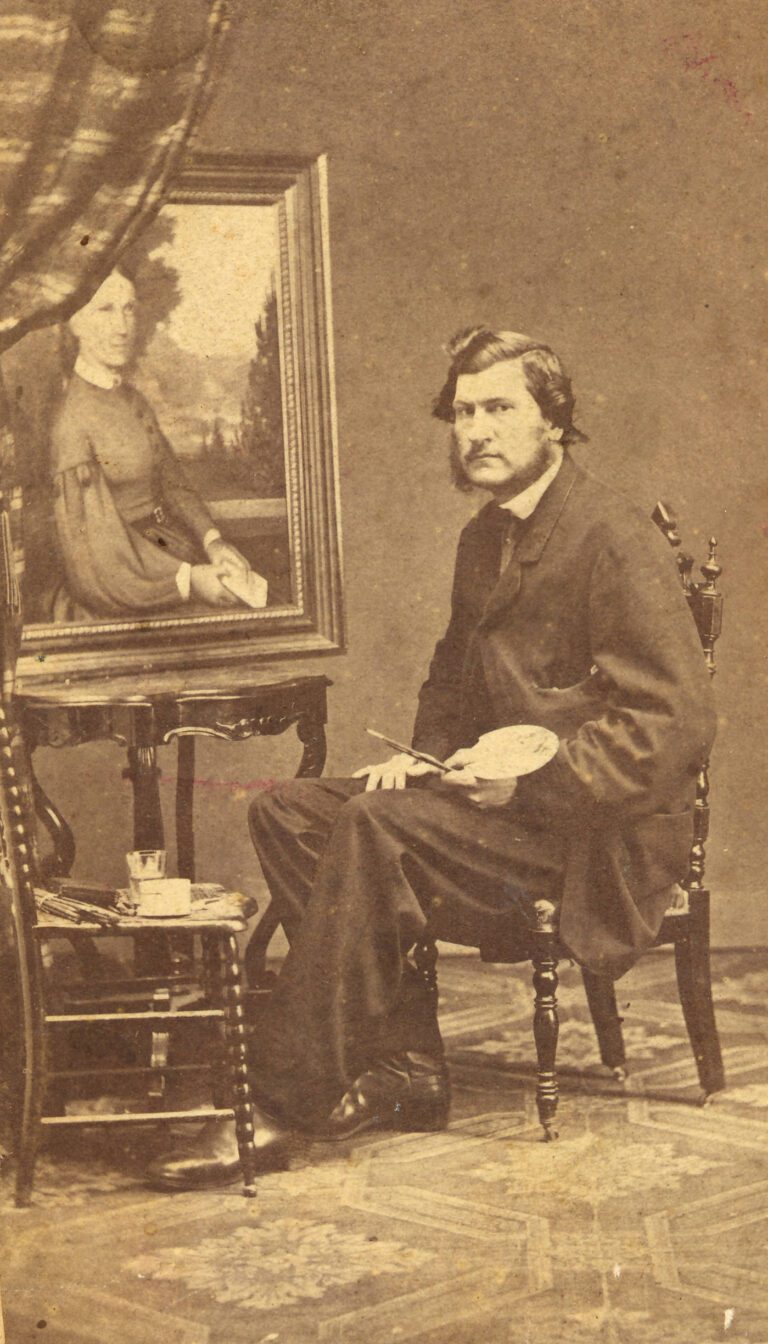
Archibald Willard at work, 1880-1889. Ohio History Connection, SC 4183.
His Early Years
Archibald Willard was born in Bedford, Ohio, in 1836, where he taught himself to draw and paint. He later gained experience and training as an artist by painting wagons, carriages, and furniture as a young man after moving to Wellington, Ohio.
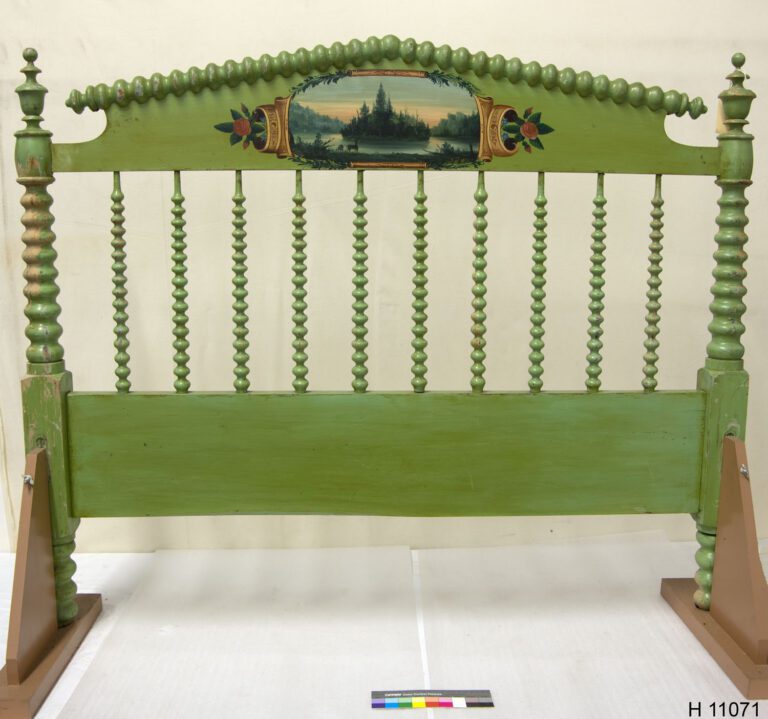
In the 1850s, Willard decorated wagons and carriages at Edward S. Tripp’s carriage works and painted landscapes and floral designs on furniture made by the nearby A. G. Couch Cabinet Company. This work provided Willard with ample opportunities to further develop his technique.
Painted footboard, Archibald Willard for the A. G. Couch Company, Wellington, Ohio, circa 1857. Ohio History Connection, H 11071.
Early Art
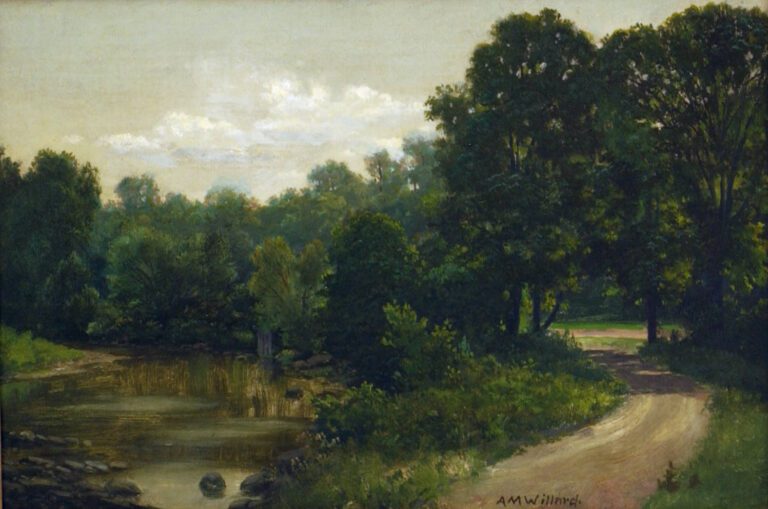
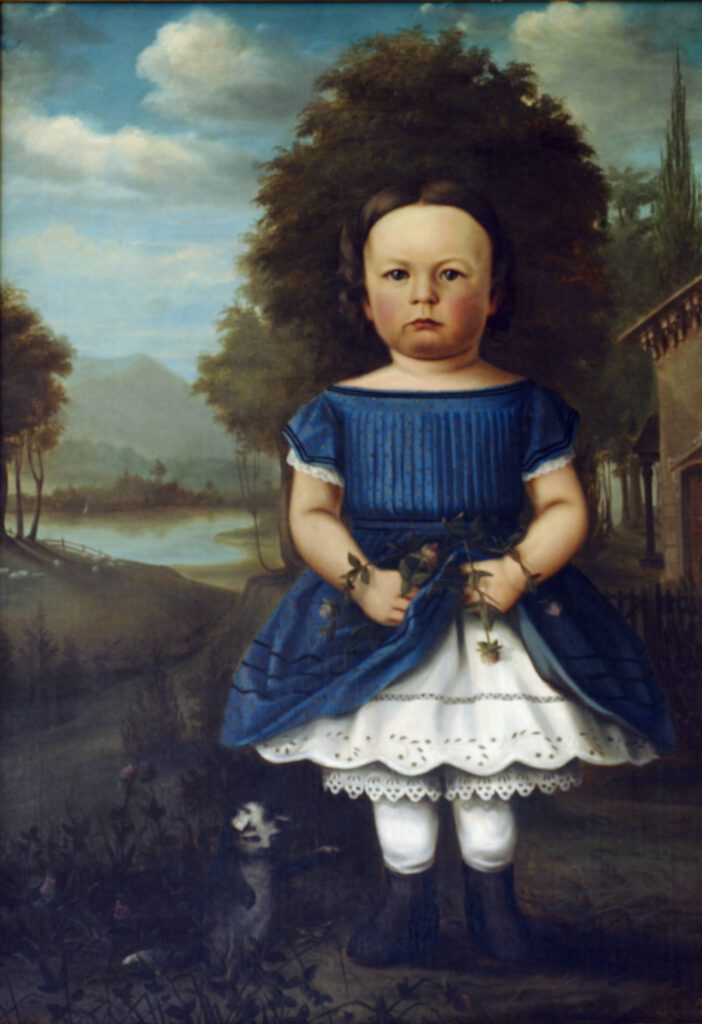
Willard’s extant works indicate he painted in two different styles early in his career: realism and folk art. He employed realism to create accurate, detailed paintings of the town of Wellington and the surrounding area southwest of Cleveland. His portraits, on the other hand, tend to incorporate the bold colors lack of traditional perspective common to folk art.
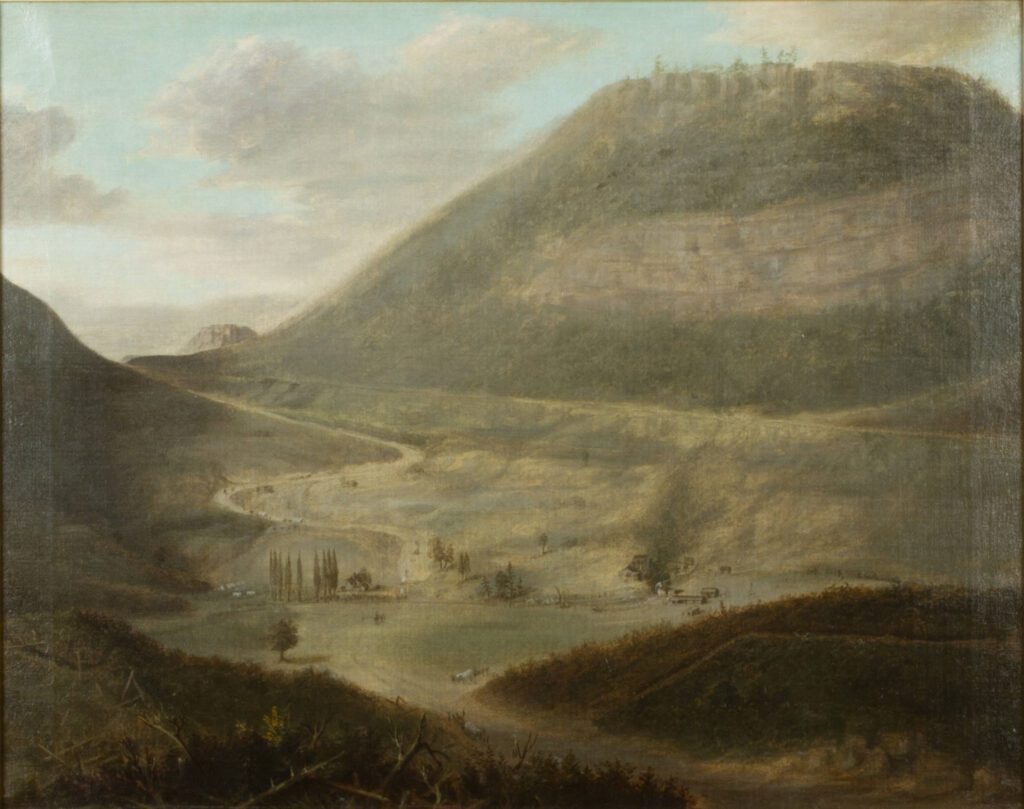
Landscape oil on canvas painting by Archibald Willard, 1860-1870. Herrick Memorial Library via Ohio Memory.
“Blue Girl.” Oil on canvas painting by Archibald Willard, 1860. Herrick Memorial Library via Ohio Memory.
In addition to painting his hometown, Willard’s early artwork also incorporated places from his military service. Willard enlisted in the 86th Ohio Volunteer Infantry during the American Civil War, serving a total of two years between 1862 and 1864. He sketched his surroundings, and later turned these drawings into paintings. He likely created this painting from sketches he made when his regiment helped to capture the Cumberland Gap in Tennessee.
“Cumberland Gap.” Oil on canvas painting by Archibald Willard, circa 1868. Ohio History Collection, H 4286.
First Success
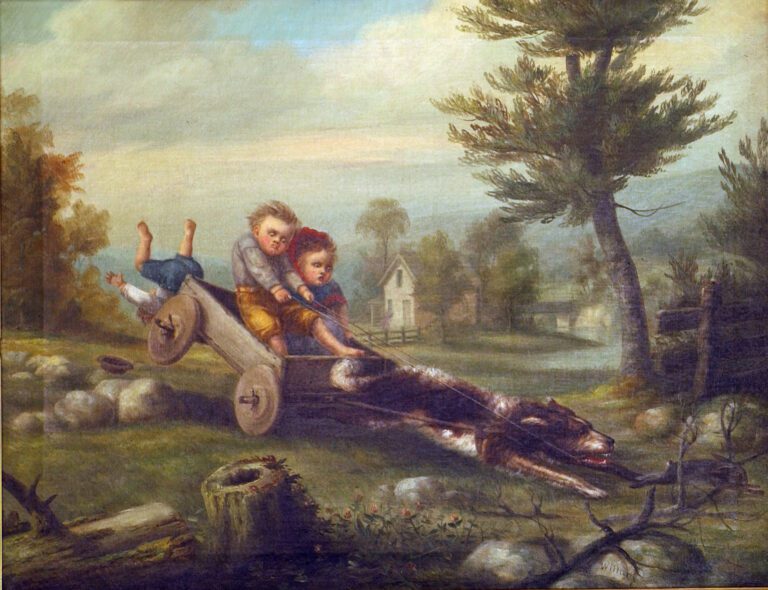
Willard’s comical depictions of his children became his first success. In 1872, Willard sent two paintings to Cleveland photographer and printer James F. Ryder. The humorous paintings, titled "Pluck" and "Pluck II," depict children’s antics with the family dog. Ryder hung the paintings in his shop window and sold many chromolithographs of these and other comical works.
Following his initial success, Willard traveled to New York to continue his artistic training. He studied under at least one notable Ohio artist, Joseph Oriel Eaton. By 1875, Willard was living in Cleveland as a full-time artist.
“Pluck.” Oil on canvas painting by Archibald Willard, 1872. Herrick Memorial Library via Ohio Memory.
What is Chromolithography?
Chromolithography is a method for making multi-color prints that democratized art in the nineteenth century by enabling high-quality, low-cost reproductions of paintings.
Spirit of ‘76
Encouraged by Ryder and his initial commercial success, Willard undertook what would become his most famous work, "Spirit of ‘76." Originally titled "Yankee Doodle," the painting was intended to be a humorous piece. But Willard’s strong patriotic feelings led him to paint what became a symbol of the courage, patriotism, and determination of the American Revolution.
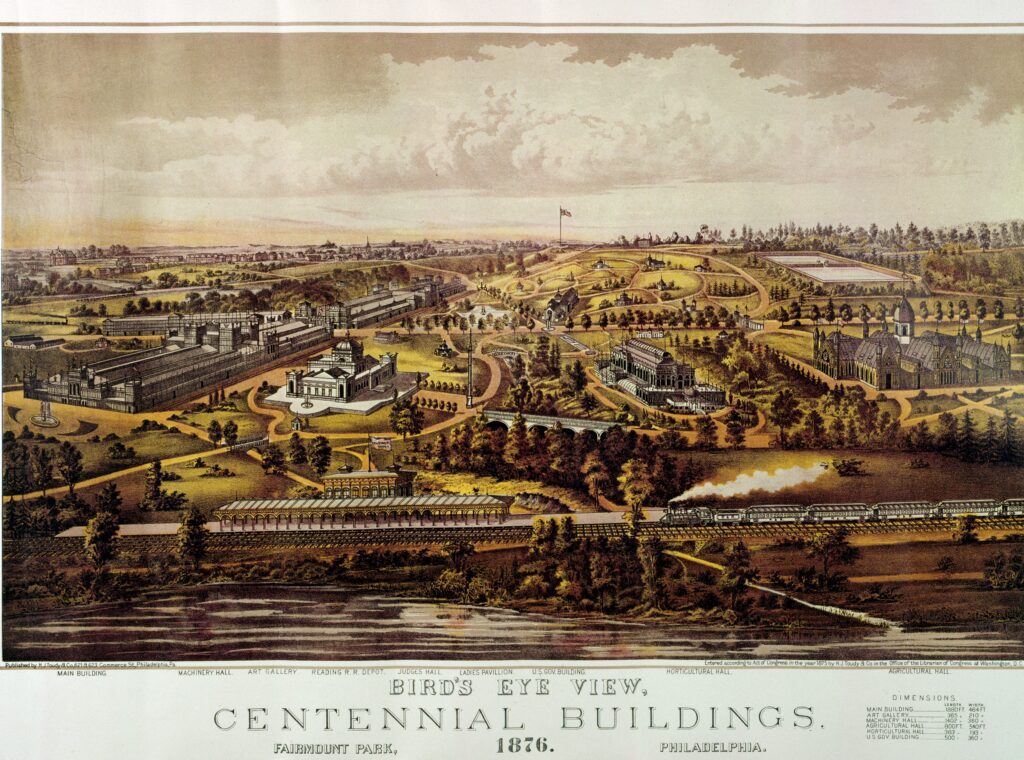
The painting garnered attention while exhibited at the 1876 Centennial Exposition in Philadelphia. Art critics dismissed the painting as nothing more than a cartoon. But, thanks to Ryder’s skillful marketing campaign, audiences turned out in huge numbers to see the original painting and purchase inexpensive color prints to hang in their own homes.
After the Exposition concluded, “Spirit of ‘76” went on a national tour, selling out crowds in many cities from Boston to San Francisco. Demand for the painting was so great that Willard created at least four copies, one of which is in the Ohio History Connection collections.
Poster for the U.S. Centennial Exposition, 1876. Courtesy of the Library of Congress.
The Aftermath
Willard’s patriotic painting vaulted him to national fame, but he wasn’t able to maintain his success. Ryder continued to sell prints of Willard’s artwork, but sales eventually dwindled. Willard began teaching to support himself, founding the Cleveland Art Club and instructing students in portraiture, landscape, oil painting, and life drawing to aspiring regional artists.
Cleveland resident and railroad superintendent John H. Devereux acquired the original "Spirit of '76" painting in 1880 and donated it to his hometown of Marblehead, Massachusetts. Devereux’s son, John, had served as the model for the drummer boy.
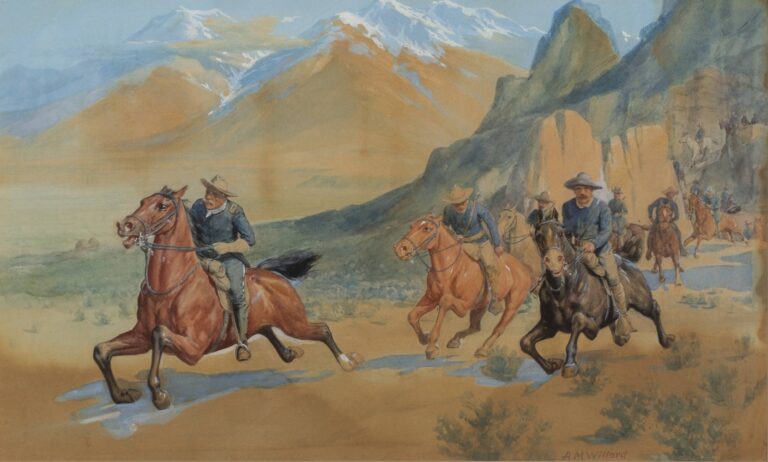
Gouache on board painting of a cavalry unit by Archibald Willard, circa 1900. Ohio History Collection, H 91861.
When the Spanish-American War began in 1898, Willard attempted to revive the patriotic tropes of “Spirit of ‘76” for this new conflict. In one version, Willard depicts geriatric soldiers galloping across a western landscape in heroic defense of the nation. These men, born too late to fight in the Civil War, eagerly joined the war to oust Spain from Cuba and the Philippines despite their advanced age.
Despite Willard’s efforts, "Spirit of ’76" remained his greatest artistic success. He died in Cleveland in 1918.
Learn More
Would you like to see more of Willard's artwork? Pieces from museum and library collections throughout Ohio can be viewed on Ohio Memory.
Our Archives & Library has many amazing resources for you to learn more about Ohio artists. Be sure to visit the Archives Wednesday through Friday or consider making a research appointment to see these materials.
Do you collect Ohio art? Are you curious if your pieces could become part of the Ohio History Connection's collections? Visit our donations page to learn more!