Harding Presidential Sites Research

Harding Presidential Sites Research

President Harding

Learn More

Florence Harding

Learn More

Harding Home

Learn More

Harding Memorial

Learn More

Harding Presidential Library

Learn More

Fact Vs Fiction

Learn More

Digital Collections Resources

Learn More

Video Resources

Learn More

President Harding

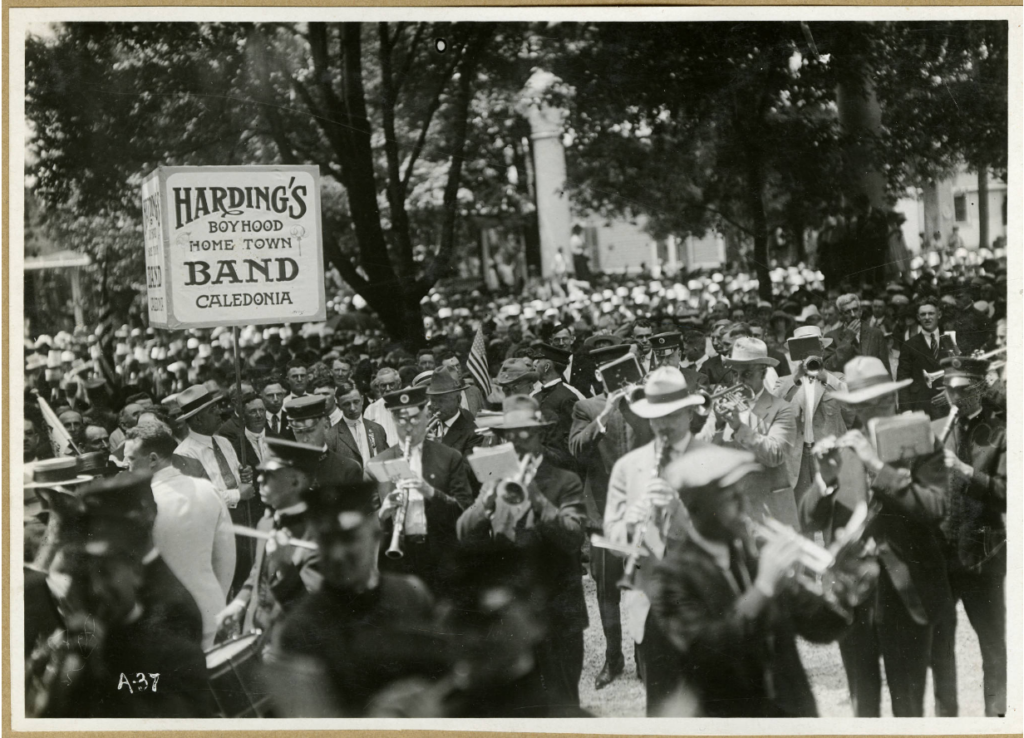
Born on November 2, 1865, Warren Gamaliel Harding was the oldest of eight children born to Dr. George Tryon Harding and Phoebe Dickerson Harding in Blooming Grove, Ohio. Early in Warren’s childhood, his family moved to the small town of Caledonia, Ohio, where Dr. Harding established a medical practice. As a child in Caledonia, Warren worked as an apprentice in the office of the Caledonia Argus newspaper, an experience which would influence him for the rest of his life.

While Warren attended Ohio Central College in Iberia, Ohio, his family moved to Marion. After his graduation in 1882, Warren joined his family in Marion and attempted to start a career. He briefly taught school in a small schoolhouse just north of the town, considered being a lawyer, and even tried selling insurance.

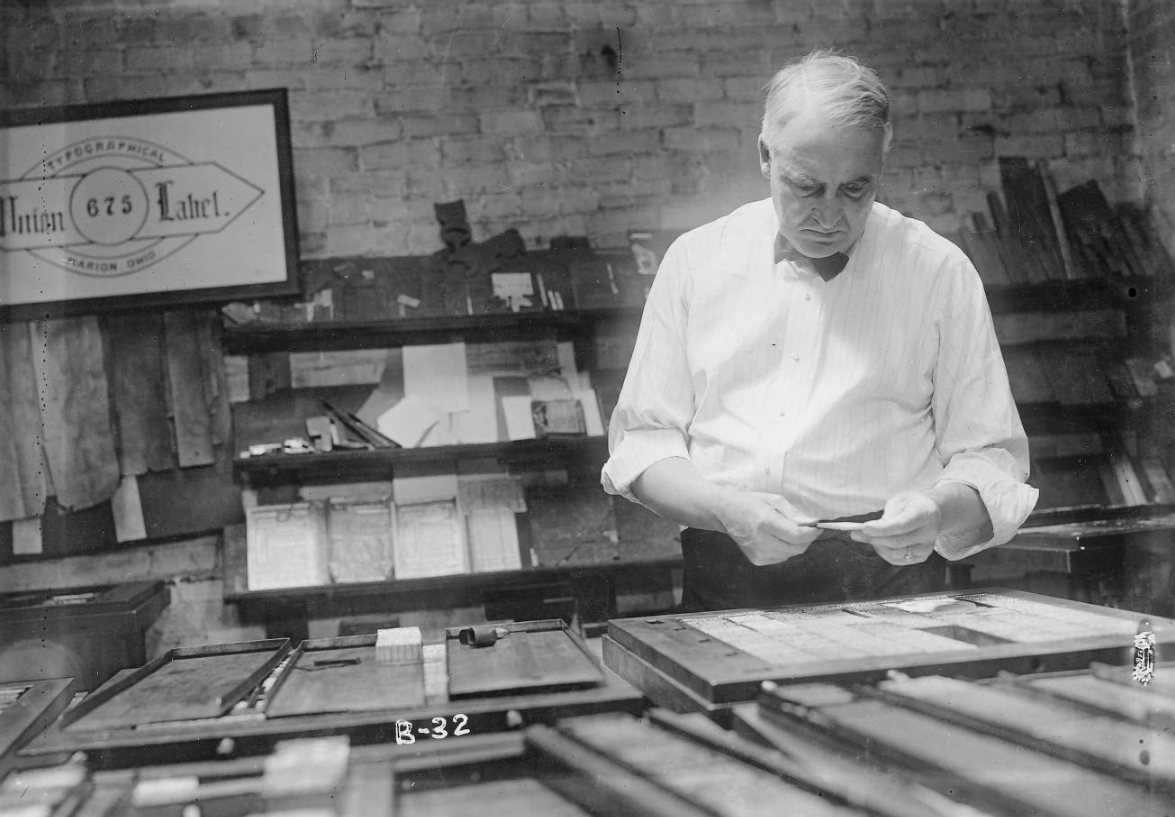
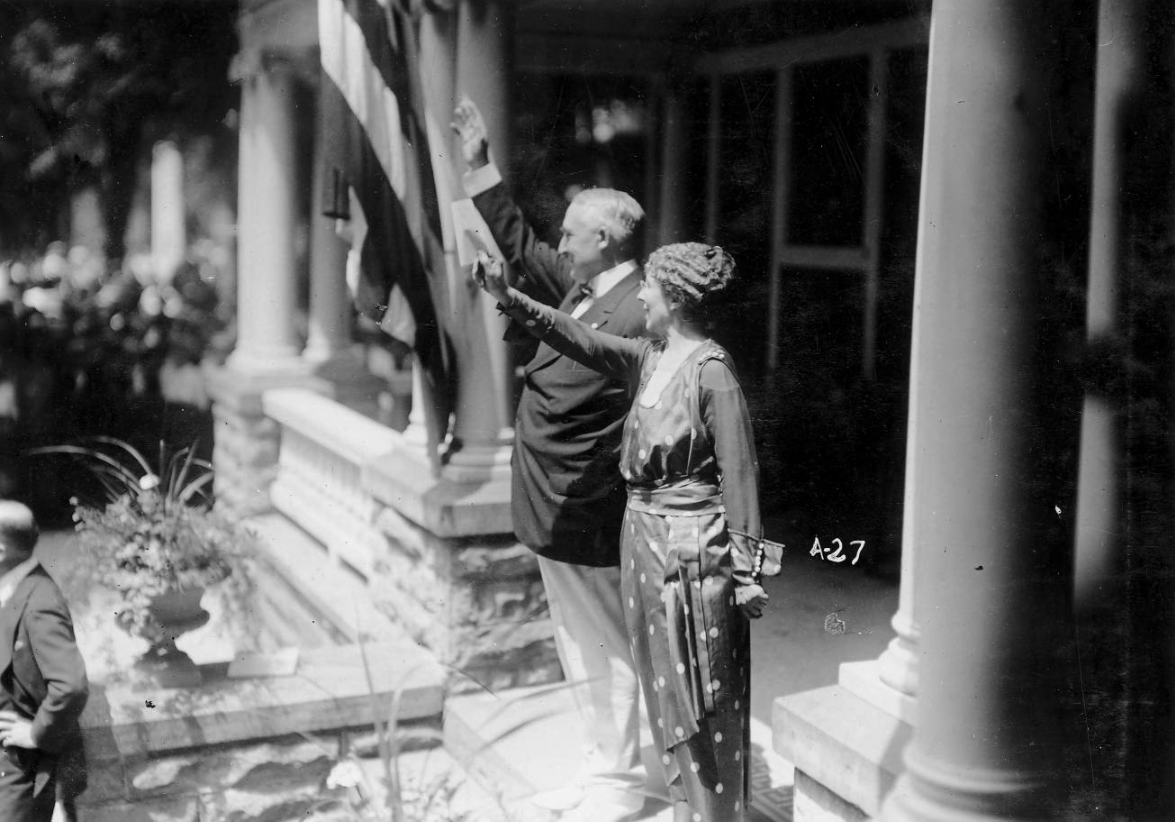
This photo shows Warren Harding at the headquarters of his newspaper, the Marion Star, during the 1920 "front porch" campaign. This image shows Harding setting type. Harding ran his 1920 presidential campaign from the front porch of his Victorian house in Marion, Ohio. People from all over Ohio and the United States came to hear him speak. Frequently, his speeches were then printed in newspapers and recorded on phonograph for the rest of the country.

But none of these things appealed to him for very long. During this time, his love of the newspaper business never subsided, and at the age of 19, with two partners, Warren purchased the Marion Daily Star, one of several newspapers in the small town. The Star was struggling and losing money, and soon Warren’s friends decided to leave the business. But Warren continued on, and eventually The Star began making money. Through the articles that he wrote for the newspaper, Warren promoted new businesses in Marion, supported the town’s progress and growth, and generally became an important voice in the city as it grew in population and importance. Harding owned The Star for nearly forty years.

Warren married Florence Kling DeWolfe on July 8, 1891 in the reception hall of their new home on Mount Vernon Avenue in Marion. He was 25 and she was 30 at the time of their marriage. Florence was the daughter of the richest man in Marion, Amos H. Kling. The Hardings had no children of their own, but Mrs. Harding had a son, Marshall DeWolfe, from her first marriage, which had ended in divorce in 1886. The Hardings were married for 32 years until his death in 1923.

Florence Harding

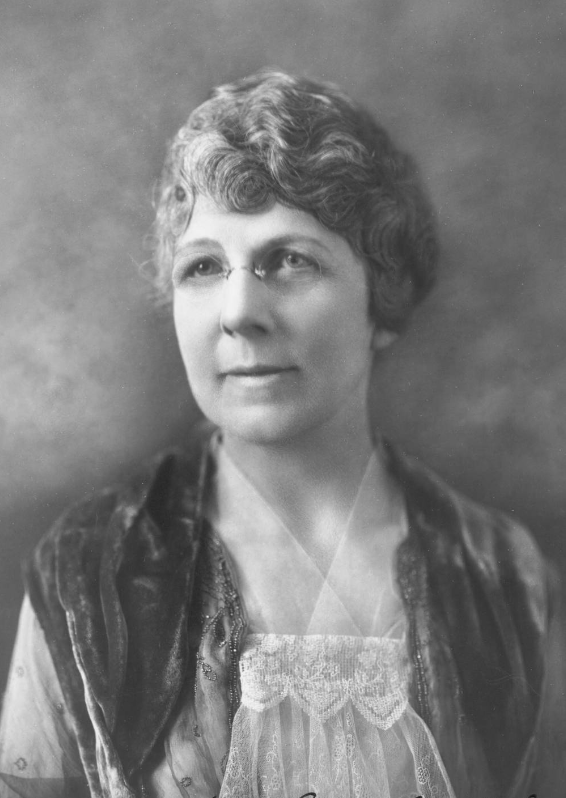
Born on August 15, 1860 in Marion, Ohio, Florence Mabel Kling was the oldest of three children of Amos Hall Kling and Louisa Bouton Kling. She had two younger brothers named Clifford and Vetallis. Her father was a self-made businessman and real estate owner who became the richest man in Marion and a prominent city leader. As such, her father was able to give her many of the best things in life, including a childhood in a large home, proper equestrian training, and piano lessons. As a young woman, Florence studied at the Cincinnati Conservatory of Music, and eventually gave private piano lessons around Marion.

In January 1880, Florence surprised her family and fellow citizens by eloping with Marionite Henry Atherton DeWolfe (sometimes known as “Pete”). Living at first in the Marion County village of Prospect, the couple’s only child, Marshall Eugene DeWolfe was born on September 22, 1880.

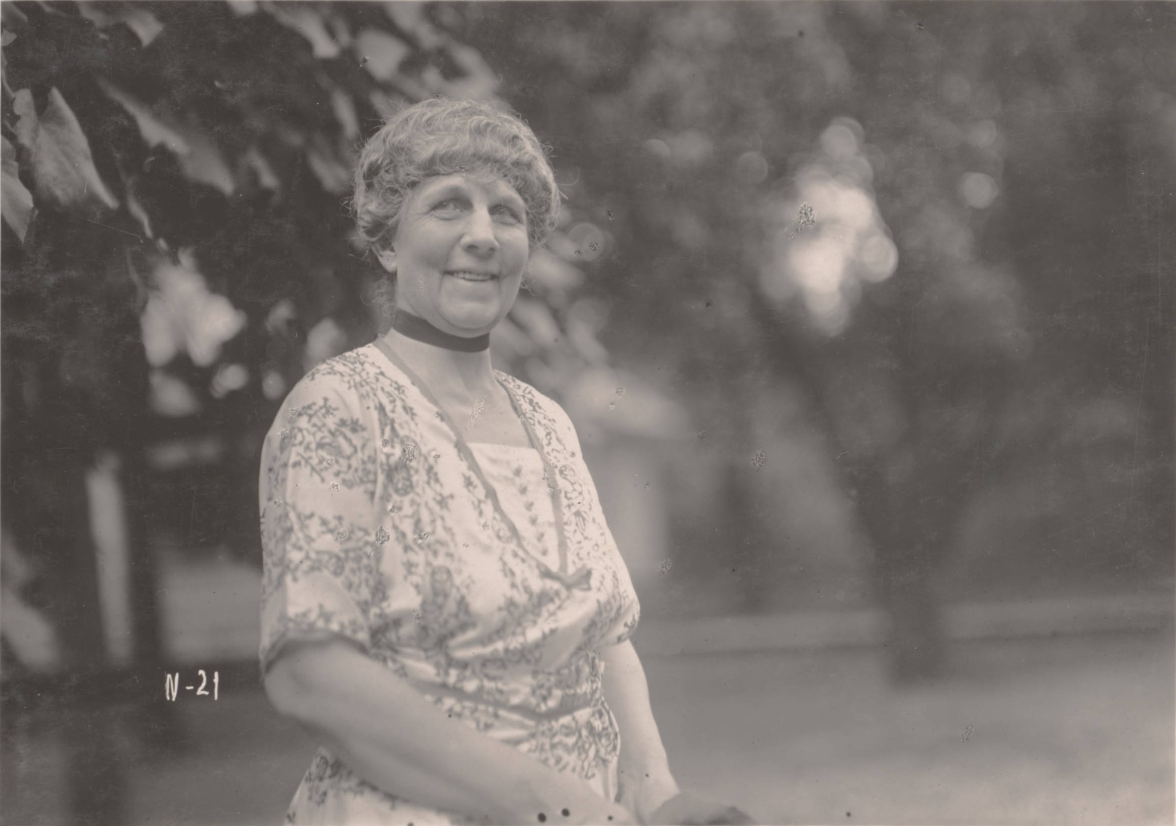
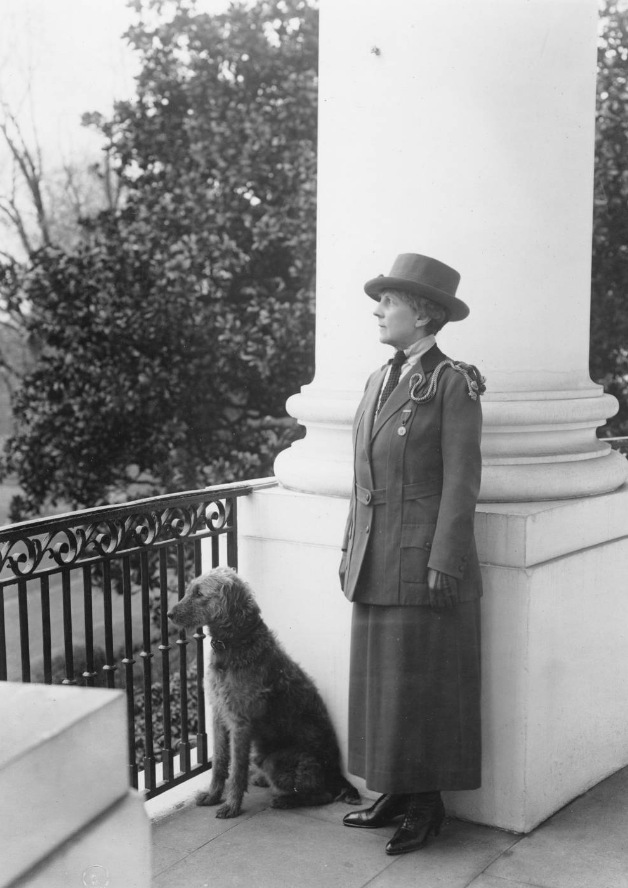
Dated 1920, this photograph shows Florence Kling Harding, wife of Warren G. Harding, standing outside their home in Marion, Ohio.

Henry was a undependable husband and father, failing to provide for his wife and young son and disappearing for weeks at a time. He also was an alcoholic. They divorced in 1886, and Florence took back her maiden name. Marshall spent part of his childhood at the Kling home and alternated between using the Kling and DeWolfe last names. Marshall married in 1908, and he and his wife, Esther, had 2 children, George and Jean. Marshall passed away from tuberculosis on January 1, 1915 in Denver, CO.

Harding Home

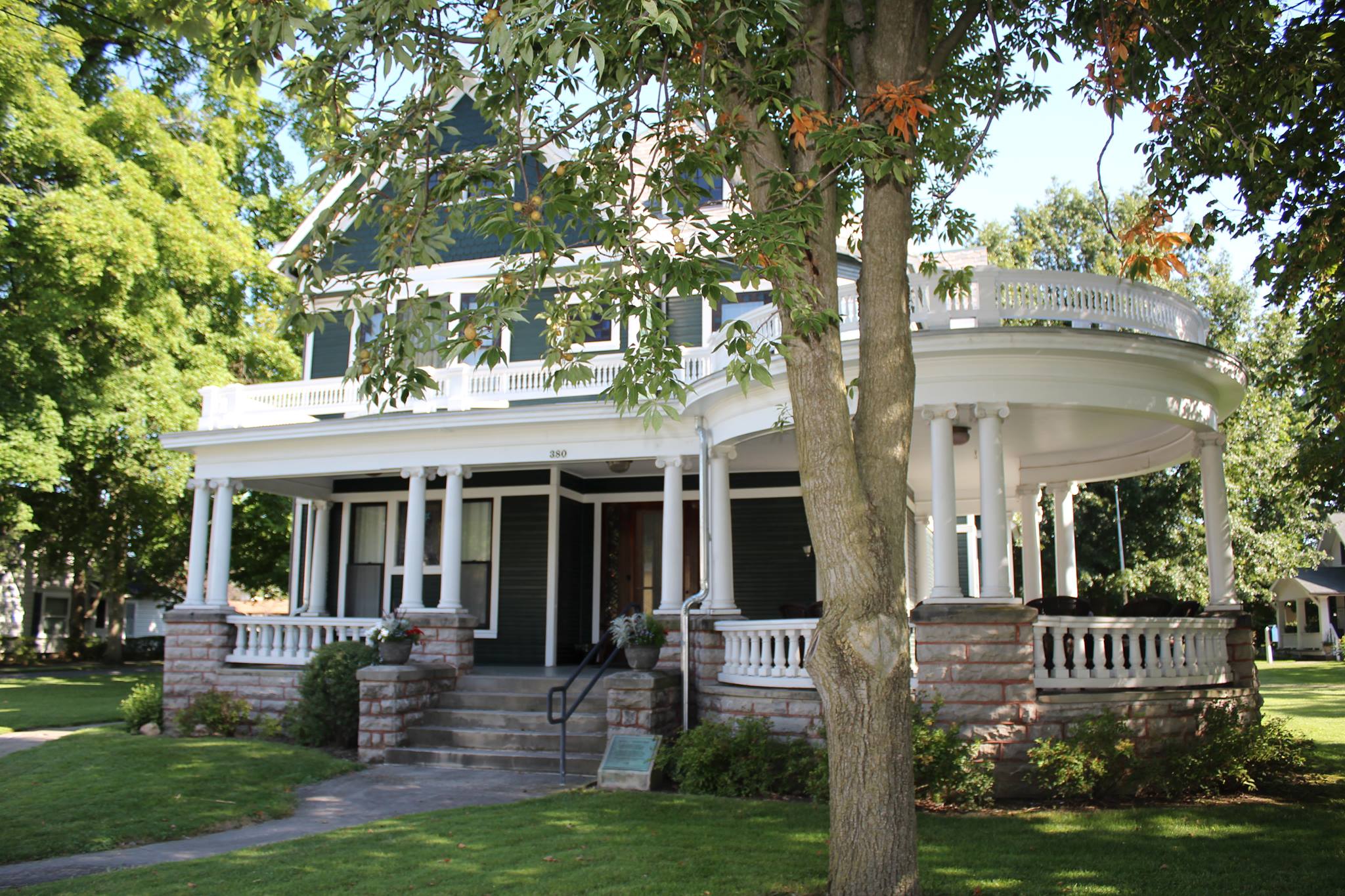
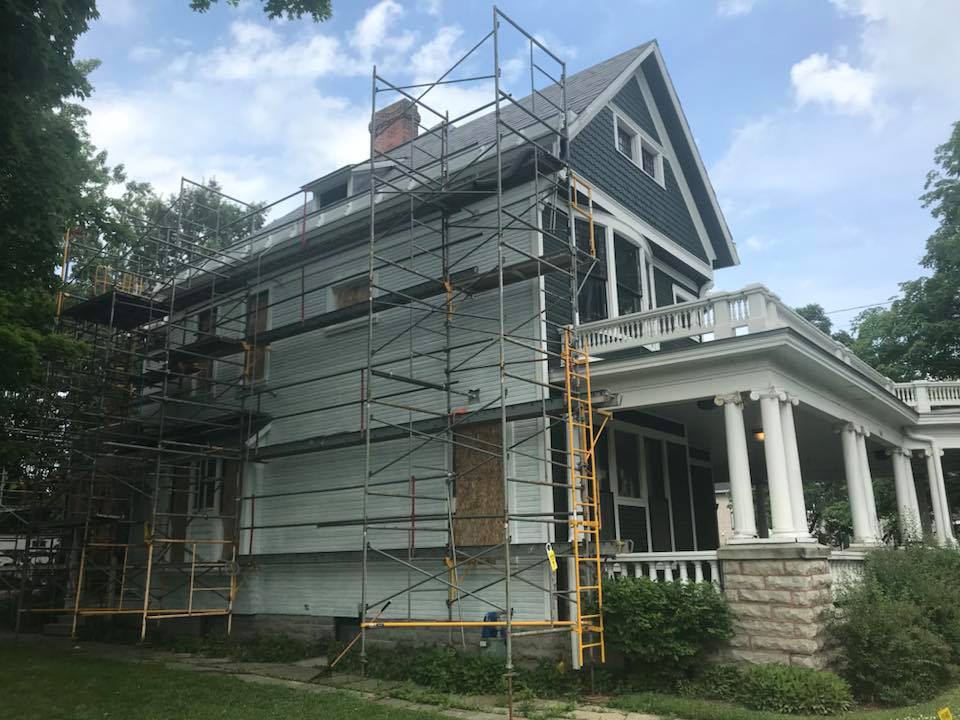
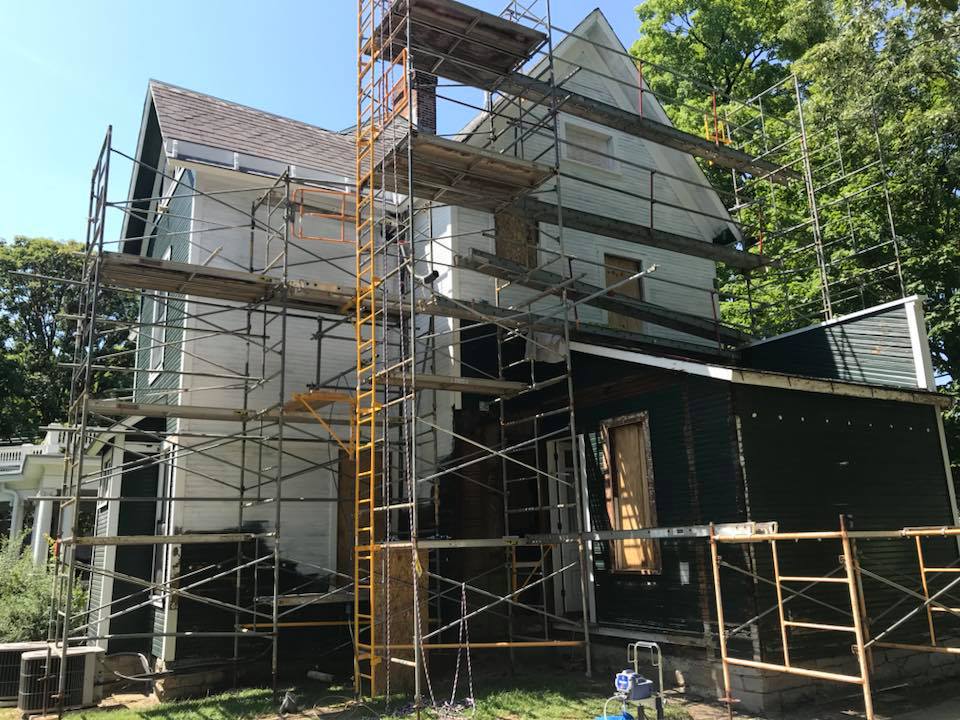
The Harding Home, which is adjacent to the Warren G. Harding Presidential Library & Museum, has been open to the public since February 1926. Warren Harding and Florence Kling oversaw the construction of the home, at 380 Mt. Vernon Avenue in Marion, during their 1890-91 engagement. They were married in the home on July 8, 1891; it was their primary residence for the next 30 years.

The Hardings initially chose a reddish brown color for their home, with brown trim. The Queen Anne-style Victorian home was 2,500 square feet, featuring four bedrooms, reception hall, parlor, library, dining room and kitchen. Built to include many modern features for the time, it had a bathroom with indoor plumbing and gas lighting. Striped awnings, wicker furniture and a large rug completed the rectangular porch on the front of the house, making it function as a cool respite in the summer.

Front Exterior of Warren G Harding's Home in Marion, Ohio, circa 2020.

Mr. Harding was publisher of The Marion Daily Star newspaper, purchasing it when he was just 19 years old. As the newspaper flourished, the Hardings’ household income increased, allowing them to upgrade their home over the years. In 1903, they replaced the original porch with a larger porch featuring a round, “bandstand” area. The concrete and stone porch had an inlaid, wooden floor. As part of the renovation, the Hardings chose a new color for the home: kelly green with white trim (the trim color would not appear “white” to modern eyes – it would be interpreted as a buff color today).

A believer in making Marion “a progressive city,” by urging the installation of street lights, a sewer system and bricked streets, Mr. Harding demonstrated the same interest in embracing new technology at home. The Hardings installed knob-and-tube electricity in their home around 1902, to augment the original gas lines. Several of their new ceiling lighting fixtures were dual fixtures — operable with electricity or gas. Electrical service at the time had drawbacks; it was available only during limited hours, and was often unreliable. Interestingly, the only room not outfitted with electricity was the kitchen; it remained dependent upon gas.

The Hardings wallpapered every room in their home, even some ceilings, as was the decorating fashion. Just prior to Sen. Harding’s famous front porch campaign in 1920, they installed new wallpaper in the bathroom, parlor and library. An additional room, adjacent to the small kitchen, was built to provide food storage and preparation during the busy campaign days. A small bathroom was added in the basement to alleviate use of the home’s only original bathroom, which was located upstairs.

Harding Memorial

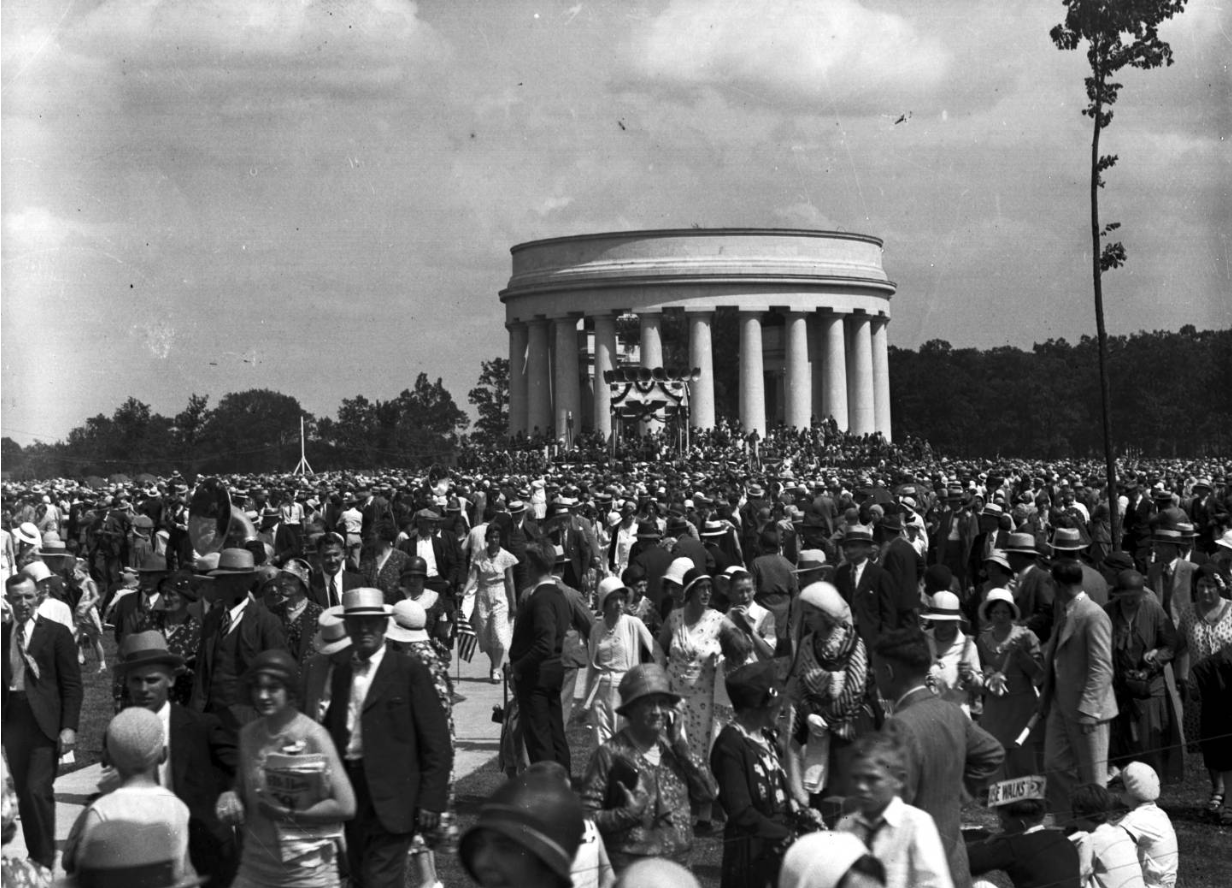
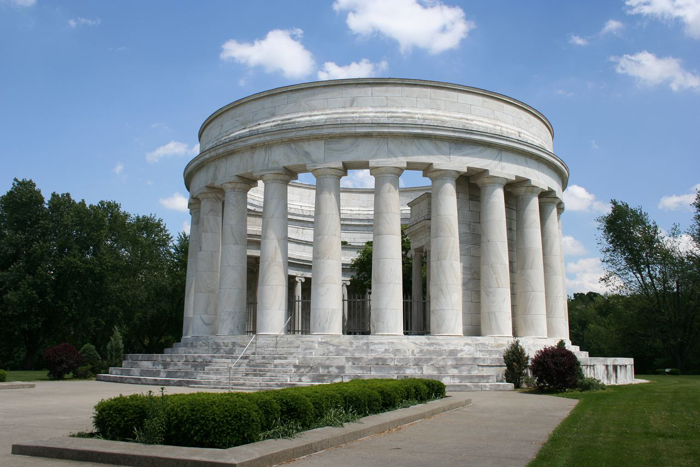
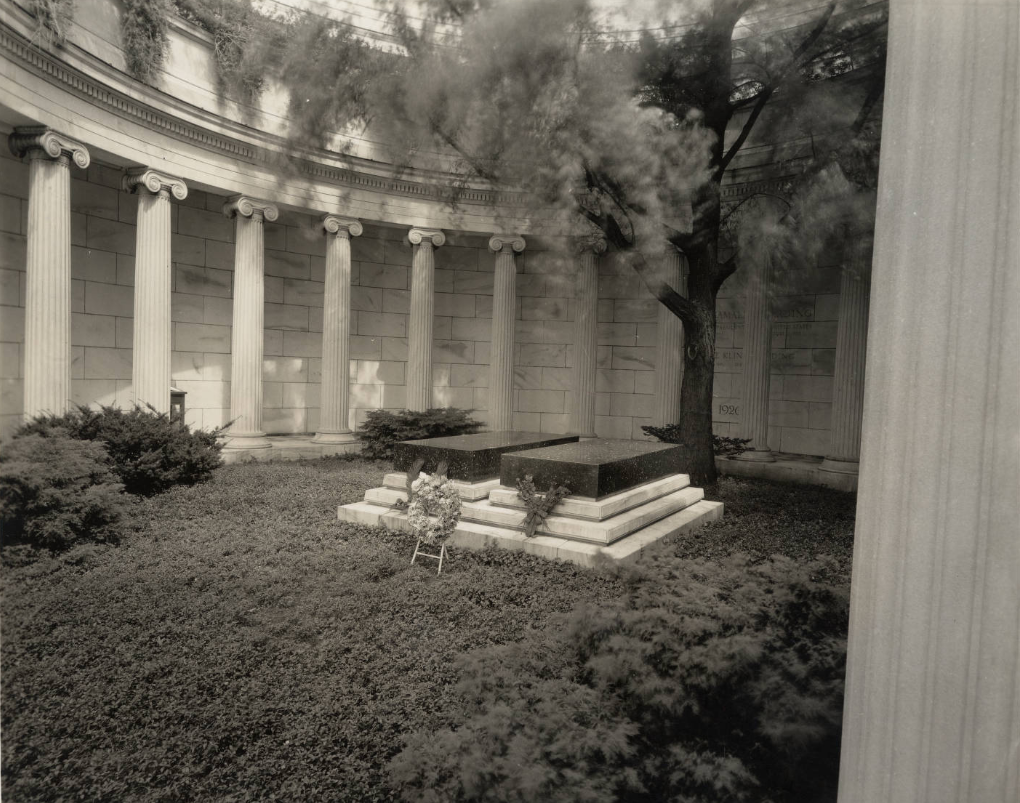
The Harding Memorial is a circular monument of white marble and is suggestive of a round, Greek temple. Unlike a temple, though, there is neither a doorway nor a roof. Instead, it forms an open court described as a “cloister.” Being open to the sky provides space for a garden plot surrounding the tomb and honors President Harding’s wishes to be buried in a simple grave under a tree and under the stars.

A Greek Ionic colonnade stands in front of the circular wall forming the open court. The columns of this structure support a terrace filled with green plants and shrubbery. The two black granite tombstones, decorated only by two bronze wreaths at the heads of each stone, indicate the resting places of President Warren G. Harding and his wife, Florence Harding. The President’s wreath is designed with palm leaves, and Mrs. Harding’s wreath is adorned with roses. A bed of ivy covers the ground surrounding the tombstones. Enclosing the entire court and colonnade is a stance of 46 Doric Greek columns, stunning and majestic. The plan originally called for 48 columns, one for each state in Harding’s era, but money fell short and the design was amended.

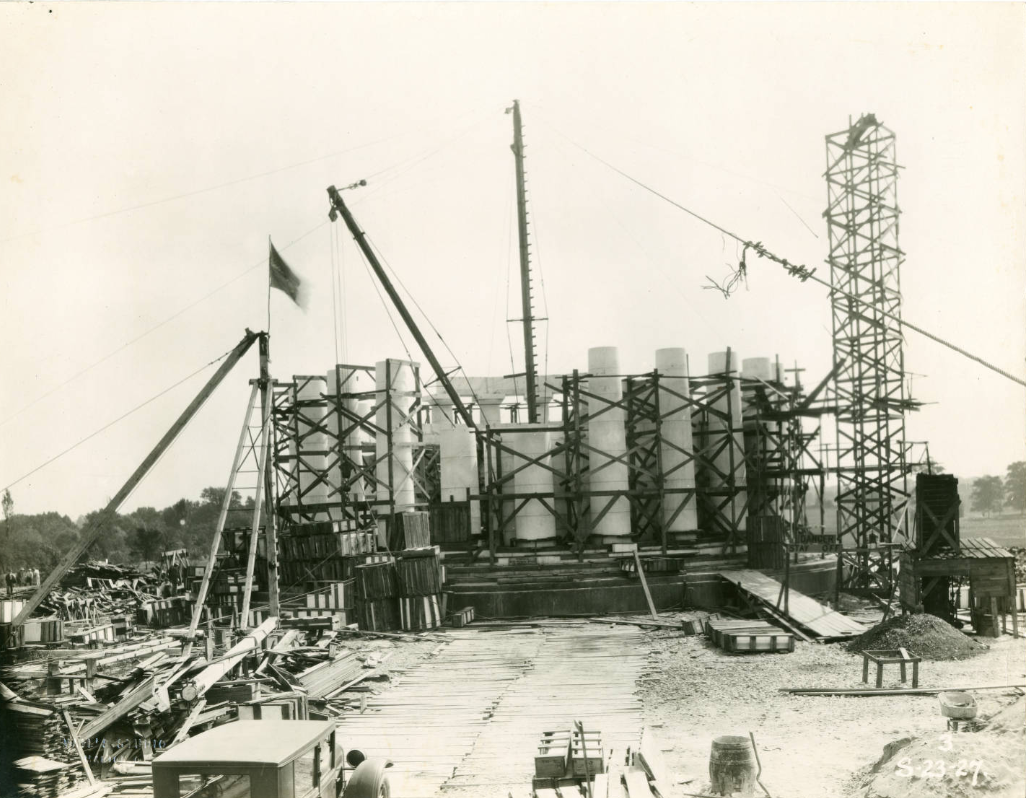
Photograph of the Harding Memorial under construction by Elford, Inc., in Marion, Ohio. Shortly after President Warren G. Harding died in office, the Harding Memorial Association was formed to raise money for a memorial site in honor of the late president. Construction of the tomb started in 1926 and was completed in 1927, although it didn't receive its formal dedication until 1931. It now houses the remains of President Harding and his wife, Florence Kling Harding.

The setting of the monument is open and uncluttered. Rows of elm trees form the shape of the Latin cross, with the tomb placed at the intersection of the arms of the cross. The main approach follows the tree of the cross. Behind the elms are clusters of trees and shrubbery. The entire memorial is built of Georgia white marble, furnished by the Georgia Marble Company of Tate, Georgia; the only variation from the plain, white marble is in the floor, where gray and white squares produce a mosaic style.

Henry Hombostel and Eric F. Wood of Pittsburgh, Pa., were the architects of the monument, and the structure cost $783,103.

Harding Presidential Library

The first phase of the newly constructed Warren G. Harding Presidential Library & Museum was finished in the spring of 2021. with the dedication of the museum taking place in September of 2021. The building was designed by Ohio History Connection architects Fred Smith and Beth McFarlane, with consultation from Korda/Nemeth Engineering of Columbus, and input from GPD Group architects, Marion.

The first phase encompasses the public spaces of the building: a lobby, gift shop, event space, exhibit gallery, catering kitchen, collections storage for historic objects, restrooms and storage. The second phase, will add a wing for administrative offices, conference room, research center and secure stacks room. The stacks will house the massive Harding Presidential Papers. With completion of both phases, the building will be 12,000 square feet. A roofed terrace, grass courtyard, garden areas and parking lot will highlight the landscaped grounds.

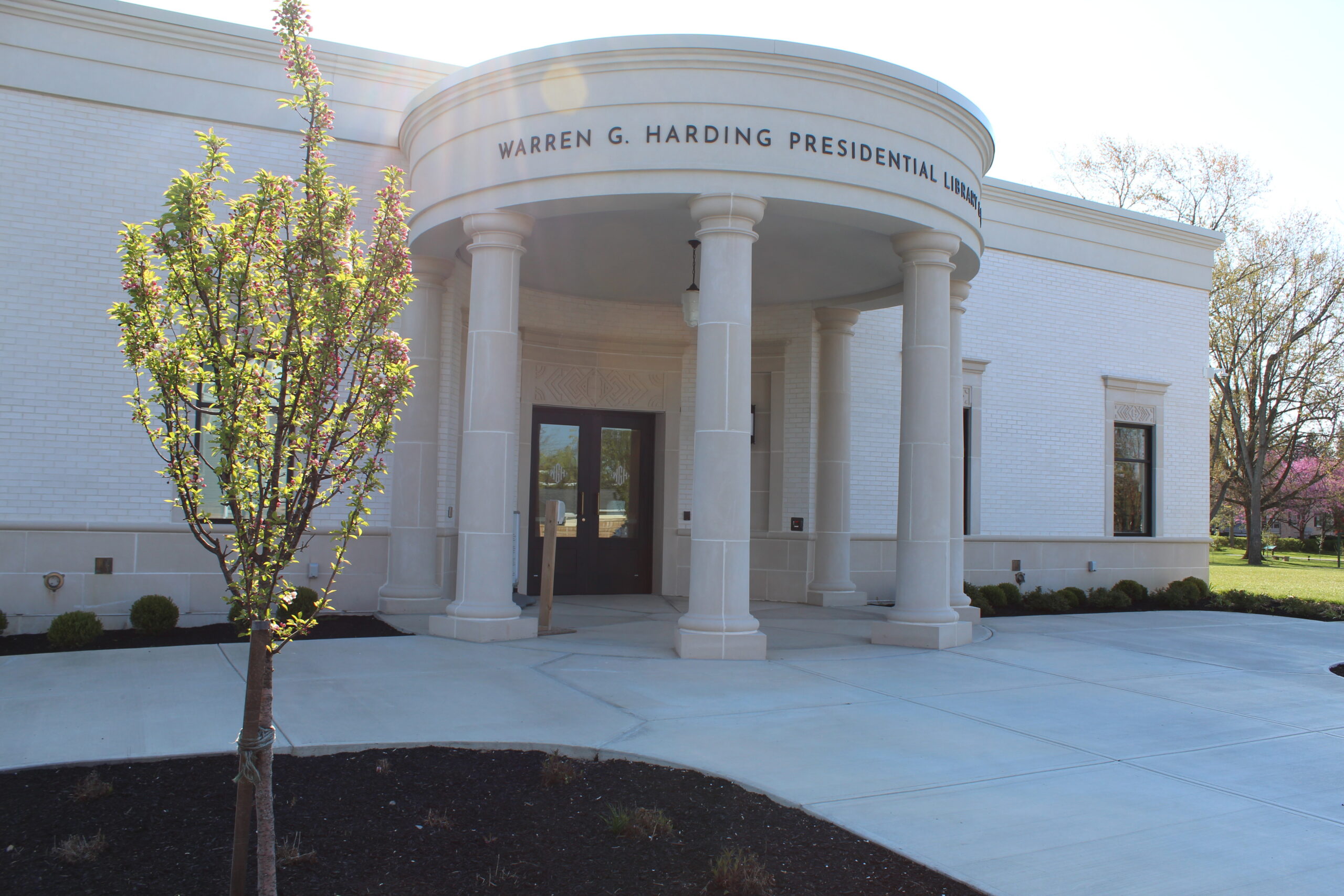
Exterior entrance to the Harding Presidential Library
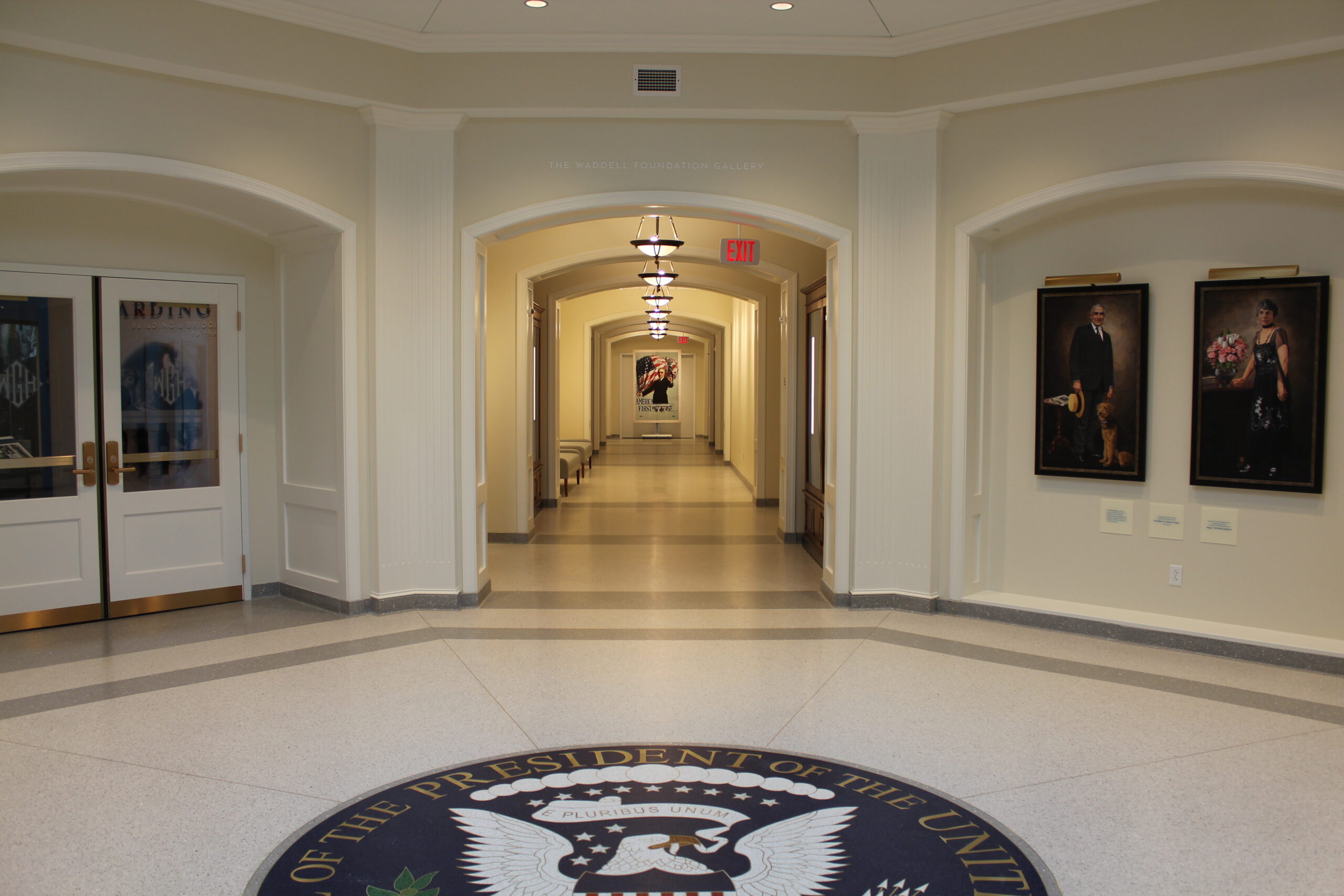
Corridor within the Harding Presidential Library & Museum with doors to the left leading to exhibit space and portraits of Florence and Warren Harding on the right. A Presidential seal sits in the middle of the room.

The project broke ground in March 2019 after several years of planning. Marker, Inc., of Columbus and Bellefontaine, was the construction manager.

A one-floor plan was chosen, providing ease of mobility for visitors and to ensure that the building did not overwhelm the adjacent Harding Home. The white brick, chosen for the exterior, brings to mind the White House, U.S. Capitol and Ohio Statehouse, all of which had connections with Warren Harding. Harding was an Ohio senator, Ohio lieutenant governor, U.S. senator and President of the United States. The stately columns surrounding the entrance and lining the terrace tie in those government buildings, as well as the porch of his nearby home and his final resting place, the Harding Memorial. Details abound. Stone inserts above each window feature the monogram used by the Hardings on their linens and stationery, giving the building a personal “Harding” touch. Arches used on the interior, augmented by art deco lighting fixtures, place the building in the Hardings’ time in history. Several stained glass windows, original to the Hardings’ era, also set the mood.

The exhibit gallery, designed by the Ohio History Connection’s Bill Mahon and his design team, offers visitors the Harding story through a mix of historic objects, media, text, music and sensory experiences. The exhibits are designed so historical objects can be changed, providing repeat visitors different perspectives. An elegant event space offers a place for public programming, children’s education, temporary exhibits and private events. Of great important is the temperature- and humidity-controlled collections storage area to house more than 5,000 historical objects.

The new Harding Presidential Library and restored Harding Home opened to the general public on May 12, 2021.

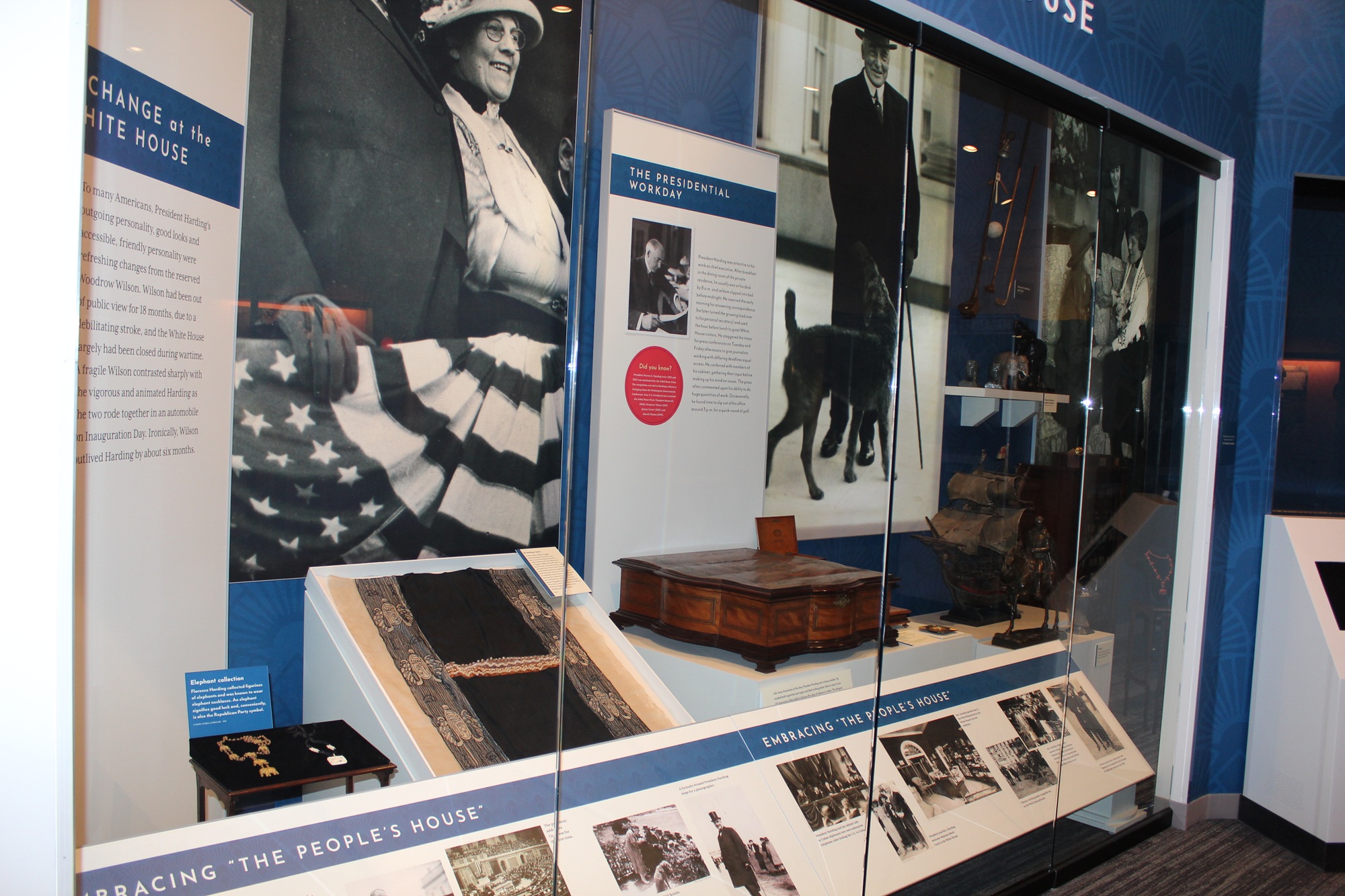
Harding Presidential Sites White House Exhibit in the Presidential Library.

Fact Vs Fiction

No, Florence was not dabbling in poison recipes. President Harding had congestive heart failure and suffered a fatal heart attack. Harding’s medical records from the western trip (the six-week trip during which he died) exist, and they show a man suffering from high blood pressure, chest pains, respiratory discomfort, indigestion, etc. Cardiac medicine was in its infancy, and these very recognizable symptoms to us were not automatic signals then for an impending catastrophic event.

The perpetrator of the Florence-poisoning story was Gaston Means, who dictated his “inside information” to May Dixon Thacker, who then wrote, The Strange Death of President Harding in 1930. Thacker was studying prison conditions in the South when she met Means, who was an inmate at the Atlanta Penitentiary. Thacker herself, shortly after publication, discredited the book, saying Means had duped her. The damage had been done, however, and the sensational story has remained a part of Harding lore. To learn more about Gaston Means and how the rumor was started, visit our YouTube Channel and watch The Original Flim-Flam Man: How Gaston Means Fooled a Nation.

The Harding Presidential Sites and the Ohio History Connection take great pride in managing the vast collection of Harding related documents and artifacts. This collection includes the nearly 5,000 objects that were once owned by the Harding Family and the Harding Presidential Papers. The artifacts and Harding Presidential Papers will return to Marion, Ohio when the Warren G. Harding Presidential Library and Museum is completed. With the new Harding Presidential Library, this wonderful collection of Harding materials will be more accessible to the public.

In addition to the collections of the Harding Presidential Sites and The Ohio History Connection, several Harding collections are maintained through the Library of Congress and the Smithsonian. On this page, you will find several digital databases that are maintained by these entities that contain Harding related materials that are searchable.

Warren G. Harding: Newspaperman and President: Warren G. Harding is the only American president to have owned a newspaper, the Marion Daily Star in Ohio. Former Harding Presidential Site Director Sherry Hall talked about the 29th president’s unique relationship with the White House press corps and the impact it had on his presidency. This program was part of the annual Warren G. Harding Symposium hosted by Ohio State University at Marion and was recorded by C-SPAN on July 21, 2018.

Modern First Ladies Part 1: The annual Warren G. Harding Symposium partnered with the National First Ladies’ Library to present “The Modern First Ladies: Portraits in Contrast.” Sherry Hall, Cynthia Bittinger, and Annette Dunlap examine the dramatic variety of styles and approaches brought to the role of First Lady by Florence Harding, Grace Coolidge, and Lou Hoover. This panel entitled “Paving the Way” was recorded live by C-SPAN on July 18, 2015.