Tours
ONE SITE (either Great Circle or Octagon)
$10/person aged 12 and up
$7/Seniors (aged 65+)
$5/ Students and children aged 5 to 12
Free/ Ohio History Connection Members & Children under 5 years of age
Tours for BOTH sites are $15 total if you book them together.
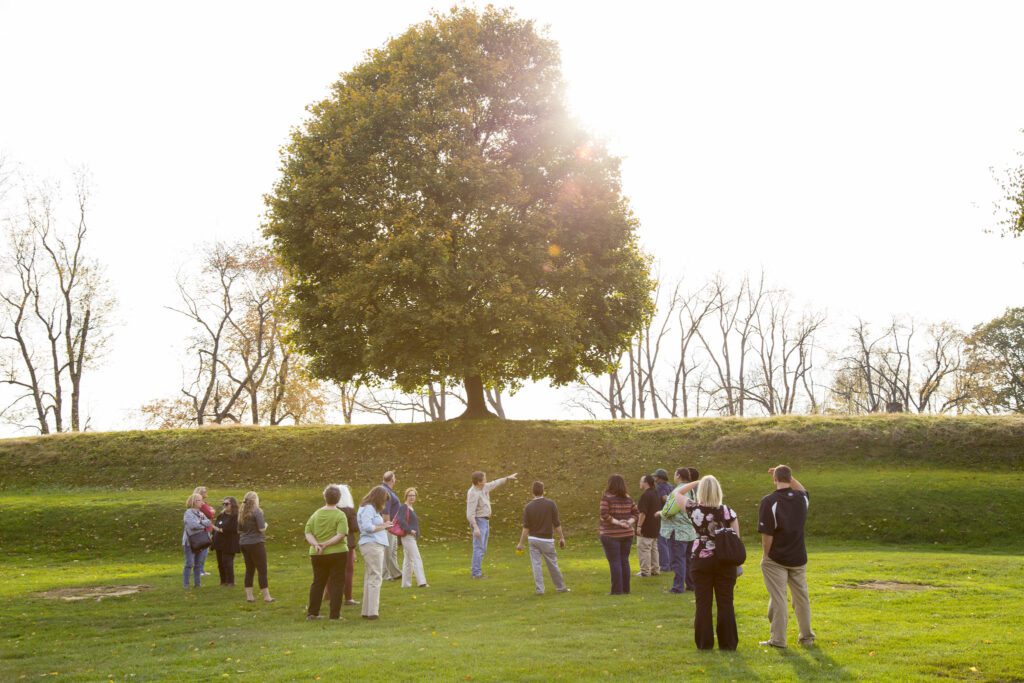
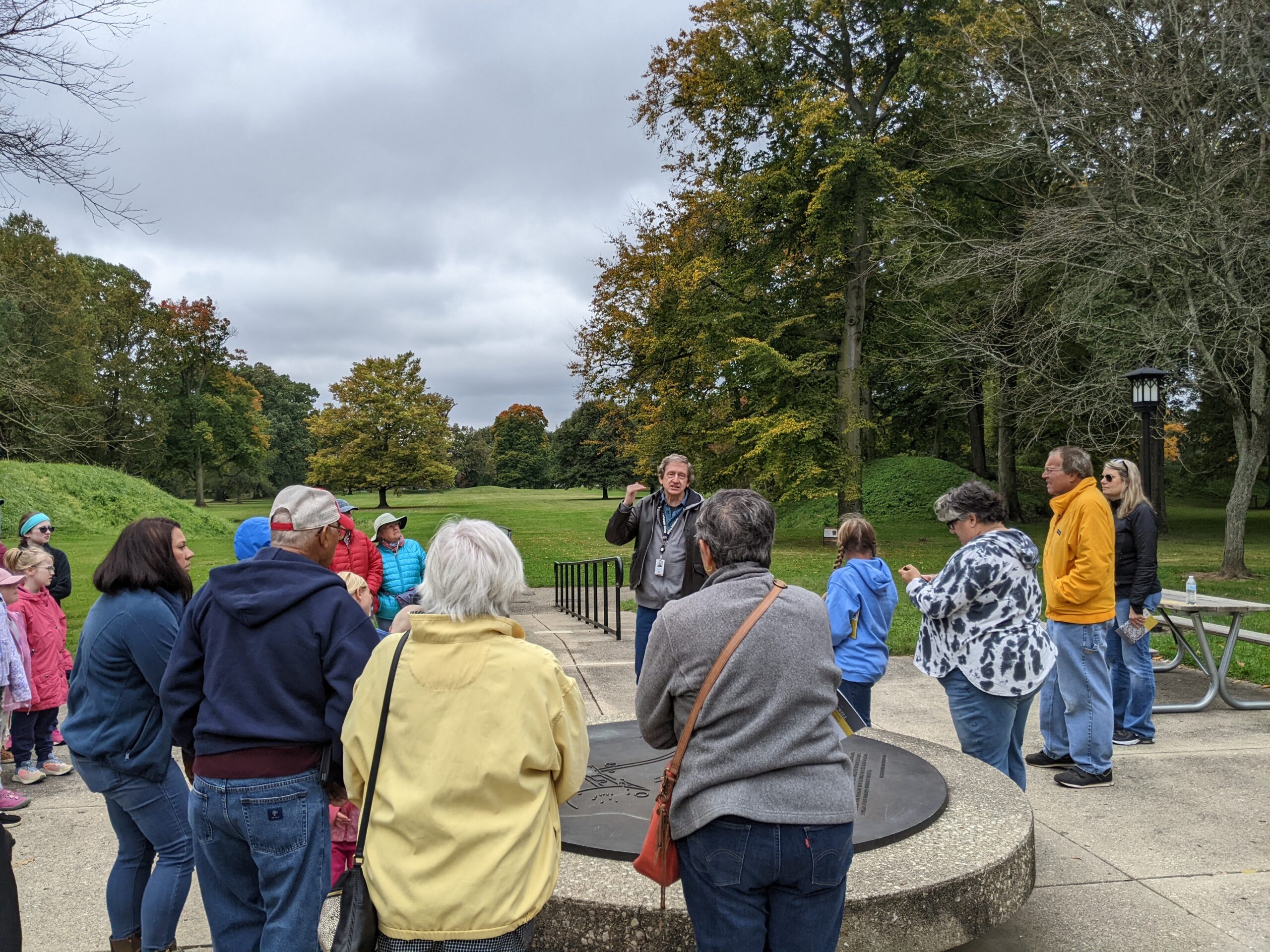
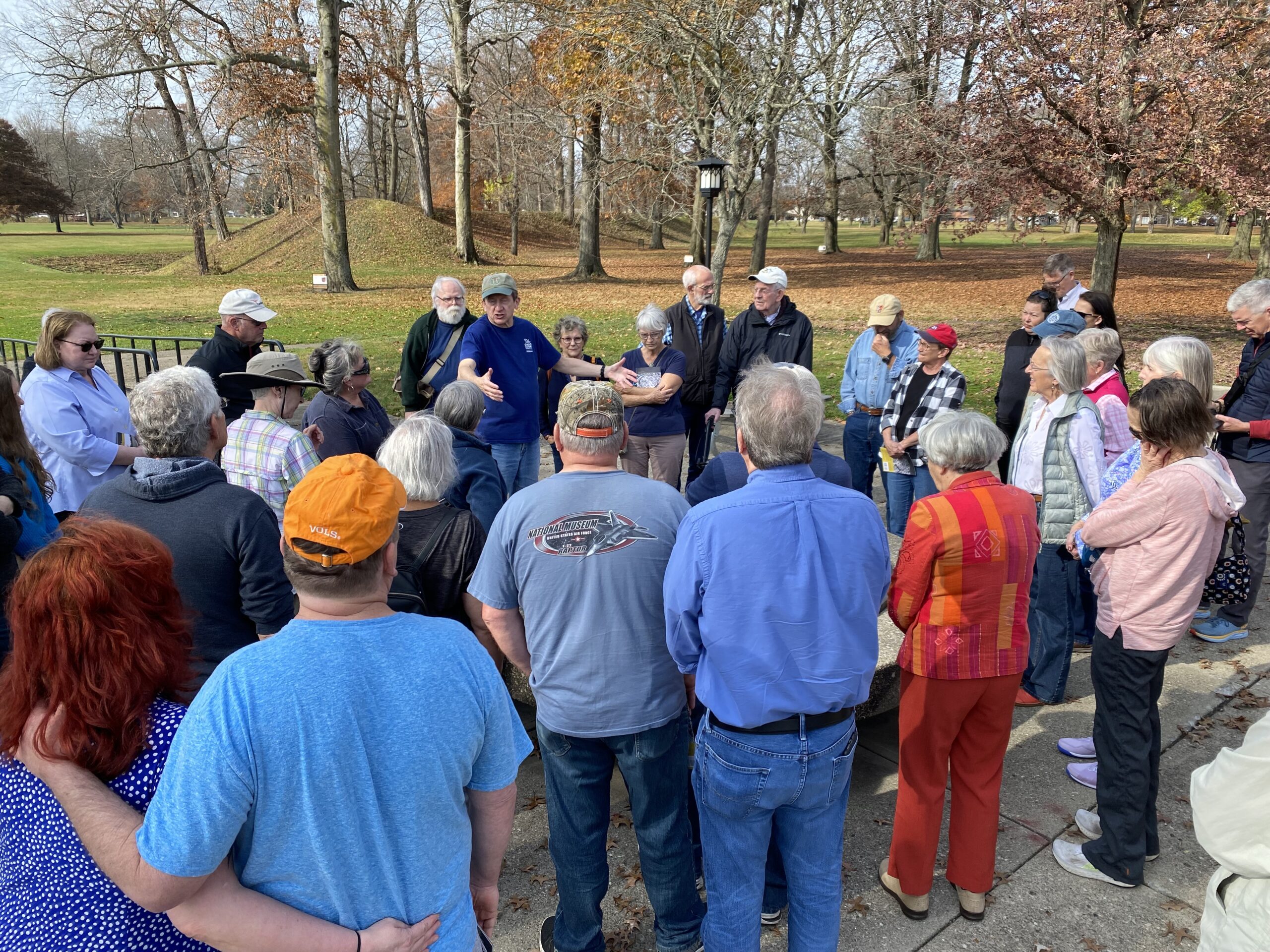
There is no registration or sign-up required for regularly scheduled tours. Please purchase tickets at the front desk prior to the start of the tour. Tours at the Octagon depart from the front of the Visitor Center. Tours of the Great Circle depart from the patio in front of the Great Circle Museum.
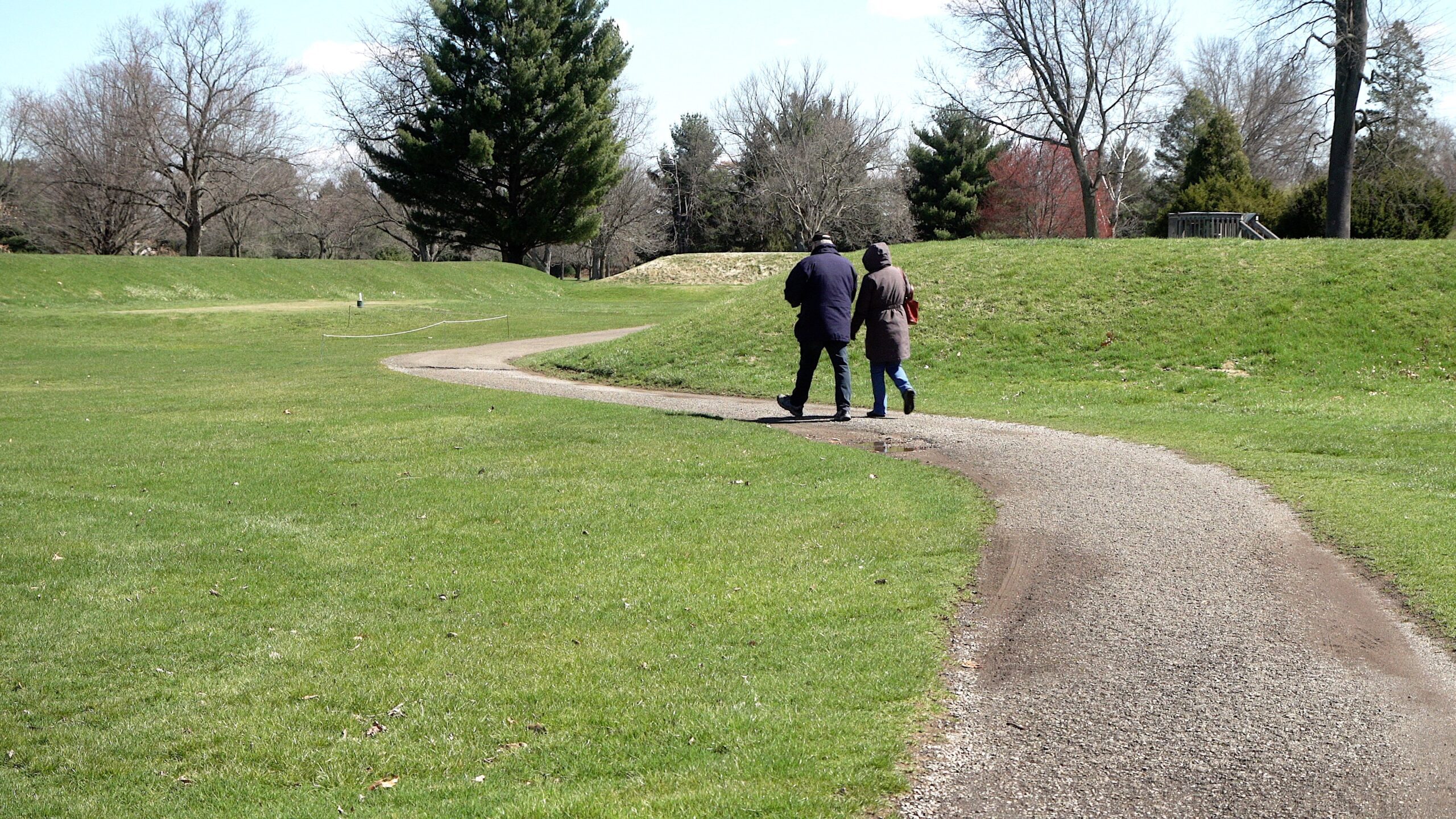
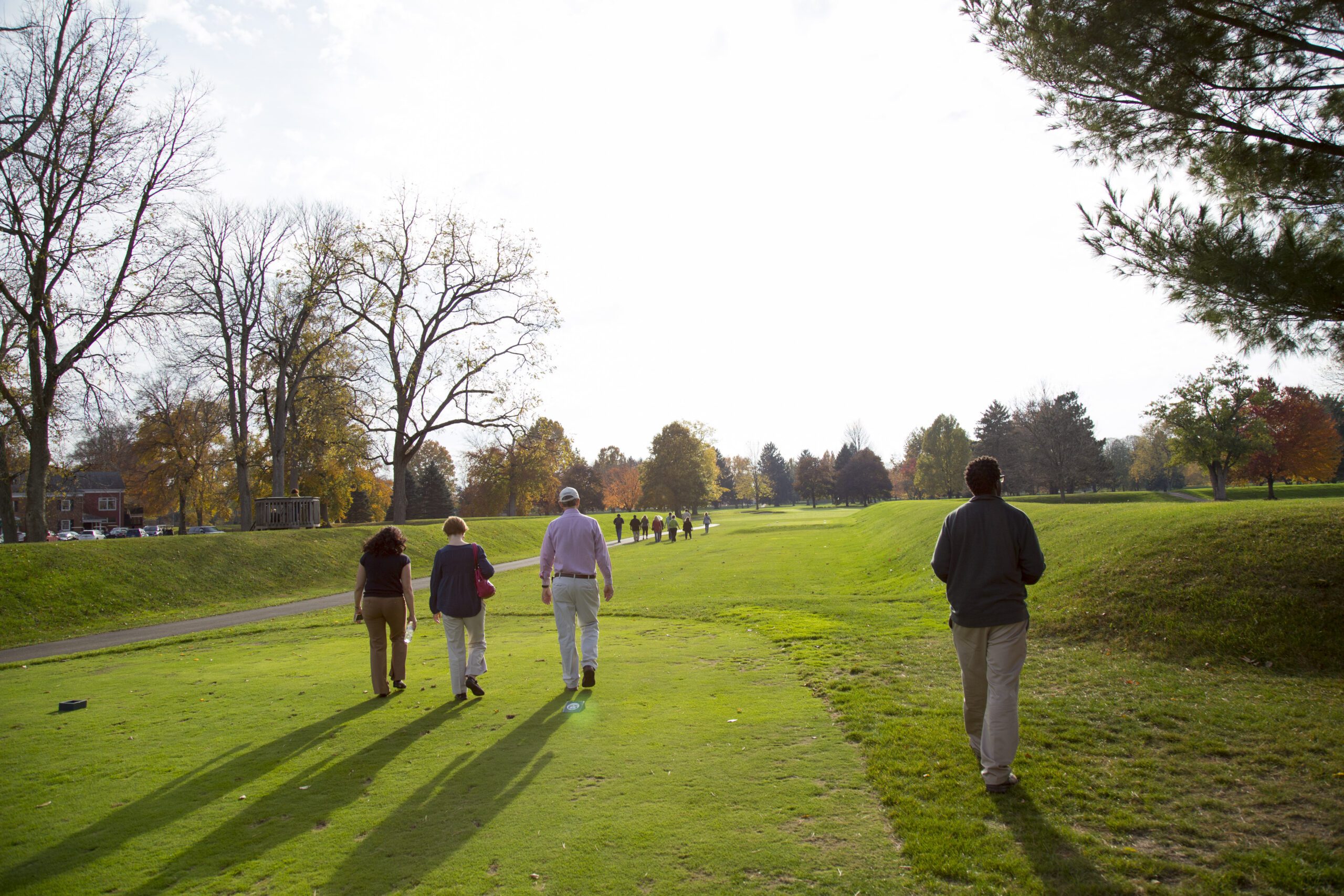
Tours are led rain or shine. Please check the weather and dress accordingly. There are no paved walkways into the earthwork.

Spring Tours March-May
Wednesday-Sunday
Great Circle: 11 a.m. and 2 p.m.
Octagon: 11 a.m. and 2 p.m.
No tours offered when site is closed on Monday & Tuesday.
Special Tours from March-November
Enjoy a guided tour led by Senior World Heritage Archaeologist Brad Lepper! Every month March-November
First Friday of the month 11 a.m. at the Great Circle
Third Friday of the month 2 p.m. at the Octagon Earthwork
While these special tours are FREE of cost, donations are encouraged to support education and public programs at the Hopewell Ceremonial Earthworks!
If you are in need of any special accommodations for a tour, please reach out to [email protected].
Private Tours
Private tours outside of regularly scheduled tours are available for groups with a minimum of 5 people.
To schedule a group tour outside of regularly scheduled hours email us at [email protected]
Field Trips
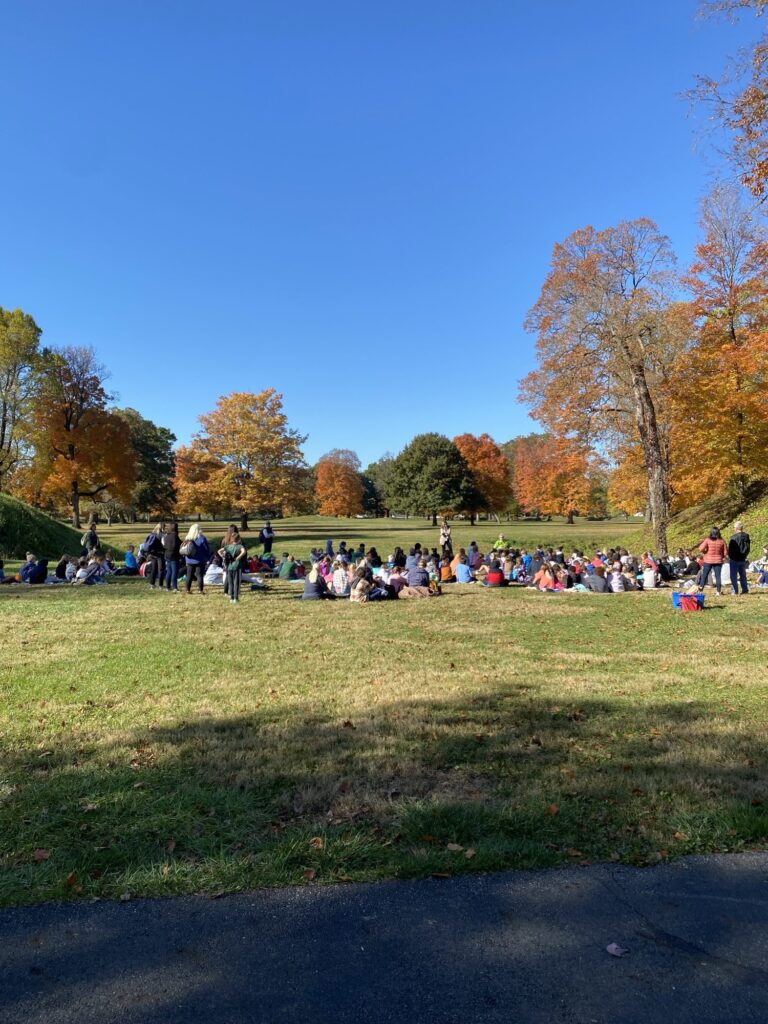
Explore Ohio’s only UNESCO World Heritage Site! Students will tour the Octagon Earthworks, investigate the exotic materials brought here by ancient peoples and build their own earthwork. After lunch, the program continues with a guided visit to the monumental Great Circle Earthwork.
Our programs explore Ohio’s Native American earthworks and the everyday lives of the people who built and used them. Each experience is hands-on and interactive, rooted in Indigenous history and culture and designed to meet Ohio Learning Standards.
Important Information
• Cost: $8 per student; free for teachers, chaperones and group leaders.
• Group Limit: Up to 4 classes, with no more than 30 students per class.
(Larger groups will need to schedule across multiple days.)
• Booking: Please schedule at least 2 weeks in advance.
• Time: Programs run from 10 a.m. to approximately 1 p.m.
• Lunch: Bring a non-refrigerated packed lunch—lunchtime is included!
• Availability: Field trips are offered Mondays, Tuesdays and Wednesdays from September through November, and then in March through May.
• Payment: An invoice will be sent after the program based on the confirmed number of students.
• Please note: This field trip includes visits to both the Octagon Earthworks and the Great Circle Earthworks. Schools will need to provide transportation between the two locations.
Plan Your Visit
The Newark Earthworks are in present-day Newark and Heath within the boundary of Licking County, Ohio. Of this once 4-square-mile complex three portions are preserved and fully open to the public including:
The Great Circle Earthworks at 455 Hebron Road, Heath, OH 43056
The Wright Square at James Street, Newark, OH 43055
The Octagon Earthworks at 125 N 33rd Street, Newark, OH 43055
Approx. drive time from:
- Athens: 1 hr 30 min
- Cincinnati: 2 hrs 30 min
- Cleveland: 2 hrs 30 min
- Columbus: 45 min
- Dayton: 1 hr 45min
- Toledo: 2 hrs 45 min
Visitor Center Hours
Great Circle Earthworks*
Mon. & Tues: CLOSED
Weds. – Sun.: 10 a.m. - 5 p.m.
* The Great Circle has a small museum, gift shop, and restroom. Staff are available to answer questions and orient you to the Newark Earthworks.
The Octagon Earthworks
Mon. & Tues.: CLOSED
Weds. – Sun.: 11:30 a.m. - 2 p.m.
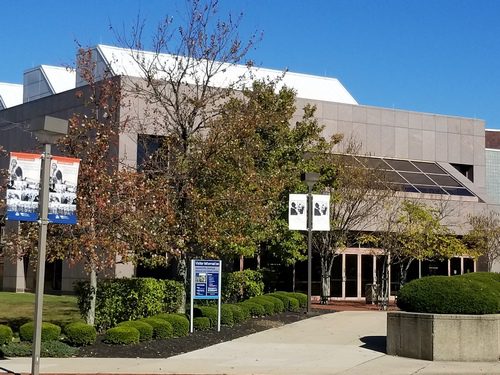
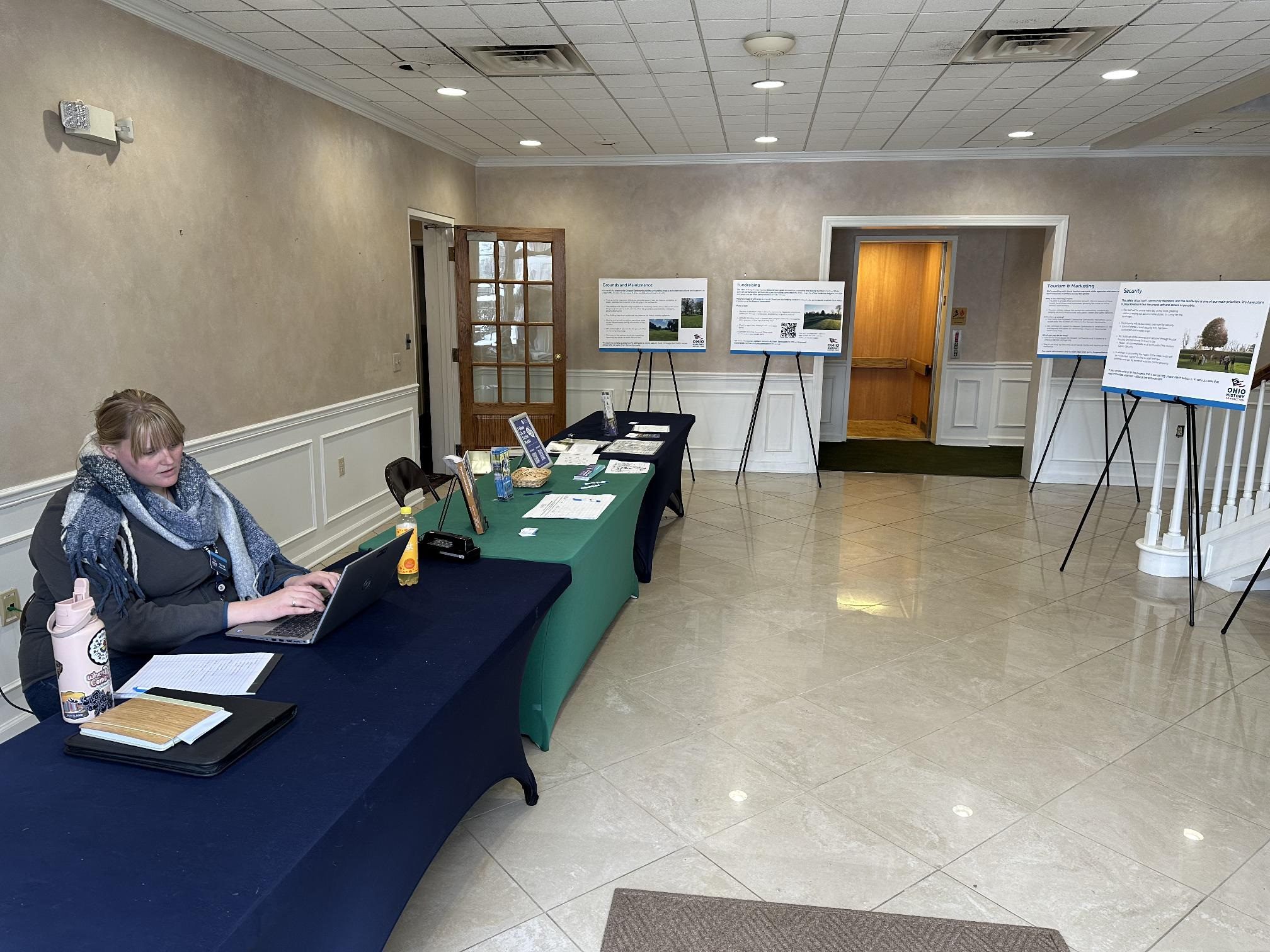
The Octagon Visitor, while still retaining much of its former features as a country club building, is open for restrooms and staff are available to answer questions during open hours.
There is also a small bookstore where you can commemorate your visit by purchasing a souvenir or book to learn more about the history and culture that make this site truly incredible.
There is no visitor center at the Wright Earthworks, but we encourage you to stop by visit the Great Circle Earthworks museum, less than a mile down the road.
Admission
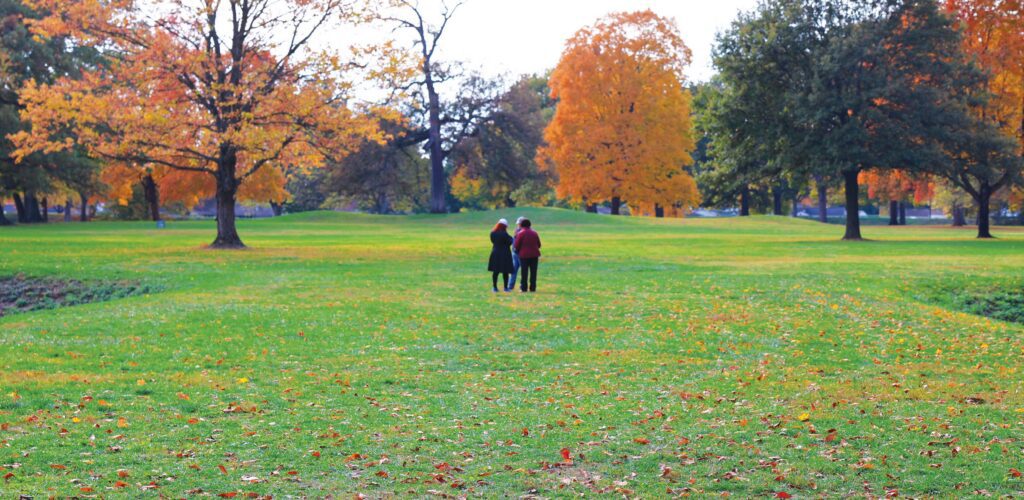
The grounds of the Great Circle, Octagon & Wright Square Earthworks are open year-round and free to walk and explore during daylight hours.
Tours and field trips are offered at the Great Circle and Octagon Earthworks for an additional cost. Check out our tours page!
Frequently Asked Questions
Dogs are welcome on all the sites. Please keep your furry companions leashed and take advantage of our waste bags and remove messes that they may create on the grounds.
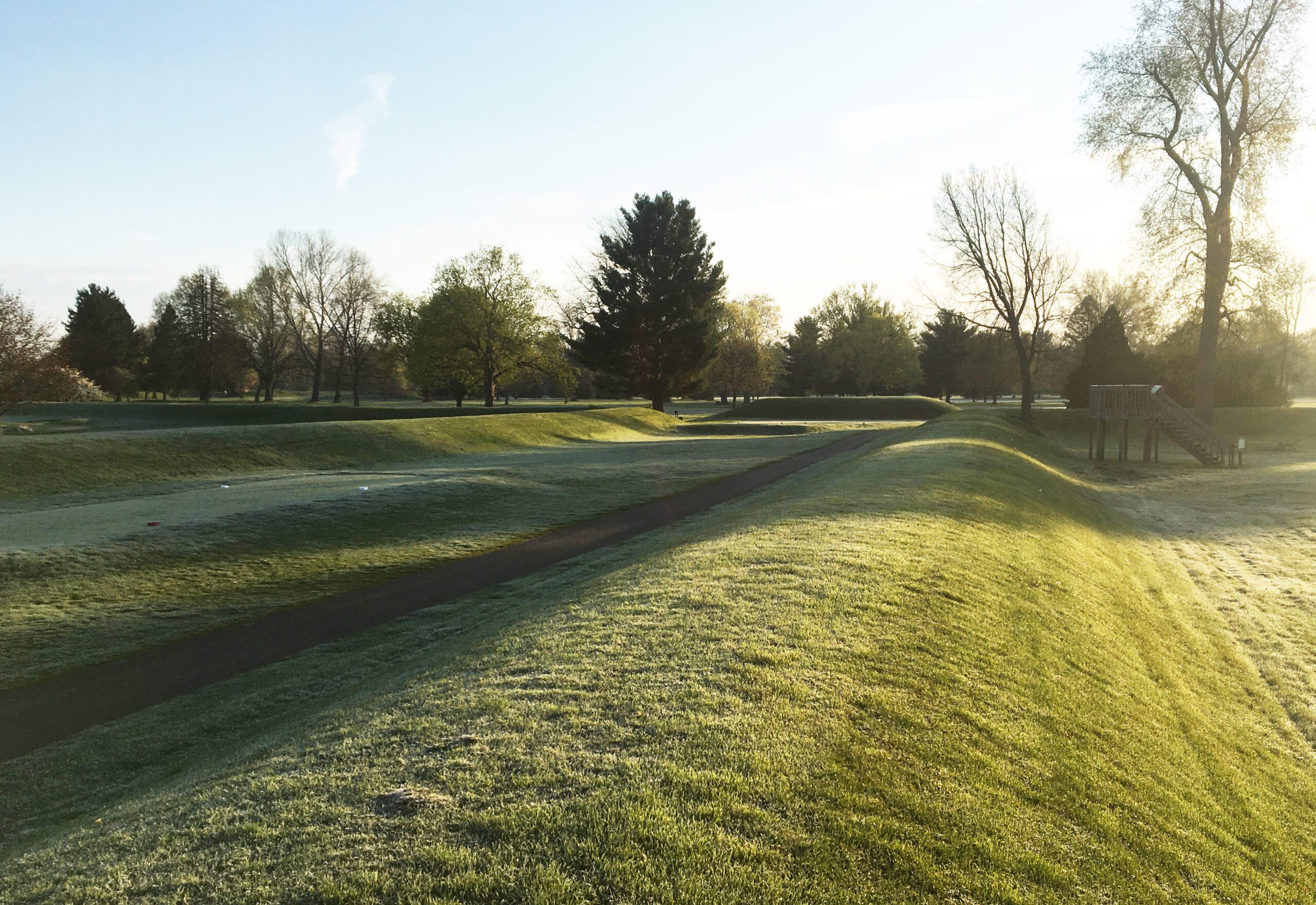
Enjoy the earthworks but please do not climb on the walls. We would like to keep these walls standing tall for 2,000 years after you visit them. Foot traffic will cause damage over time. You may walk up to the base of the earthworks and mounds.
For guided tours or special ticketed events, they can be purchased upon arrival at the Great Circle or Octagon Earthworks.
These earthworks, especially the Octagon and Great Circle, are large and outdoors so we suggest sturdy walking shoes and weather-appropriate clothing.
Weather appropriate clothing, water, and snacks. The sites do not have food service facilities. And of course, bring your camera!
An Abbreviated History of The Newark Earthworks
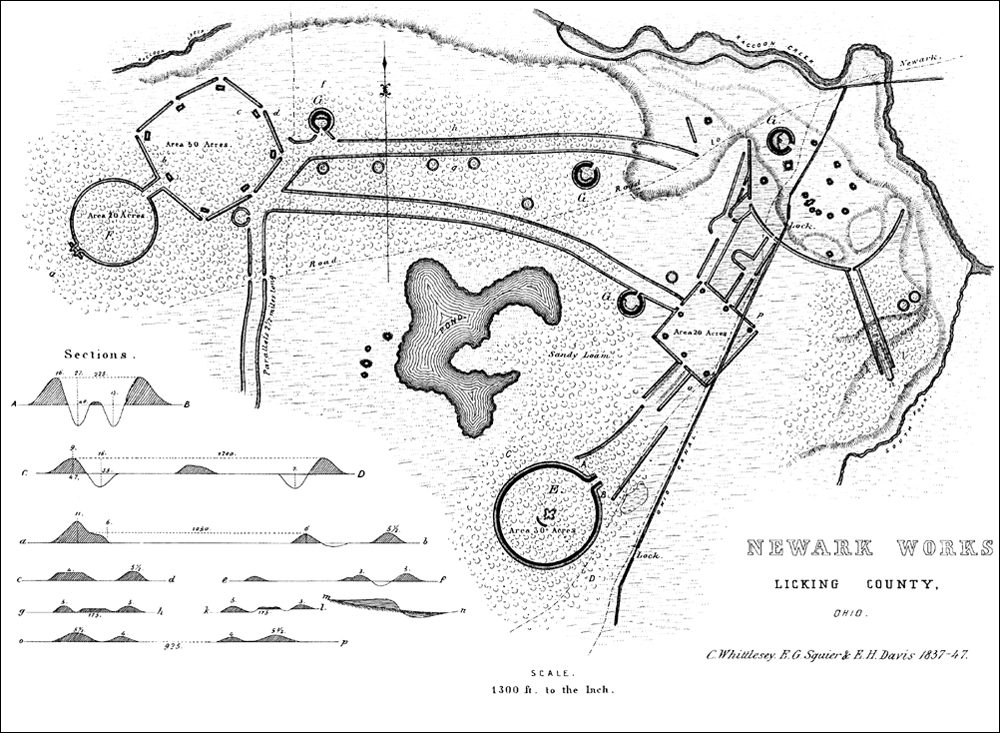
The Newark Earthworks is one of many Hopewell Ceremonial Earthworks built by American Indians 2,000 years ago. This site includes geometric shapes interconnected by low walls all built from earth carried by human hands and laid intentionally one basketful at a time. An estimated 7 million cubic feet (approximately 21 million baskets) of earth were used to construct the Newark Earthworks which covered over four-square miles of what is now today the city of Newark, Ohio. Many groups of American Indians from all over North America were gathering at the Newark Earthworks to practice spiritual traditions, celebrate and connect with one another and the world around them.

Map of the full Newark Earthworks Complex as mapped by Ephraim Squier and Edwin Davis in 1848 for the publication "Ancient Monuments of the Mississippi Valley."
The Octagon portion of the Newark Earthworks highlights the depth of planning and connection to the broader patterns of the universe embedded in the construction of Hopewell Ceremonial Earthworks. The Octagon is aligned with the lunar cycle and every 18.6 years the moon rises directly through the passageway linking the Observatory Circle and the Octagon. Each aspect of these earthwork complexes was created and designed with intention and care, a testament to the genius, cooperation and devotion of the American Indian peoples who created them thousands of years ago.
The earthwork sites in Ohio were sacred spaces not just for local American Indian peoples but groups of American Indians from all over North America. Exotic (non-local) materials were being brought by the people gathering at these sites from over 1800 miles away. American Indians coming to gather at the Hopewell Ceremonial Earthworks were bringing obsidian from the Rocky Mountain region, lightning whelk shells and shark teeth from the Gulf of Mexico and Atlantic Ocean, mica from the Blue Ridge Mountain Region and copper from the Upper Peninsula of Michigan. All these materials were transformed into ceremonial items that were laid to rest in these earthworks in Ohio.
Despite the fact that a great deal of the Newark Earthworks complex was lost to agriculture and development, two aspects of it remain: the Octagon and the Great Circle. The citizens of Licking County had the foresight to preserve these spaces. They are still used as places of coming together, sharing and celebrating but maybe in different ways than originally intended. Regardless, they are sacred spaces and hold a special place in the hearts of many. The local communities around the earthwork remember it as the county fairgrounds and as a place for family reunions and gatherings. But the site is especially meaningful to American Indian peoples. Their ancestors constructed the earthen walls that make up the Newark Earthworks and many other earthwork sites. They are the ones who lived, worked, played and celebrated on the land that is now Ohio for thousands of years.

Current Exhibits
African Art: Form, Function, and Fraught Histories
Although often misunderstood by the West, African art had an enormous impact on the world. While Africans created objects for culturally specific functions, their aesthetics challenged Western society and shaped its perceptions. This exhibit presents the relationship between the aesthetic and cultural functions of African art objects and the historical context of their global influence. The exhibition addresses modern questions of cultural appropriation, representation, and repatriation in presenting this updated interpretation. Using the museum's extensive African Art collection, Wright State University Graduate Students in Public History assisted the NAAMCC curatorial staff with its creation.
African Americans Fighting for a Double Victory
Explore the many ways that African Americans served our country in the military and on the home front during World War II, through this exhibit of World War II materials from National Afro-American Museum & Cultural Center collections. Discover the art of Charles Alston, commissioned by the Office of War Information to promote the war effort among African Americans, explore stories of the Tuskegee Airmen, the Red Ball Express, the Triple Nickels and Wilberforce-area veterans, and get a look at the impact World War II veterans had on the advances in civil rights that followed the war.
Queens of the Heartland
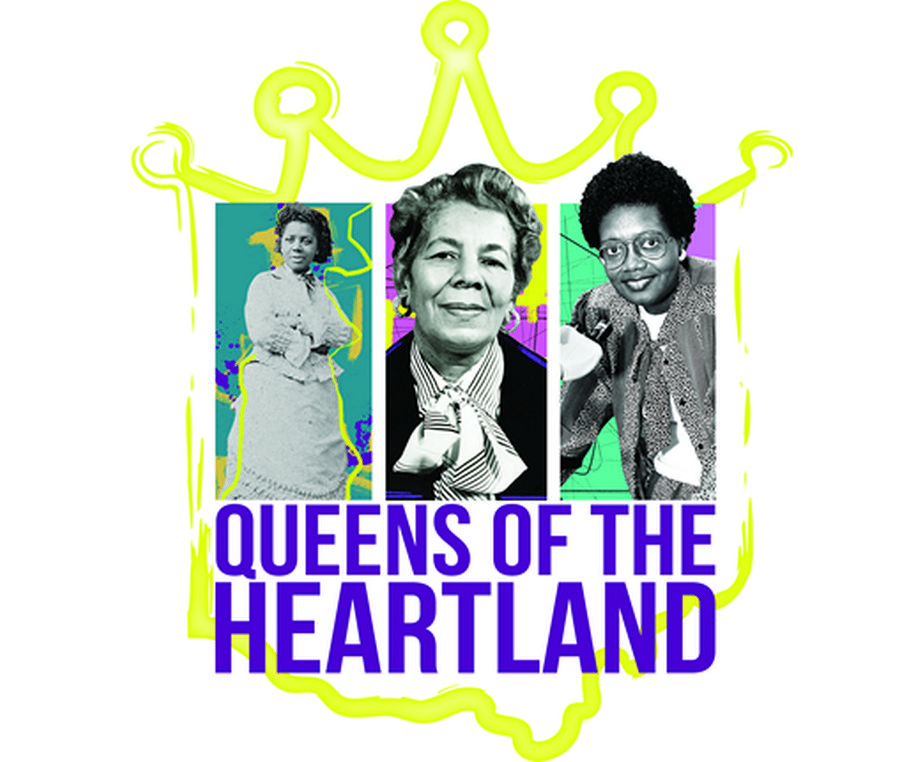
The Queens of the Heartland-the exhibit is part of the Ohio History Connection and National Afro-American Museum and Cultural Center Women’s Suffrage Centennial celebration. The exhibit will feature the stories of 30 Ohio African American women who were a significant influence in the Suffrage and Civil Rights Movements. The Queens of the Heartland exhibit will tell the stories of pioneering women through panel text as well as three-dimensional objects. This exhibit will also feature portrait illustrations of these historical figures by New York artist Nichole Washington whose current work focuses on identity and celebrates African American women.
Rhythm of Revolution-The Transformative Power of Black Art 1619 to the Present
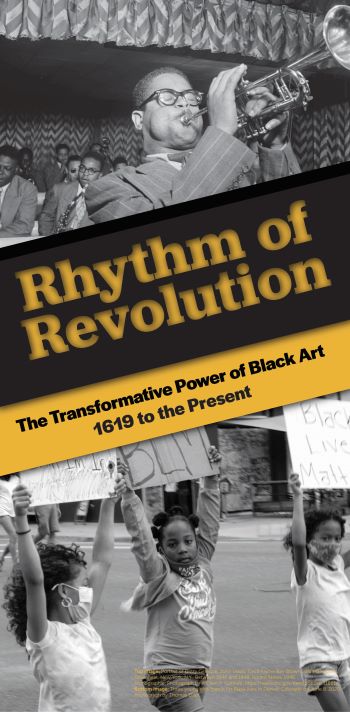
The National Afro-American Museum and Cultural Center in Wilberforce, Ohio, presents a new exhibit called Rhythm of Revolution-The Transformative Power of Black Art 1619 to the Present. The exhibit maps the visual flow of artistic, cultural, social, and political change in America from 1619 to the present day. Using three-dimensional objects from the NAAMCC collections, Rhythm of Revolution explores how Black artists, religious leaders, and activists worked within their spheres of influence to transform Ohio and our nation. Over time, these known and unknown change agents connected deeply rooted African traditions, interpreted those traditions to attempt to solve contemporary challenges, and worked to pave the way forward into a better future.
Upcoming Events at National Afro-American Museum & Cultural Center
Current Exhibits at National Afro-American Museum & Cultural Center

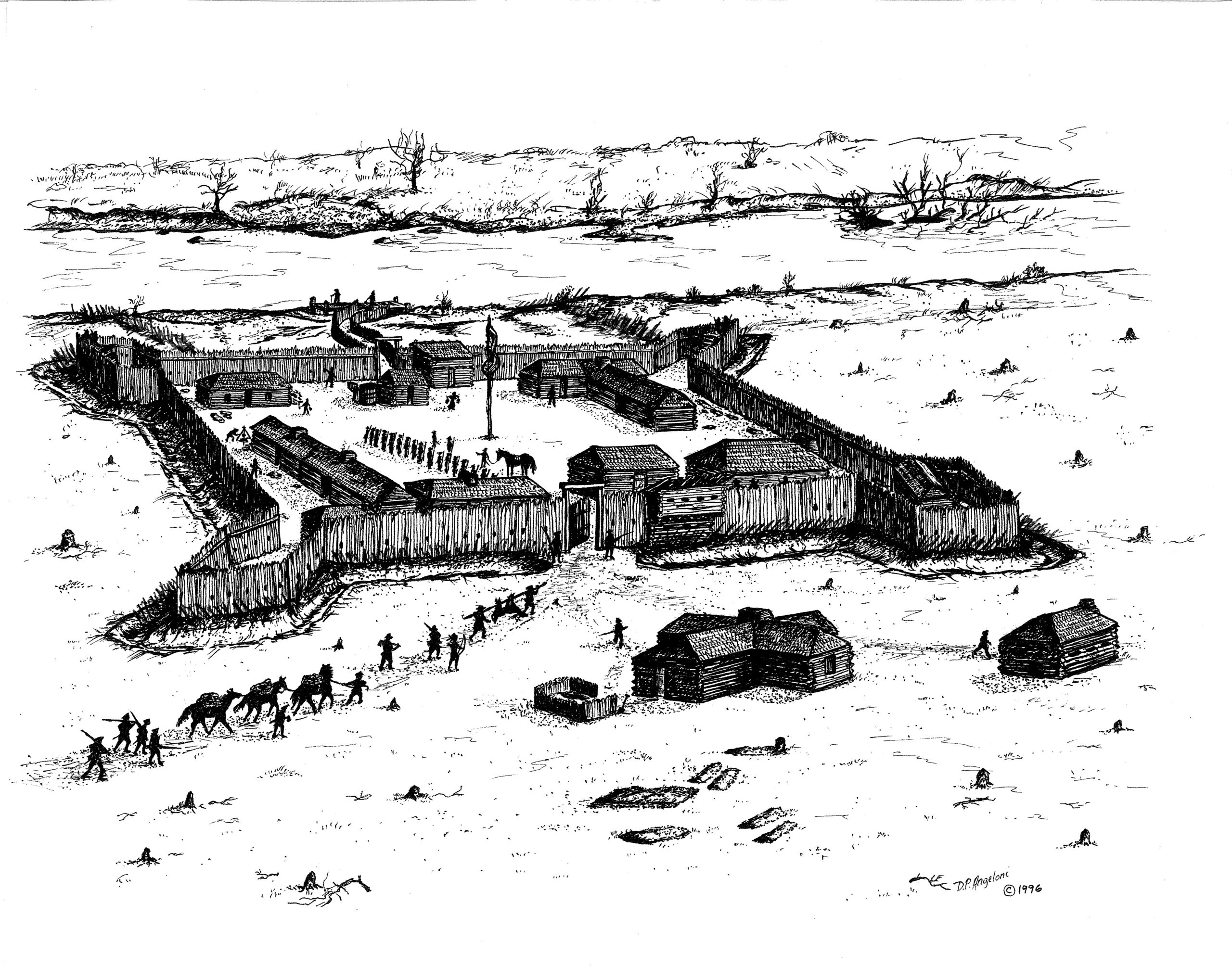
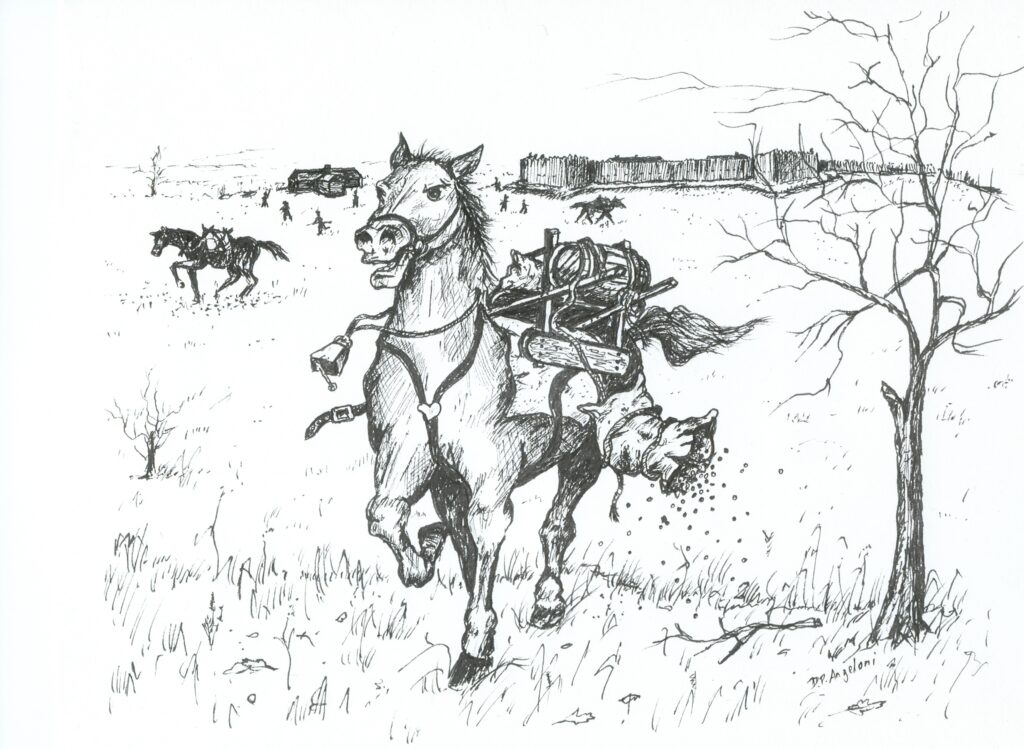
Illustration courtesy, Doug Angeloni, Friends of Fort Laurens Foundation
Fort Laurens was constructed on the banks of the Tuscarawas River (referred to in the period as the Muskingum River) by an expedition led by General Lachlan MacIntosh in November of 1778. The fort was a part of a larger plan to establish a line of forts in preparation for a campaign across northern Ohio to neutralize Native American allies of the British around what is now Sandusky, Ohio, and to provide a supply point for future campaigns against the British stronghold at Detroit, Michigan.
Using troops from the 8th Pennsylvania Regiment, the 13th Virginia Regiment, Virginia militiamen, and a small group of dragoons (mounted troops that dismounted to fight as infantry rather than fighting from horseback as cavalry would), McIntosh followed the Great Trail west, using the same route that General Henry Bouquet followed fourteen years earlier during the later stages of the French and Indian War (1754-1763). In November 1778, McLachlan selected a site along the west bank of the Tuscarawas in a broad river valley, in the same vicinity that Bouquet had ordered fortified storehouses to be built before continuing further south.
Construction of the American fort began on November 18th, 1778, most of it was completed in about ten days. Fort Laurens, as constructed by an experienced French military engineer, represents an amalgam of 18th century European fortifications with the practical limitations imposed by the isolated location and the American frontier. Typical European star forts were intended as strong points, a defense against European mass sieges involving artillery and large troop concentrations. The adaption of fortifications to the American frontier turned the fort into a defensible supply depot, especially against an opponent that lacked artillery and relied largely on guerilla tactics.
Fort Laurens is typical of this mixed ideal. Rather than stone, the walls were constructed of timber and the European arrangement of a glacis/moat/rampart earthworks is distilled down to a ditch in front of the wooden palisade, the excavated soil packed around the base of the timbers to provide additional strength. European style bastions at each corner of the fort provided unobstructed fields of fire to dissuade attackers approaching the fort’s wall. On December 9th, McIntosh departed the fort, leaving a force of 150 troops to continue working on the fort throughout the winter and spring, when his campaign against the Native villages at Sandusky could be resumed. The rest of the troops returned to Fort McIntosh and Fort Pitt for the winter.
The garrison force at Fort Laurens faced a difficult winter, enduring an ambush by Native American forces that was followed by a ruse that made it appear their forces were far more numerous. Believing they were heavily outnumbered, American soldiers remained within the fort, facing dwindling supplies, unwilling to venture out to hunt or gather food.

Drawing by Doug Angeloni

In March, General McIntosh led a relief column, but the defender’s musket salute frightened the packhorses, causing them to bolt and scatter, losing most of the supplies. With the loss, McIntosh abandoned the plans for his western campaign and, after garrisoning the fort with fresh troops, returned east. By August, strategic plans for the Continental Army shifted to the point where Fort Laurens was no longer seen as necessary and the garrison returned to Fort Pitt, abandoning the area.
In 1832, the Ohio-Erie Canal was constructed along the east side of the now demolished fort. The cut for the canal removed the entirety of the eastern boundary, whether walls or reinforced structures, and largely destroyed any traces of the northeast and southeast bastions. The Gibler family purchased the area in 1853 and leveled the ground for agricultural production, removing most traces of the fort. By 1917, historians generated enough interest in the fort that the State of Ohio purchased the site and established a park with the goal of eventually rebuilding a replica of the fort.
Since the establishment of the State Memorial there have been eight archaeological research projects conducted at Fort Laurens.
What is the Fort Laurens Project?
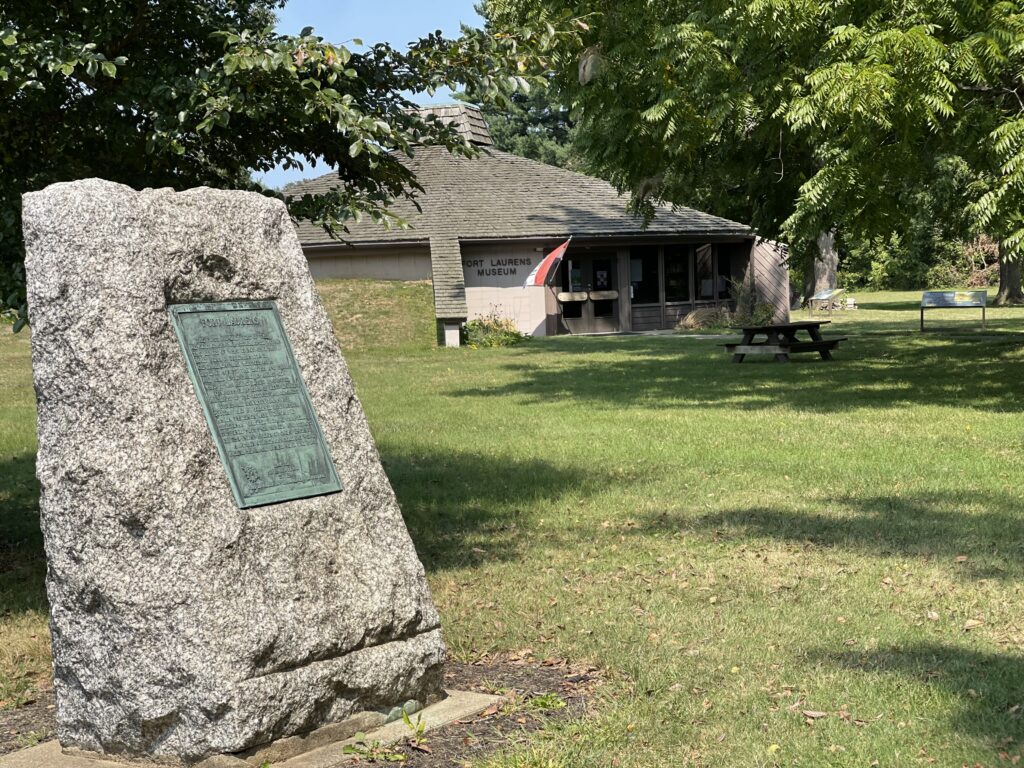
The Ohio History Connection has a goal to increase public awareness of the Revolutionary War in the Ohio Country, and Fort Laurens in particular. Fort Laurens is the lone Revolutionary War fortification in the state and provides an important place in the early history of Ohio. The Ohio History Connection is beginning improvement projects at the fort at the same time as the America 250 celebration. These include a renovation of the on-site museum and Tomb of the Unknown Patriot of the American Revolution and a multiyear public archaeology project from 2025-2028 that will develop the knowledge base needed to inform an accurate partial reconstruction of the fort's palisade wall by 2028, the 250th anniversary of its original construction. This work is a part of the major projects included in the Ohio History Connection’s strategic plan.
Public Archaeology
What is public archaeology?
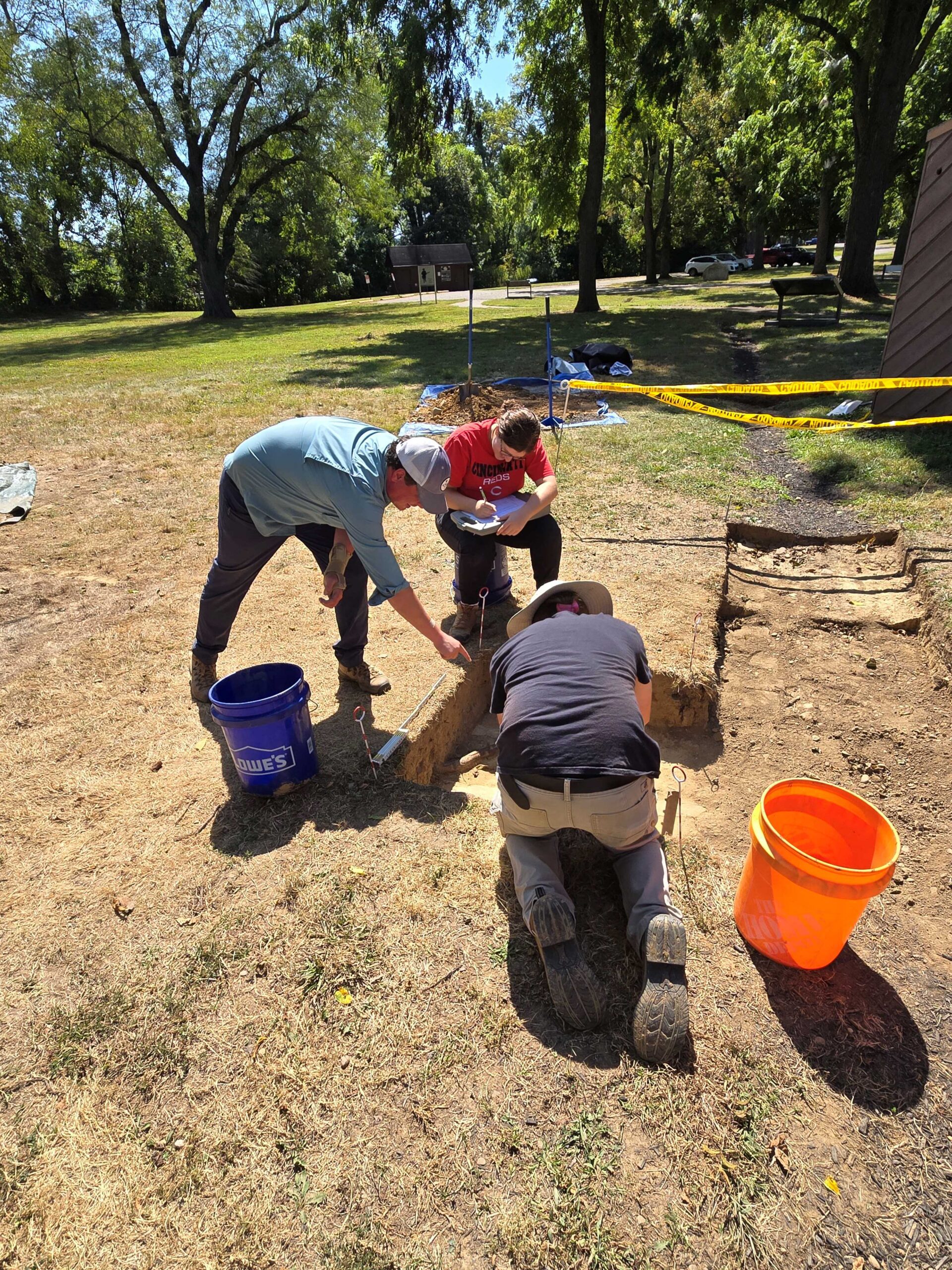
In short, public archaeology is exploring the past with the community, not just on their behalf. Archaeological sites belong to everyone, and public archaeology is an opportunity to understand firsthand how we learn about the past.
Rather than working behind the fence and sharing technical reports alone, public archaeology gives members of the community the chance to be part of the process. The public archaeology at Fort Laurens allows visitors to take part in the excavation, but that’s only one way to be involved. The Fort Laurens project provides educational outreach and tours to school groups, public presentations of our research to date (check your local library’s presentation schedule, or ask your librarian to schedule a presentation), and online updates that share what we are finding and what it means.
What Does Public Archaeology Do?
Public archaeology turns history into something tangible. Watching an artifact emerge from the ground, learning how archaeologists interpret evidence, or seeing how even small finds fit into a larger story creates a personal link to our past. It also builds stewardship. When people understand why a place matters and how easily it can be damaged or lost, they are more likely to protect it. Public archaeology replaces mystery and distance with knowledge and shared responsibility. Just as importantly, it broadens the stories we tell. Archaeology often reveals the lives of people who left few written records: soldiers, laborers, families, Native communities, and others whose experiences shaped history but were rarely documented. Public archaeology invites communities and descendant groups to help guide interpretation and ask new questions.
Archaeology Crew working on a portion of the western fort wall at Fort Laurens
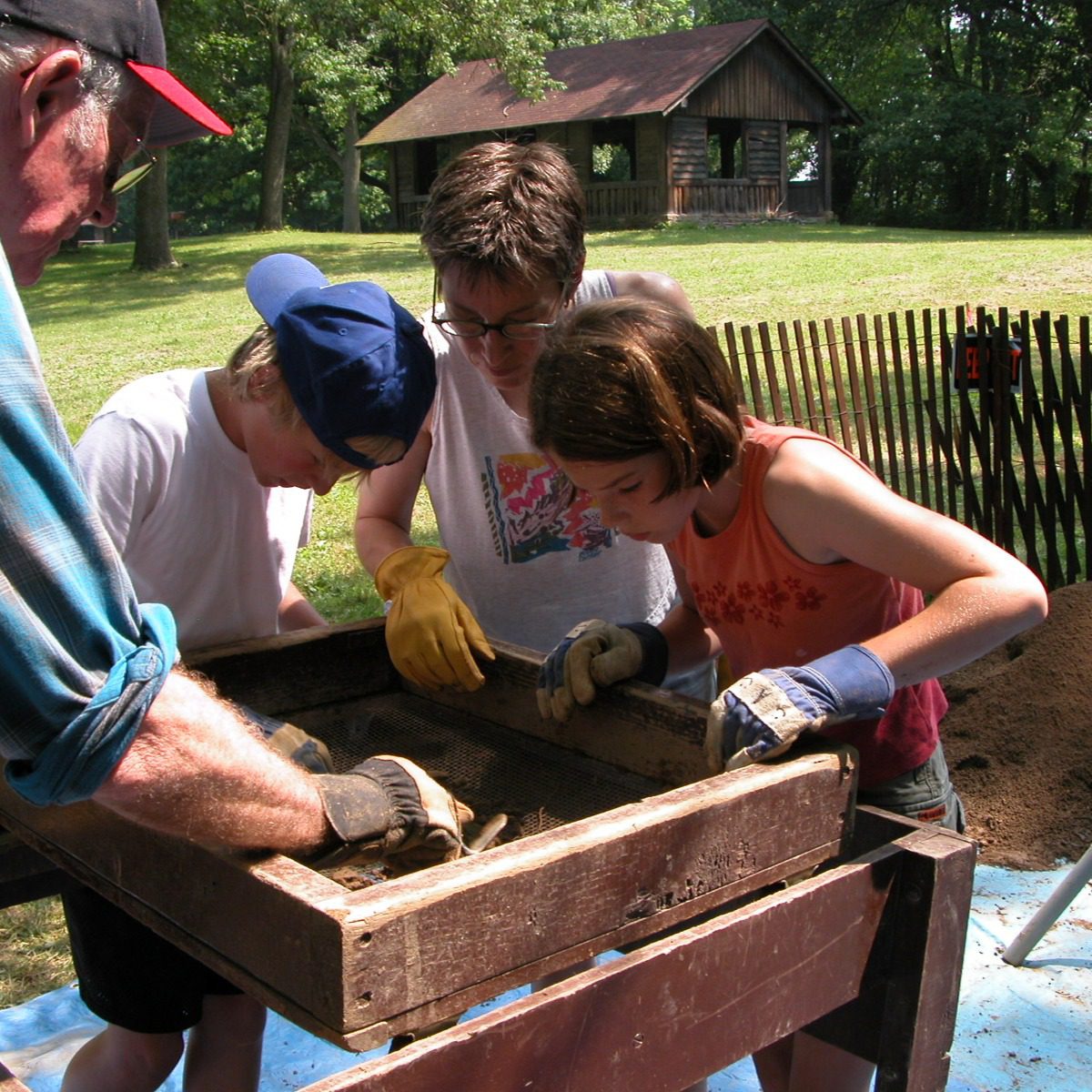
Family screening for artifacts at Fort Laurens
Why Public Archaeology Matters Today
Many archaeological projects are supported by public funding, which brings a responsibility to share results openly and accessibly. But beyond that, people increasingly want to understand not just what we know about the past, but how we know it. Public archaeology shows the process of discovery, emerging evidence, and sometimes the uncertainties this creates. It encourages curiosity and creates a dialogue between archaeologists and the public, making archaeology a living conversation rather than a finished story.
At its best, public archaeology connects research teams with community stakeholders, community memory to shared memories and care for place. It ensures that the past is not only studied, but understood, shared, and protected for future generations.
Get Involved!
Public archaeology works best when you’re a part of it. There are many ways to take part in this project like visiting the site, helping with excavations, attending public presentations or just following along as new discoveries are made. Even simply staying informed and sharing what you learn helps support the preservation of this unique archaeological site.
By getting involved, you help ensure that the past is understood and cared for by the community it belongs to.
Unearth the Past – Join Us for Public Archaeology Day!
Ready to roll up your sleeves and get dirty for a good cause? Let’s uncover history together—one stratum at a time!
You're invited to the Public Archaeology Day series at Fort Laurens, Ohio’s Revolutionary War fort, for a day of discovery and hands-on historical adventure. This is a unique opportunity to form a connection with our nation’s birth, right here in Ohio. You could be the first person to touch an artifact in hundreds of years!
Whether you're a history buff, or just looking for a unique day out, there's something for everyone:
- A work session with professional archaeologists. Don’t worry, we’ll train you in what to look for.
- Help recover the artifacts from our past and learn first-hand what they tell us.
- Chat with local experts about the history of the fort.
- Or just come and observe professional archaeologists at work.
Summer 2026 Public Archaeology Dates:
July 25th from 10 a.m.-3 p.m.
August 8th & 15th from 10 a.m.-3 p.m.
Public Archaeology dates are subject to change, please check back for updates
Public Archaeology Frequently Asked Questions
This event is completely weather dependent. Check the Fort Laurens Facebook page for information on the day of the event if the weather looks iffy. Inclement weather includes thunderstorms, rain and high temperatures.
There is not any food or water available for purchase at the fort. We suggest you bring your own or explore the convenient shops and great restaurants of nearby Bolivar.
We ask that children under the age of 16 be accompanied by an adult.
You’re welcome to stay as long as you like, we hope you enjoy the site. However, due to the limited number of screening stations, please give everyone a chance by limiting your participation on the screens to 1 hour (if there are more people waiting).
Presentations on the 2025 excavation results will be held in the Fort Laurens museum twice a day during operating hours.
Fort Laurens is among our state’s most important archaeological sites. All artifacts recovered are the property of the State of Ohio and will be cared for by trained professionals at the Ohio History Center.
Lift Every Legacy and Remembrance Alley Brick Campaign!
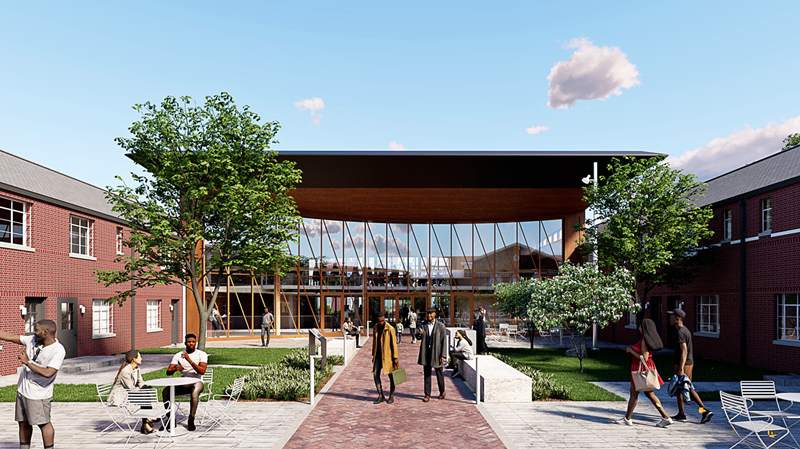
Paying tribute to the historic alley that once connected the original buildings, Remembrance Alley invites individuals, families and organizations to engrave their names, or the names of loved ones, into the pathways of the museum. Each brick will become a stepping stone of memory, weaving personal legacies into the enduring story of Poindexter Village. Costs will be $250 per brick and $500 per paver.
We invite you to join us in our Lift Every Legacy Campaign as we work to make this vision a reality. For questions or donation inquiries, call Development Officer Anthony Gibbs at 614.297.2477.
“It was the kind of community where hard-working families flourished.”
-Aminah Robinson
Our Staff
Shelbi Toone, Project Director
Rob Dehart, Associate Curator
Anthony Gibbs, Development Officer
Special Thanks to our Partners
Center of Urban and regional Analysis at The Ohio State University (CURA)
In partnership with CURA, we are developing an interactive exhibit that explores the evolution and transformation of central Ohio's historically Black neighborhoods.
Columbus Metropolitan Housing Authority (CMHA)
Poindexter Village was established under the housing authority. CMHA has been a strong supporter of the museum and has been a significant sponsor of the annual Drum Circle event.
James Preston Poindexter Foundation (JPPF)
This grassroots organization is committed to preserving Poindexter Village and ensuring its legacy continues for generations to come by offering historical insight and community guidance. JPPF is a founding partner for this project. Learn more about JPPF here!
Union Grove Baptist Church
Located next to Poindexter Village, the church, established in 1888, is a cornerstone of the Near East Side and a partner in the museum's vision and story.
The City of Columbus
The city is supporting the construction, operation and curation of the museum, while also providing essential resources to ensure its successful completion.
Read more about what's happening at Poindexter Village!
Get Involved
Poindexter Village African American Museum needs your support! Whether you're looking to give, donate or become an ambassador, your support will help us bring the vision of African American museum dedicated to preserving the heritage of Poindexter Village, while sharing the rich, untold story of the Black experience in this neighborhood and beyond.

Lift Every Legacy
Join us as we work to make this vision a reality. Support us by click the donation links above or click below to learn more and become an ambassador for the Poindexter Village African American Museum or call our Development Officer, Anthony Gibbs at 614.297.2477. For more information, visit our fundraising page.
Remembrance Alley Brick Campaign Coming Soon!
Paying tribute to the historic alley that once connected the original buildings, Remembrance Alley invites individuals, families and organizations to engrave their names, or the names of loved ones, into the pathways of the museum. Each brick becomes a stepping stone of memory. weaving personal legacies into the enduring story of Poindexter Village. Costs will be $250 per brick and $500 per paver. More details coming soon.


Donate An Item
Donate a single artifact or large collection to our collections and take your place in history! If you have artifacts that you believe will enhance the Poindexter Village Museum collection, please contact us through the form. National Afro-American Museum (NAAMCC) hosts the repository for your donation. If you have any questions please contact us through the email below.
Programs
Poindexter Village African American Museum will feature a dynamic range of programs, including educational workshops, special events and community outreach. Look forward to guided tours, family-friendly activities and more. Over the past few years, we have worked with the community partners to create successful programs and events that highlight the museum's mission. These include:
Poindexter Village Drum Circle
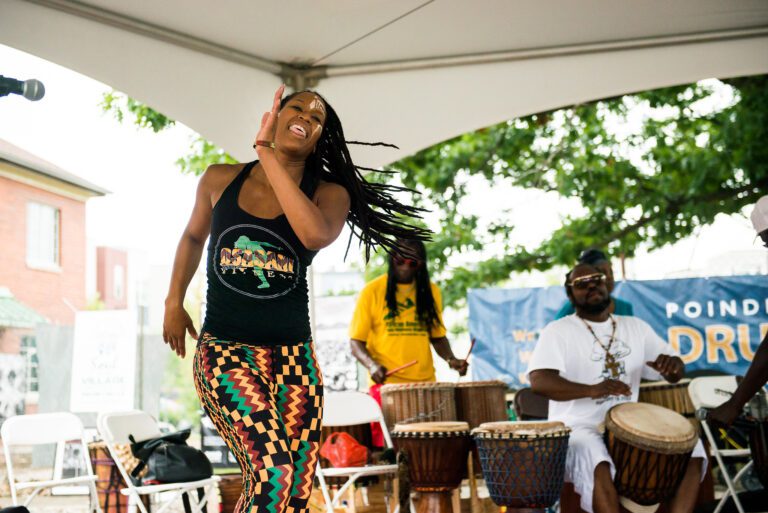
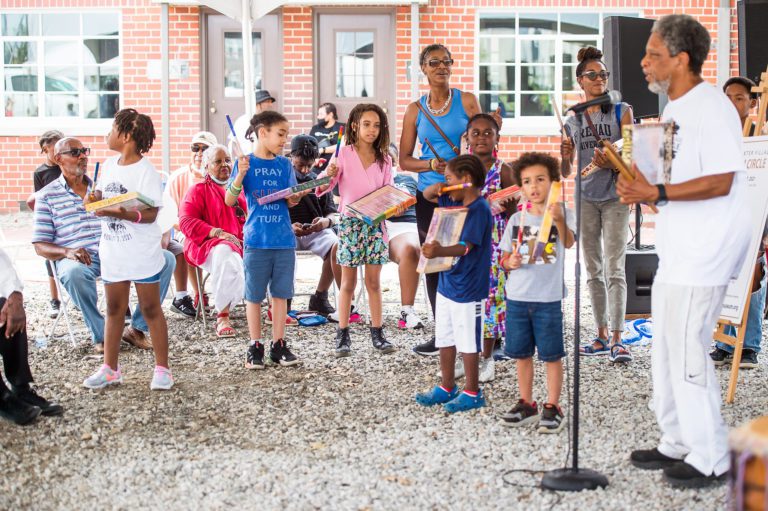
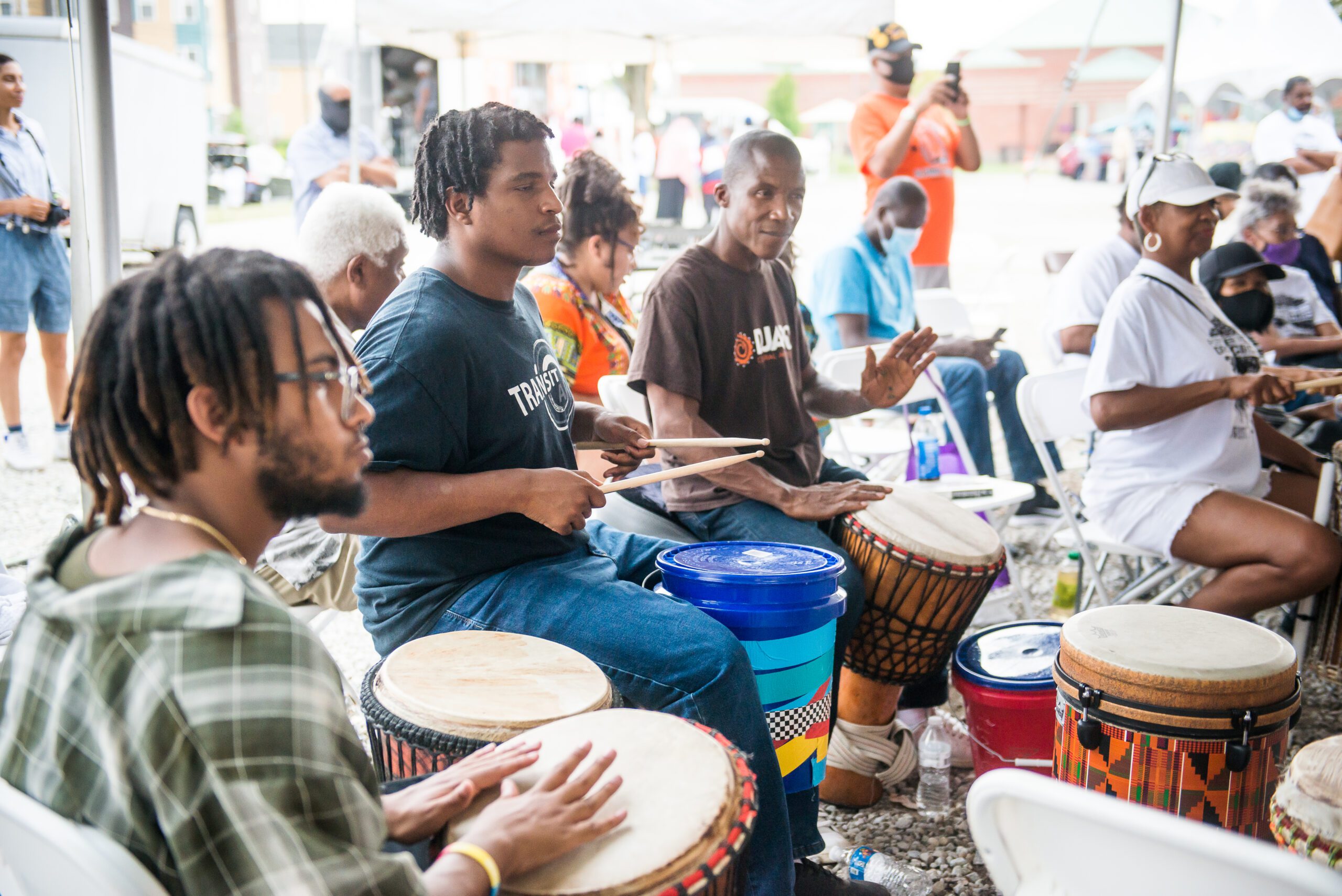
This vibrant community event featuring drum circle performances by elders from the King-Lincoln Bronzeville neighborhood. Everyone is welcome to bring their drums, with lawn chairs and coolers welcome. The event features interactive drum activity tables, local vendors and food trucks, creating a dynamic cultural experience.
For questions or to sign up as a vendor, contact Drum Circle Coordinator Venica Miller here.
Juneteenth on the Ave
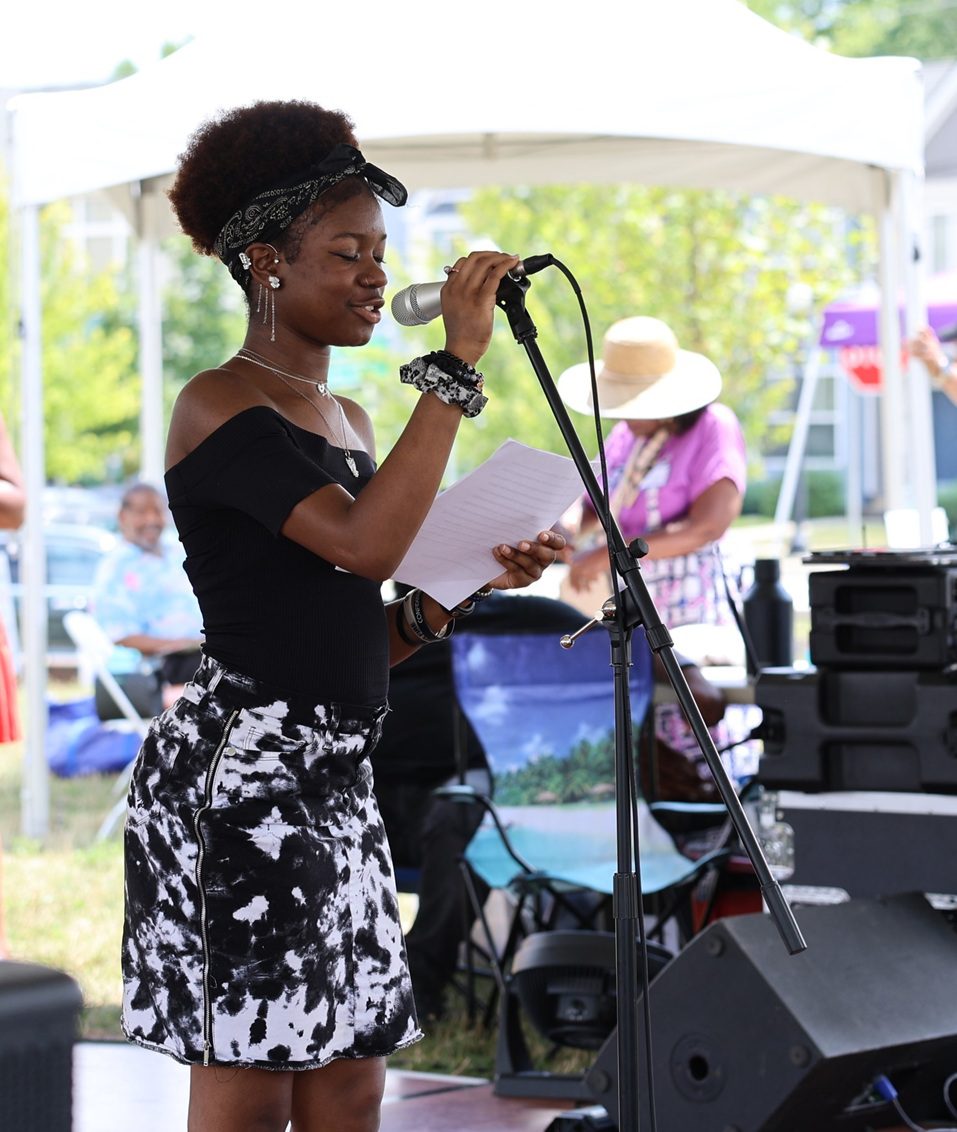
Join us as we commemorate the oldest known celebration of the end of chattel slavery in the United States. Juneteenth on the Ave is a celebration on the historic Mount Vernon Avenue honoring Black resilience and creativity—a showcase for performing and visual artists, and a vehicle to promote and support Black-owned businesses.
Oral History
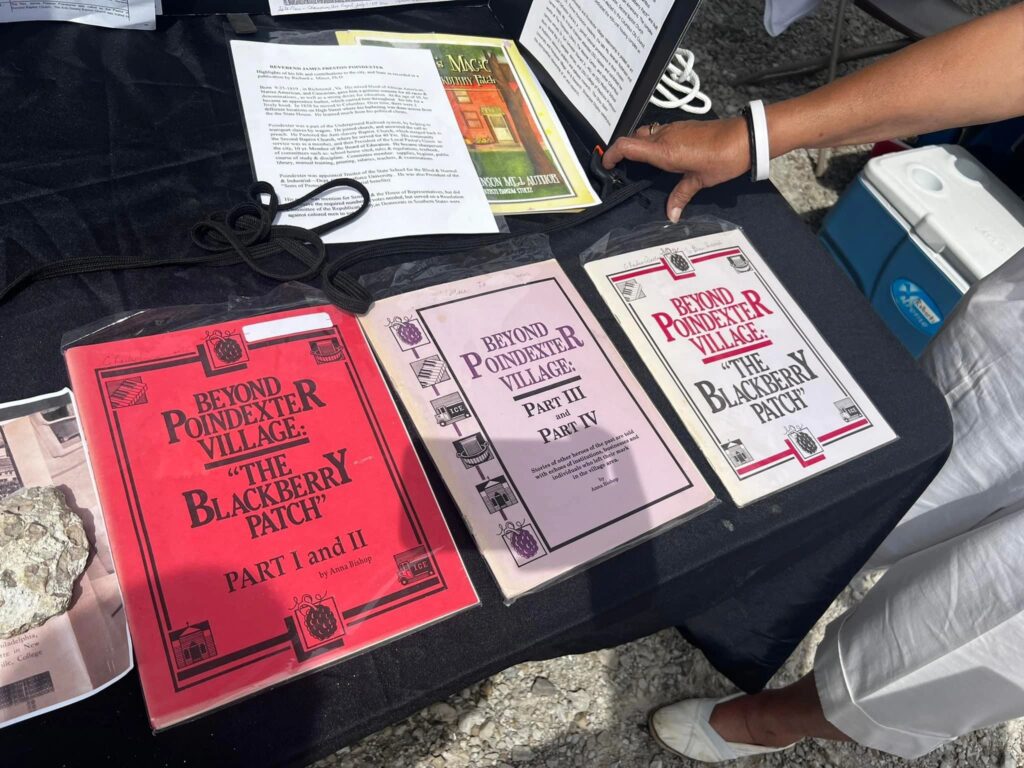
Oral histories are a key part of the preserving the memories of Poindexter Village. If you live in or have memories of Poindexter Village, support Central Ohio's First African American Museum by sharing your story with us.
For more information on our oral history interview process and things you should know, please review our oral history interview document.
Youth Art Challenge
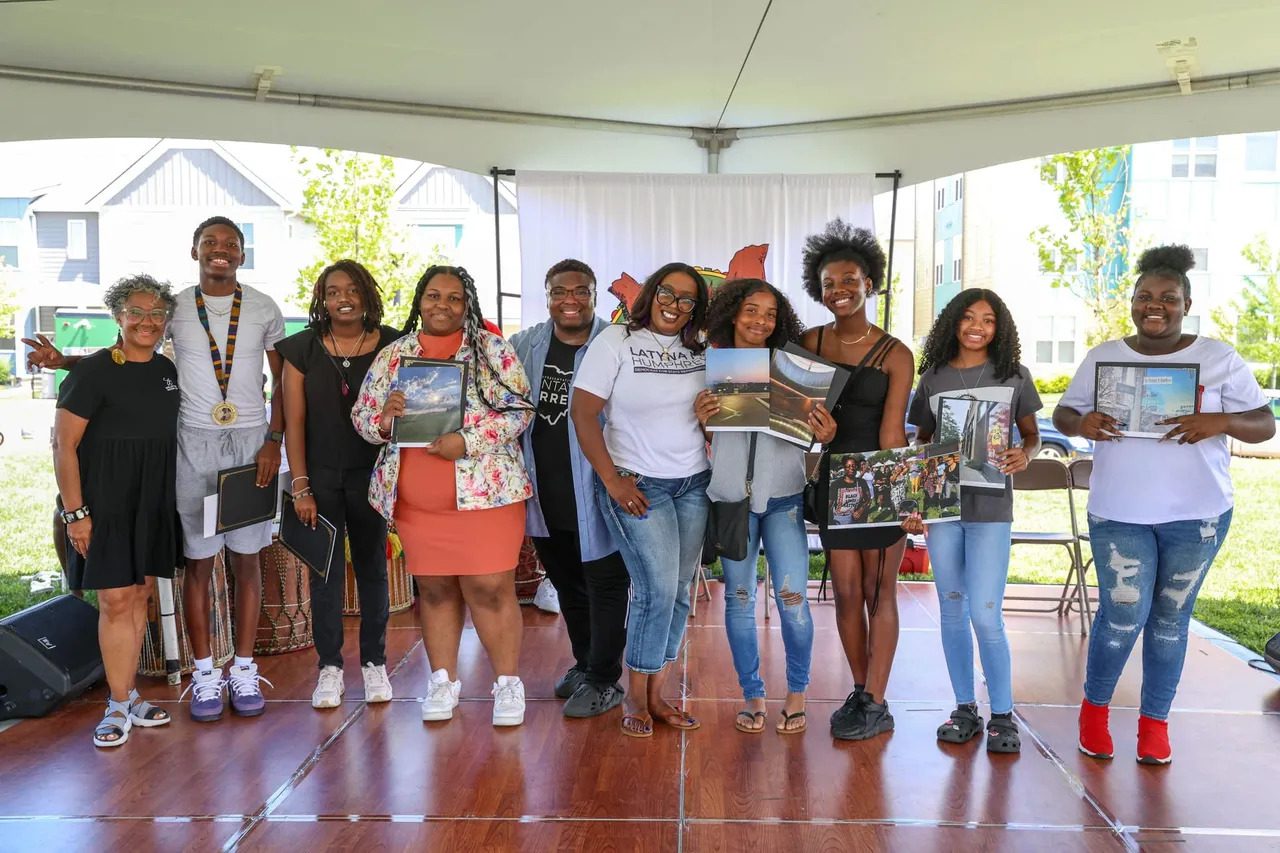
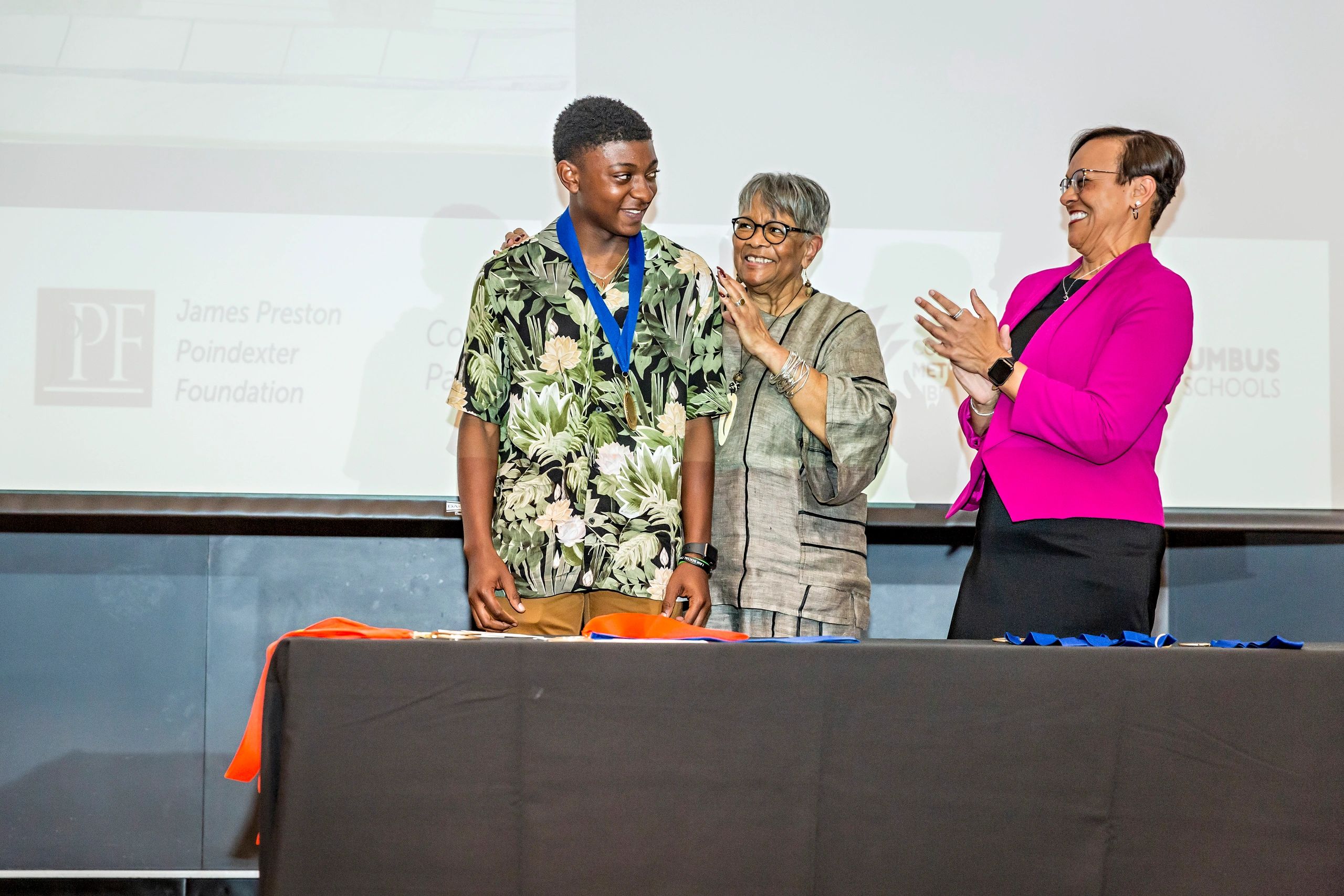
An annual initiative that gives students in Columbus City Schools and surrounding districts the opportunity to create artwork featured throughout the museum and integrate into its programming. This year's challenge is Keepers Of The Culture. This citywide initiative invites K-12 students in Columbus to honor local African American leaders and historical figures through visual art. Students are encouraged to create 2D artwork that reflects the impact, contributions and legacy of their chosen figure. Selected artwork will be featured in a published book and showcased in a city-wide vinyl fence wrap installation.
Submissions deadline has passed. Awards Ceremony will take place on Thursday, February 26, 2026 at the Ohio History Center. Artwork should be installed in Spring 2026. Poindexter Village is in its 4th annual art challenge. Review images and posts from previous years below.
Past Art Challenges
History
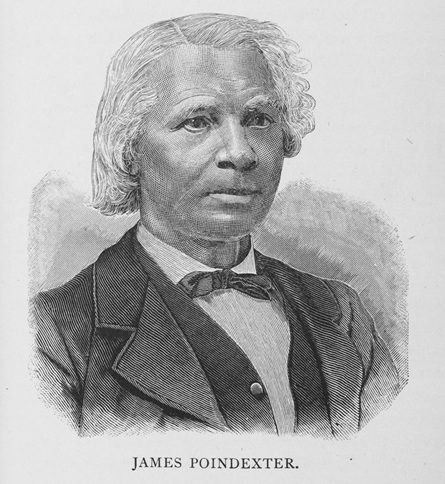
Rev. James P. Poindexter
(October 26, 1819- February 7, 1907)
Reverend James Preston Poindexter was a relentless abolitionist and leader for the African American community in central Ohio before and after the Civil War. He was born in Virginia but moved moved to Columbus in 1838 with his wife Adelia Atkinson, where he lived until his death in 1907. Poindexter served as pastor of the Second Baptist Church for 30 years, assisted escaping slaves traveling through Columbus, founded the Colored Soldiers Relief Society during the Civil War, and served in political positions at the state and municipal level. In 1880 he became the first African American elected to the Columbus City Council. Poindexter was a man of integrity, faith, respect and one who had a lifelong pursuit of social justice.
In recognition of his impact, Poindexter Village, one of the first public housing developments in the United States, was named in his honor in 1940. The community served as a beacon of Black resilience and progress, reflecting Poindexter’s legacy of empowerment and justice. Today, the Poindexter Village African American Museum honors his legacy by preserving his story and the rich history of the community he helped shape.
Poindexter Village
From the years after the Civil War through the peak of the Great Migration, thousands of Black citizens arrived in Columbus. By the 1940s, Columbus’ Near East Side was a popular migrant destination and a flourishing hub for Black businesses, churches, social organizations, and other community institutions.
In the early twentieth century, increased racial segregation coupled with the expanding Black population caused overcrowding and deteriorating living conditions in Columbus’ constricted Black neighborhoods. In 1937, the Federal Housing Act provided federal funds for the construction of affordable public housing for Americans suffering from the impacts of the Great Depression. In 1940, the Columbus Metropolitan Housing Authority completed the construction of Poindexter Village, the city’s first affordable public housing project and one of the earliest in the nation. The 400-unit low-rise apartment complex was built exclusively for Columbus’ Black population.
Residents of Poindexter Village supported an adjacent flourishing business district of Black-owned companies and cultural institutions. The community nurtured its residents, producing many successful individuals. One notable resident was Amina Brenda Lynn Robinson, a world-renowned artist. Robinson, in her colorful mixed-media work, brought to life the vibrancy of the Poindexter Village community.
Even as Columbus’ civil rights leaders organized, Poindexter Village deteriorated. In 1952, the Livingston Heights Place subdivision was created.. Ten years later, Teakwood Heights, a Black subdivision of originally 13 homes expanded to 77 houses. A racially-mixed East Side suburb, Berwick, also developed. In the late 1960s, fair housing acts and ordinances eased some restrictions on housing for middle-class Black families, spurring them to buy houses in previously restricted areas.
The exodus of these residents from public housing left more financially vulnerable people behind, with their choices still limited by redlining and neighborhood isolation caused by highway construction. Public investment in affordable housing declined, resulting in a cut to services and maintenance in older public housing units. Many vacant units, too costly to repair, were boarded up. Due to this disinvestment, public officials called for the demolition and redevelopment of Poindexter Village.
To read more about the history of Poindexter Village, visit the local spotlight on the Unvarnished Project. This project looks to document the impact of racial restrictions in communities across the U.S. Many of these communities are suburbs and small towns that utilized restrictions to keep their communities White. The existence and development of Poindexter Village and its surrounding community reflects how similar restrictions impact urban areas and how specifically the Black community rallied to change those realities.
In 2017, Unvarnished was awarded a prestigious Institute of Museum and Library Services National Leadership Grant.